Languages
Saturday, November 21, 2026



News and Views from the Global South
Food and Agriculture
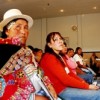
BOLIVIA: Women Clamour for Right to Land
Despite major advances in land distribution in Bolivia, single, widowed and undocumented women in this South American country have little chance of owning rural land due to the patriarchal traditions and customary practices of indigenous peoples, in violation of international instruments and conventions protecting women’s rights.BRAZIL: ‘Quilombos’ Keep Black Cultural Identity Alive
A black community in the southern Brazilian state of Rio de Janeiro is trying to maintain its cultural heritage on 287 hectares granted to it by the government in 1999 as part of reparations to the descendants of slaves.ENVIRONMENT-GUATEMALA: SOS from Lake Atitlan
A thick, chocolate-coloured scum floats on the normally clear blue waters of Lake Atitlán, in the southwestern Guatemalan province of Sololá, caused by agricultural fertilisers and untreated sewage from surrounding villages and farms.TRADE: “African States Need Advice Body Outside WTO for Talks”
Since before the creation of the World Trade Organisation (WTO) in 1995, two groups of people have confronted each other: supporters of trade liberalisation, who regard the pursuit of growth as paramount, and opponents of trade liberalisation, who see unfettered trade as the cause of many socio-economic problems.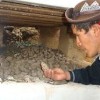
PERU: Fighting Hunger with Native Crops
As if he were showing off a treasure, Dionicio Sarmiento holds up his seed potatoes with a smile. "Look how nice they are, all ready to plant. It'll be a good harvest," says the peasant farmer from Huancavelica, Peru's poorest province, where most of the population depends on subsistence farming.DEVELOPMENT: Climate Change Likely to Increase African Hunger Woes
Africa, the continent already most affected by hunger and food scarcity, is likely to see its woes increased due to climate change and the changing rain patterns it provokes, experts and scientists say.DEVELOPMENT: To Grab, Or To Invest
The World Food Security Summit in Rome this week opened up a dispute between what may be investment in farmland to some, but is seen as land grab by others.Q&A: “If You Find Yourself in a Minefield, Shout for Help”
Putting on a white t-shirt or wearing olive-green pants can be life-or-death decisions in the conflict zone in the steep Andes mountains in western Colombia where 14-year-old Andrés lives and attends eighth grade.TRADE: Kenya Faces Job Losses, Collapsing Sectors in Wake of Doha
The consequences of the Doha Round of trade talks for larger developing countries in sub-Saharan Africa could include job losses and deindustrialisation if a new study forecasting how Kenya is set to be affected is anything to go by.DEVELOPMENT: Hunger Summit’s Failure Exposes Grim Reality
There are two main ways the flop of this week’s United Nations World Food Security Summit in Rome - which has been snubbed by the world’s top leaders, has failed to deliver binding aid commitments, or to set a target date for the eradication of hunger - is being read.
AGRICULTURE: Exporting Afghanistan
The 60 hectare stretch of farmland in north Kabul's Badam Bagh neighbourhood looks much like farmland all over this country. Colourful rows of neatly planted crops stretch out from a dusty road and up the gentle slope of an arid ridge.PAKISTAN: Soup Kitchens Spring Up to Stave Off Growing Hunger
Until meagre resources began dwindling to almost nothing, 43-year-old Firdaus Begum had not ventured into the Khana Ghar (Food House), which serves up inexpensive but filling meals.U.S.: Nearly One in Six Citizens Went Hungry in 2008
As the World Food Security Summit got under way in Rome Monday, the U.S. Department of Agriculture (USDA) disclosed that nearly one in six U.S. households went hungry at some time during 2008, the highest level since it began monitoring food security levels in 1995.DEVELOPMENT: Hunger Summit Passes Toothless Declaration
Fears that the United Nations World Food Security Summit would fail to deliver effective measures to defeat hunger were borne out Monday when world leaders and government officials approved a toothless declaration on the first day.
DEVELOPMENT: Farmers Not Invited to Food Summit?
World farmers are not part of the official delegations at the Food and Agriculture Organisation (FAO) food summit on food security that opened here Monday. But they came anyhow to express their views, since, they say, it is their communities that are most impacted by the food crisis.DEVELOPMENT: Looking to the Past to Feed the Future
As wheat rust threatened crops in the 1950s, a global effort to breed resistant wheat varieties led to 117 million hectares of cropland being protected from the deadly fungi and ensured the food security of 60 to 120 million rural households.
UGANDA: “Mount Elgon Eviction Has Reduced Us to Beggars”*
"We have been reduced to begging from relatives and to migrate to urban areas where life is not safe. We were living in the mountain for more than 200 years. Transferring us means burying us, completely. We want to stay in our area and develop."DEVELOPMENT: More Promises to Eat
Next week's United Nations food security summit is in danger of becoming a massive missed opportunity, experts and non-governmental organisations say. Fears mount that top leaders will not show up, and binding new commitments will not materialise.
AGRICULTURE-ZIMBABWE: New Methods to Maximise Yields
Last season, for the first time in her more than 20 years as a farmer, Elizabeth Runema harvested her maize crop at the beginning of February.AGRICULTURE-ARGENTINA: Desperately Dry
The persistent drought affecting some 90 percent of Argentine territory has slain cattle in the hundreds of thousands and caused forest fires, drastic restrictions on water use and local disputes over water.BRAZIL: Green Beans to Go, Roast Coffee Grounded
For over a century and a half, Brazil has led the world in green coffee bean production and exports, without ever achieving similar success with processed beans. Some of the internal and external hurdles reflect the dilemma of reliance on agricultural commodities for export revenue.« Previous Page — Next Page »


 Farming on the Outskirts of Juba. Credit: UN Photo/JC McIlwaine
Promoting human and planetary health is a central focus of the United Nations, as laid out in the 2030 Sustainable Development Goals (SDGs). World hunger and unsustainable farming practices continue to be pressing concerns for the world. According to the 2025 State of Food Security and Nutrition in the World report by the Food and Agriculture Organization (FAO), 673 million people faced hunger in 2024. There are stark regional disparities, with the FAO projecting that 60% of the world population facing hunger will reside in Africa by 2030. Globally, the prevalence of food insecurity has remained consistently higher for women than men.
Sustainable and efficient national food systems are essential in preserving health, education, environmental well-being, peace, economy, and security. However, creating sustainable food systems can be a challenging endeavor, as food production takes a heavy toll on the environment. The agricultural sector accounts for a significant portion of greenhouse gases. Finding safe, sustainable, and ethical strategies to feed the world is crucial in ensuring planetary longevity. A recent initiative from 2023, the EU Regulation on Deforestation-free Products (EUDR), seeks to advocate for sustainable food systems. The main driver of deforestation is the expansion of agricultural land used to produce commodities like cattle, wood, cocoa, coffee, etc. The EUDR is part of the 2020 European Green New Deal and the EU Biodiversity Strategy for 2030 and aims to limit Europe’s consumption of products linked with deforestation by requiring that companies prove that their products are deforestation-free. Despite aiming to achieve major strides in sustainability, policies such as EUDR also raise socioeconomic concerns for targeted countries. Many emerging Latin American economies are impacted by the policy, and have raised the question of how developing countries can grapple with the tensions between economic development and advancing sustainability.
IPS has been at the forefront of providing compelling and insightful stories on communities facing hunger as well as the cost of food production. IPS uses statistics from FAO, the World Food Programme (WFP) and the International Fund for Agricultural Development (IFAD) to bring relevant and hard-hitting facts to readers. This gathering of information and data from such organizations helps bring the best stories from IPS journalists working in the different regions in consultation with experts on the ground.

The Week with IPS

NEXT STOP - SDGs
Tracking global progress towards a sustainable world
Tracking global progress towards a sustainable world

