Languages
Saturday, November 21, 2026



News and Views from the Global South
Food and Agriculture
CLIMATE CHANGE-BOLIVIA: Climbing a ‘Dead’ Glacier
The rapid disappearance of glaciers and the subsequent exhaustion of water sources are pushing indigenous communities in the Bolivian highlands even further into poverty, Bolivian experts told IPS, adding that an increase in awareness about climate change is desperately needed.SOUTH AFRICA: GMOs – Strategic Priority in Whose Interest?
The South African government is in the process of drafting regulations to police genetically modified organisms (GMO) as part of the national Consumer Protection Act, but environmental experts are worried the GMO section of the new Act, which was signed into law last April, will not be put into practice.DEVELOPMENT: For a Greener Green Revolution
A new Green Revolution that is truly green is needed to prevent efforts to eradicate hunger colliding with climate change goals, environmentalists say.TRADE: What Will China’s Legacy in Africa be by 2049?
With its recent history of tremendous economic growth, China has a few lessons to teach Africans. But African governments should be vigilant in ensuring that their countries also reap benefits from their relations with China.CAMBODIA: Climate Fight an Uphill Battle, But All’s Not Lost
As one of the world’s poorest nations, Cambodia is by definition one of those least able to protect itself from the effects of climate change. As an agrarian society, it is one of those most susceptible to climate change.
ZAMBIA : Fishing in Troubled Waters
In two decades of fishing on the Zambezi, Darius Wamulume has never seen anything like this. With deep ulcerations and tissue decay, the fish he has caught recently is too unsightly to sell and too suspect to eat.WATER-BOTSWANA: A Garden In the Heart of the Village
Look, there's no drama with the borehole in Mokobeng. And that's the way it should be.
AFRICA: Could Regulation Ease Fears Over Land Grabs?
The 'land rush' across Africa by international investors should be regulated to protect smallholder farmers from deals that could leave them landless and hungry.DEVELOPMENT: Land Grabs for Food Production Under Fire
A move by governments and rich investors to raise food crops on farmland purchased in some of the world's poorer countries is coming under fire.DEVELOPMENT: For-Profit Seeds Hurting Farmers, Biodiversity
Large biotechnology firms are not only depriving poor farmers of inputs essential for their livelihoods, but are also pushing up food prices, according to a new U.N. report.
AGRICULTURE-COTE D’IVOIRE: Small-scale Pineapple Growers Want More Support
Karim Diabaté, looks questioningly at his vast 20 hectare pineapple plantation in Bonoua in south-eastern Côte d'Ivoire. "I'm asking myself if if I'll get the money I need for in time for the inputs I need and keep my plants going."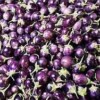
INDIA: Controversy Rages over Genetically Modified ‘Brinjal’
Scientists and activists say that but for the fact that the 'brinjal', also called 'eggplant' or 'aubergine', is native to India and a favourite on the table, the decision to allow commercial release of its genetically modified (GM) variety may have gone unremarked.PERU: On Track to Meeting Poverty Reduction Target
Peru is only one percentage point away from halving the proportion of its people living in extreme poverty, one of the Millennium Development Goals (MDGs) agreed by the international community in 2000, according to a United Nations report.LATIN AMERICA: Poor Response to Global Call Against Poverty
The creative approach of using football matches, student gatherings, shows or events indirectly related to the issue of poverty enabled Global Call to Action Against Poverty (GCAP) activists to reach a wide variety of audiences in Latin America with their message.
DEVELOPMENT: More Than a Billion Going Hungry
The global economic crisis has led to an historic increase in hunger and undernourishment in the world's poorest countries, with broad consequences for political security and stability, according to two reports released for World Food Day, observed Friday.
AGRICULTURE-MOZAMBIQUE: Anti-Poverty Campaign Targets Candidates
Antonio Machava is standing by the gate of his farm listening to election campaigners. The group of young people says their party will fight for a law to protect small farmers and create conditions for them to prosper.ECONOMY-CUBA: Cutting Subsidies to Balance the Budget
Cuban President Raúl Castro is willing to risk unpopular measures to free the state from its excessive burden of subsidies and for-free services, as part of a programme to adjust public expenditure to shrunken government revenues and balance the budget.SOUTH AFRICA: "If You Are Landless, You Are Damned"
A group of small-scale South African farmers has lodged a complaint with the South African Human Rights Commission (SAHRC) against the government, accusing the authorities of not sufficiently assisting small farmers to make a living and therefore undermining their human right to food security.SOUTH AFRICA: Addressing Water Wastage
How do you fix a leaking pipe?AGRICULTURE-ZIMBABWE: "The Rule of Law Just Isn’t There"
Agriculture used to be Zimbabwe’s economic mainstay but it has been on the decline since 2000 when the ZANU-PF government embarked on a so-called land reform programme that resulted in about 4,000 productive white farmers losing their farms, many to members of the politically connected elite.
WATER-ZIMBABWE : New Wells Protect Environment, Build Peace
Twenty years ago, Isaac Chidavaenzi would worry when his neighbours set up vegetable gardens on river banks, trying to get closer to water sources. The number of gardens on the rivers' banks has now decreased, but Chidavaenzi is even more worried.« Previous Page — Next Page »


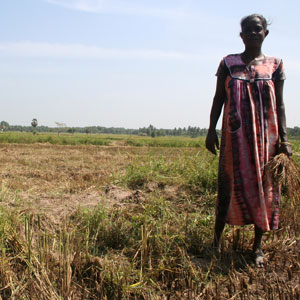
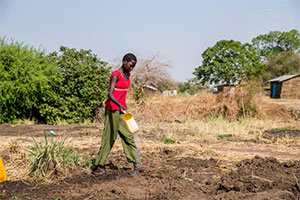 Farming on the Outskirts of Juba. Credit: UN Photo/JC McIlwaine
Promoting human and planetary health is a central focus of the United Nations, as laid out in the 2030 Sustainable Development Goals (SDGs). World hunger and unsustainable farming practices continue to be pressing concerns for the world. According to the 2025 State of Food Security and Nutrition in the World report by the Food and Agriculture Organization (FAO), 673 million people faced hunger in 2024. There are stark regional disparities, with the FAO projecting that 60% of the world population facing hunger will reside in Africa by 2030. Globally, the prevalence of food insecurity has remained consistently higher for women than men.
Sustainable and efficient national food systems are essential in preserving health, education, environmental well-being, peace, economy, and security. However, creating sustainable food systems can be a challenging endeavor, as food production takes a heavy toll on the environment. The agricultural sector accounts for a significant portion of greenhouse gases. Finding safe, sustainable, and ethical strategies to feed the world is crucial in ensuring planetary longevity. A recent initiative from 2023, the EU Regulation on Deforestation-free Products (EUDR), seeks to advocate for sustainable food systems. The main driver of deforestation is the expansion of agricultural land used to produce commodities like cattle, wood, cocoa, coffee, etc. The EUDR is part of the 2020 European Green New Deal and the EU Biodiversity Strategy for 2030 and aims to limit Europe’s consumption of products linked with deforestation by requiring that companies prove that their products are deforestation-free. Despite aiming to achieve major strides in sustainability, policies such as EUDR also raise socioeconomic concerns for targeted countries. Many emerging Latin American economies are impacted by the policy, and have raised the question of how developing countries can grapple with the tensions between economic development and advancing sustainability.
IPS has been at the forefront of providing compelling and insightful stories on communities facing hunger as well as the cost of food production. IPS uses statistics from FAO, the World Food Programme (WFP) and the International Fund for Agricultural Development (IFAD) to bring relevant and hard-hitting facts to readers. This gathering of information and data from such organizations helps bring the best stories from IPS journalists working in the different regions in consultation with experts on the ground.

The Week with IPS

NEXT STOP - SDGs
Tracking global progress towards a sustainable world
Tracking global progress towards a sustainable world