Languages
Saturday, November 21, 2026



News and Views from the Global South
Food and Agriculture
TRADE: Cloudy Skies for Doha
The most optimistic WTO trade negotiators are perhaps taking solace in the old saying "it is always darkest before the dawn."
AGRICULTURE-SOUTH AFRICA: Small Farmers Pushed to Plant GM Seed
Baphethile Mntambo has been farming organically for the past five years because she knows that avoiding chemicals will in the long-term benefit her yield. She decided not to plant genetically modified seeds because she has heard that they cannot be saved for the next season and will eventually deplete her soil. But she is not entirely sure how and why.ENVIRONMENT-SOUTH AFRICA: Western Cape Farmers Expect the Unexpected
The Western Cape region attracts millions of tourists who come to this part of South Africa to enjoy its famous Table Mountain and beaches, and to experience some of the world's best wines and deciduous fruits. But changes in the region's climate could be threatening these industries.TRADE: Realpolitik Takes Over
When a new round of world trade talks was launched in Doha almost seven years ago, there was no shortage of rhetoric about the need for global cooperation to bring tangible benefits for the poor and the vulnerable. "International trade can play a major role in the promotion of economic development and the alleviation of poverty," noted the official declaration issued by the World Trade Organisation as its conference in the Qatari capital concluded.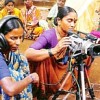
INDIA: Media Lessons From Rural Women
"We don’t know how to read or write, but we make our own films,’’ is how Narsamma, 42, a farmer from Pastapur village in Hyderabad, introduces herself and her colleagues.POLITICS-ARGENTINA: Cristina At A Crossroads
Following a major parliamentary defeat, the Argentine government is pondering whether to accept the reversal and negotiate with farmers’ associations, or to pursue its export tax policy that these organisations have rejected. Experts say this would put government institutional stability at risk.AGRICULTURE-ARGENTINA: Rival Rallies Disagree On More Than Taxes
Two major rallies took place in the Argentine capital, one for supporters of the government’s decision to increase the export tax on oilseeds, and the other for those in favour of farming associations, which have been opposing the tax measure for four months.
ECONOMY-ZIMBABWE: ‘‘Basic Commodities Have Become Luxuries’’
Business has never been this bad, said Nomathemba Nkomo.
ASIA: Rice Prices Add to Inflation Woes
In Singapore, where almost 100 percent of foodstuff is imported, the government has allowed private importers to increase buffer stocks. The Philippines, the world’s largest importer of rice, has been busy shopping for the grain from producers such as China and Pakistan.DEVELOPMENT: Live With EU's Contradictions
The European Union has "to live with" how its agricultural policies can cause hardship in poor countries, the man in charge of the bloc's development aid efforts has stated.OIL-CARIBBEAN: Petrocaribe Building ‘Anti-Crisis, Anti-Hunger Shield’
Seventeen countries in Central America and the Caribbean are to make down payments of only 40 percent on Venezuelan oil, while cooperating to expand their food supply, and calling on the North to take measures to curb speculation on futures markets, which is resulting in surging crude prices.
ENVIRONMENT: Afro-Brazilian Communities Recover Jucara Palm
The juçara, a palm tree in danger of becoming extinct due to over-exploitation of its edible heart, is beginning to recover thanks to sustainable management by the Afro-Brazilian communities of the Atlantic tropical forest, Brazil's most deforested biome.
Q&A: 'With the Right Methods, You Can Be Self-Sufficient'
The U.N. High Commission for Refugees says that in the five years since camps were established in Southern Chad for Central African refugees, U.N.-administered agriculture programs have reduced external food assistance to a minimum.AFRICA: Russia Behind China and Brazil in Building Relations
The Soviet-era connections between Russia and some African states have collapsed into low levels of economic engagement between the former partners, with the arms trade remaining the exception.DEVELOPMENT-MOZAMBIQUE: An Overly Civil Society?
Civil society organisations in Mozambique are weak, concludes a report on the state of CSOs in the country earlier this year. It only confirmed an open secret: "The involvement of civil society organisations in the fight absolute poverty is mainly as observers, listeners..."
Q&A: ‘Speculation Is Causing An Oil and Food Price Bubble’
The soaring prices of oil and food are the result of a huge new global speculative bubble, created to recoup the financial markets’ losses when the technological and real estate bubbles burst, Syrian Deputy Prime Minister for Economic Affairs Abdullah al-Dardari told IPS.GRENADA: New PM Vows to Tackle Growing Poverty
Prime Minister Dr. Keith Mitchell apparently got his numbers all wrong, and the former professor of mathematics at Howard University in the United States is joining a number of his political colleagues who have been brushed aside by the winds of change sweeping the Caribbean over the past 18 months.
AGRICULTURE-CHAD: Farmers, Herders Collide In Southern Refugee Camps
Clarisse Larlombaye was nearly ruined when a herd of cows got into her rice field one night. The tiny 900-square-meter plot, outside the U.N.-run Gondje refugee camp in lush southern Chad is the sole source of income for Larlombaye and the two other Central African refugees she shares it with.DEVELOPMENT: ‘Planet Burns While G8 Fiddles’
While the world's major industrialised nations expressed satisfaction over their three-day summit meetings that concluded Wednesday, non-governmental organisations, after some early and limited approval, were deeply disappointed with the outcome on the whole.DEVELOPMENT: Decades of Bad Policies Brewed a "Perfect Storm"
When the Cold War ended following the collapse of the Berlin Wall in 1989 and the subsequent dismantling of the Soviet Union, there was widespread political euphoria about de-militarisation, global peace, a decline in military spending and economic prosperity.
AGRICULTURE-TANZANIA: Higher Crop Prices Bring Farmers No Joy
The six-foot tall corn stalks on Kastul Baha's homestead are the envy of his pastoral village in northern Tanzania. Baha was one of the fortunate farmers this crop season with $35 to buy a package of fertilizer to apply over his half-hectare field. He expects to more than double output to 10 bags of corn compared to four bags last year.« Previous Page — Next Page »


 Farming on the Outskirts of Juba. Credit: UN Photo/JC McIlwaine
Promoting human and planetary health is a central focus of the United Nations, as laid out in the 2030 Sustainable Development Goals (SDGs). World hunger and unsustainable farming practices continue to be pressing concerns for the world. According to the 2025 State of Food Security and Nutrition in the World report by the Food and Agriculture Organization (FAO), 673 million people faced hunger in 2024. There are stark regional disparities, with the FAO projecting that 60% of the world population facing hunger will reside in Africa by 2030. Globally, the prevalence of food insecurity has remained consistently higher for women than men.
Sustainable and efficient national food systems are essential in preserving health, education, environmental well-being, peace, economy, and security. However, creating sustainable food systems can be a challenging endeavor, as food production takes a heavy toll on the environment. The agricultural sector accounts for a significant portion of greenhouse gases. Finding safe, sustainable, and ethical strategies to feed the world is crucial in ensuring planetary longevity. A recent initiative from 2023, the EU Regulation on Deforestation-free Products (EUDR), seeks to advocate for sustainable food systems. The main driver of deforestation is the expansion of agricultural land used to produce commodities like cattle, wood, cocoa, coffee, etc. The EUDR is part of the 2020 European Green New Deal and the EU Biodiversity Strategy for 2030 and aims to limit Europe’s consumption of products linked with deforestation by requiring that companies prove that their products are deforestation-free. Despite aiming to achieve major strides in sustainability, policies such as EUDR also raise socioeconomic concerns for targeted countries. Many emerging Latin American economies are impacted by the policy, and have raised the question of how developing countries can grapple with the tensions between economic development and advancing sustainability.
IPS has been at the forefront of providing compelling and insightful stories on communities facing hunger as well as the cost of food production. IPS uses statistics from FAO, the World Food Programme (WFP) and the International Fund for Agricultural Development (IFAD) to bring relevant and hard-hitting facts to readers. This gathering of information and data from such organizations helps bring the best stories from IPS journalists working in the different regions in consultation with experts on the ground.

The Week with IPS

NEXT STOP - SDGs
Tracking global progress towards a sustainable world
Tracking global progress towards a sustainable world

