Languages
Thursday, October 22, 2026



News and Views from the Global South
Food and Agriculture

Trade Liberalisation Never Lifted All Boats
President Trump has blamed trade liberalisation advocated by globalists for US deindustrialisation. Instead, his own weaponisation of economic policies, instruments and institutions purport to ‘make America great again’ (MAGA).
Dual Crises in Eastern DRC as Ebola Surges and Hunger Deepens
The Democratic Republic of Congo (DRC) is battling the fastest-growing Ebola outbreak on record, with United Nations officials warning that hunger is actively undermining efforts to contain the spread.
Preparing Agriculture for a New Era of Extreme Weather
Recently, the Food and Agriculture Organization of the United Nations put out an alert, warning countries around the world about an impending new El Niño phase that is expected to significantly increase the likelihood of drought, heat waves, storms, and flooding and pose major risks to agriculture across multiple regions.
Sudan’s War Economy: Funded by Gum Arabic and Gold
In the three years since the outbreak of the Sudanese Civil War, the humanitarian crisis has deteriorated significantly, with the United Nations underscoring a blatant disregard for international humanitarian law among warring parties. This includes the deliberate targeting of civilians in residential areas, widespread sexual violence, and attacks on critical infrastructure that have hindered aid efforts and pushed communities to the brink of collapse. To manage rising military expenses, the warring parties have increasingly relied on the exploitation of trade routes and territories, prompting humanitarian experts to express concern about a persistent, self-sustaining “war economy.”
World Hunger Is Falling – We Know How To Keep It That Way
Here is a fact that should interrupt the world’s drumbeat of bad news: Hunger fell again in 2025.
Hunger in Latin America Keeps Falling – Now Healthy Diets Must Become Affordable
Hunger is falling across most of Latin America and the Caribbean. The region’s next challenge is harder: ensuring that everyone can afford a healthy diet, not merely enough calories to survive.
Food and Transport Costs through Strait of Hormuz Remain High, Burdening Vulnerable Economies
Prior to the latest round of hostilities between the United States and Iran, freight traffic had been increasing in the Strait of Hormuz, and negotiations were underway for a new agreement to fully restore trade through this channel.
Global AI Governance Cannot Wait As the Digital Divide Widens
Throughout July 2026, various United Nations (UN) bodies and global experts have underscored the need for increased comprehensive artificial intelligence (AI) governance. Although AI yields significant potential gains for global development, persistent structural barriers continue to impede equitable access and deepen the digital divide.
Renewed Hostilities in the Strait of Hormuz Threaten to Compound Global Supply Chain Costs
A continuation of hostilities within the Strait of Hormuz is once again threatening one of the world's most critical supply chain arteries, posing another wave of disruption which could choke the global energy, shipping and commodity markets. With roughly a quarter of global seaborne oil trade transiting through the Strait, alongside significant flows of liquefied natural gas and fertilizers, further constraints on commercial traffic could send new cost pressures cascading through supply chains that have yet to absorb the full effects of the earlier conflict.
Full Effects of Strait of Hormuz Disruption May Not Be Felt Until Second Half of 2026
The full economic impact of the disruptions in the Strait of Hormuz may not become clear until the second half of 2026, warns the United Nations Conference on Trade and Development (UNCTAD).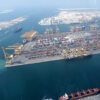
Arab Regions Remain the Most Underrepresented in the Global Trade System
Despite the importance of international trade as an engine for economic growth and development, only fourteen of the twenty-two Arab states are members of the World Trade Organization (WTO). The remaining Arab states risk missing out on opportunities for greater integration into the global economy and the multilateral trading system facilitated by the WTO.
Why Pastoral Production Requires Regional Coordination, Harmonised Policy
At the 64th sessions of the Subsidiary Bodies (SB64) under the UNFCCC in Bonn, Germany, the Local Communities and Indigenous Peoples Platform (LCIPP) underscored the importance of ethically and equitably incorporating indigenous values and knowledge and local knowledge systems such as pastoralism into climate policies and actions ahead of the 31st Conference of Parties on climate change (COP31).
Invasive Prickly Pear Turned into Food, Clean Energy Source
An international academic partnership is helping turn one of Laikipia County’s most destructive and invasive plants, the prickly pear cactus (Opuntia stricta), into a source of food security and clean energy while also helping end perennial resource conflict in the region.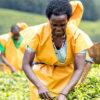
Feeding Africa: Women Farmers Key to Ending Hunger
As FAO coordinates the implementation of the International Year of the Woman Farmer 2026, gender team leader Tacko Ndiaye discusses why investing in Africa’s women farmers is essential for food security, economic growth and creating more resilient agrifood systems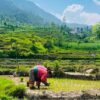
Dry Monsoon in South Asia: Looming Fears of Agricultural Loss, Extreme Heat, and Disaster
Monsoon season in South Asia, including Nepal, is a period of frequent rainfall, extreme heat, and a busy time of the year for farmers. Most farmers in Nepal depend on monsoon rain to plant paddey, the main source of food.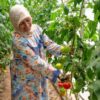
Smart Farming Is Not the Future. It Is Already Here
Farmers today are producing food under pressures that would have been unimaginable to previous generations. Input costs are rising and supply chains are unreliable. Water is scarcer. Weather is less predictable. And for a growing number of farmers — in Sudan, in Ukraine, in Myanmar, in Gaza — the challenge is producing food at all, in the middle of active conflict. These are not marginal conditions. They describe the reality facing hundreds of millions of people who grow the food the world depends on.
Universities Join Hands to Enhance Agroforestry Research for Mitigating Climate Change
A team of universities, led by Addis Ababa University, has joined forces to implement a four-year Intra-Africa academic mobility project aimed at strengthening agroforestry research and education for climate change mitigation.
The Forgotten Triumph of Rinderpest Eradication, and the Cost of Ignoring Its Lesson
Animal disease is no longer a distant concern for farmers and veterinarians alone. It is increasingly visible in household budgets: global egg prices surged more than 60% during recent bird flu outbreaks. In South Africa, foot-and-mouth disease pushed beef prices up by 34%. These are not isolated fluctuations in price. They are reminders that when prevention falls short, families, farmers and food systems all pay the price.
In a Post-Aid World, Investing in Sustainable Livestock Farming Is an Investment in Global Stability
Smallholder farmers in Africa and Asia are likely to still be reeling from the fuel and fertilizer crisis caused by conflict in the Middle East when what forecasters expect to be a “super” El Niño arrives later this year.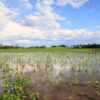
The Overlooked Impact of Flooding on Crops, Soils and Food Systems
Across the United States, record-breaking extreme weather events have already occurred, including severe storms and Tornadoes in the State of Illinois to flooding in Texas, southern Wisconsin and the South. Throughout the summer and the remainder of the growing season, additional severe weather events will come through, including several hurricanes and tropical storms beginning with Tropical Storm Arthur.
From Rotten Tomatoes to AI: Ugandan Commonwealth Youth Award Winner Takes Aim at Hunger Across Africa
Before anyone called her an innovator, before artificial intelligence entered the conversation, before solar-powered cold rooms, before the language of sustainable development, Shifra Ainomugisha knew food loss in its painful form.« Previous Page — Next Page »





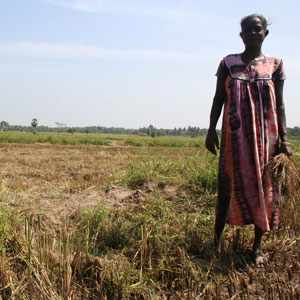
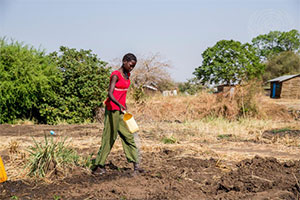 Farming on the Outskirts of Juba. Credit: UN Photo/JC McIlwaine
Promoting human and planetary health is a central focus of the United Nations, as laid out in the 2030 Sustainable Development Goals (SDGs). World hunger and unsustainable farming practices continue to be pressing concerns for the world. According to the 2025 State of Food Security and Nutrition in the World report by the Food and Agriculture Organization (FAO), 673 million people faced hunger in 2024. There are stark regional disparities, with the FAO projecting that 60% of the world population facing hunger will reside in Africa by 2030. Globally, the prevalence of food insecurity has remained consistently higher for women than men.
Sustainable and efficient national food systems are essential in preserving health, education, environmental well-being, peace, economy, and security. However, creating sustainable food systems can be a challenging endeavor, as food production takes a heavy toll on the environment. The agricultural sector accounts for a significant portion of greenhouse gases. Finding safe, sustainable, and ethical strategies to feed the world is crucial in ensuring planetary longevity. A recent initiative from 2023, the EU Regulation on Deforestation-free Products (EUDR), seeks to advocate for sustainable food systems. The main driver of deforestation is the expansion of agricultural land used to produce commodities like cattle, wood, cocoa, coffee, etc. The EUDR is part of the 2020 European Green New Deal and the EU Biodiversity Strategy for 2030 and aims to limit Europe’s consumption of products linked with deforestation by requiring that companies prove that their products are deforestation-free. Despite aiming to achieve major strides in sustainability, policies such as EUDR also raise socioeconomic concerns for targeted countries. Many emerging Latin American economies are impacted by the policy, and have raised the question of how developing countries can grapple with the tensions between economic development and advancing sustainability.
IPS has been at the forefront of providing compelling and insightful stories on communities facing hunger as well as the cost of food production. IPS uses statistics from FAO, the World Food Programme (WFP) and the International Fund for Agricultural Development (IFAD) to bring relevant and hard-hitting facts to readers. This gathering of information and data from such organizations helps bring the best stories from IPS journalists working in the different regions in consultation with experts on the ground.

The Week with IPS

NEXT STOP - SDGs
Tracking global progress towards a sustainable world
Tracking global progress towards a sustainable world