Languages
Saturday, October 10, 2026



News and Views from the Global South
Food and Agriculture

How Households Increased Food Waste is Feeding Climate Change
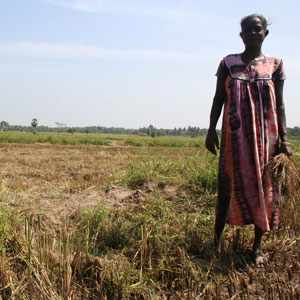
Twenty percent of all food bought by households, retailers, restaurants and other food services in 54 countries around the world was thrown away in 2019 -- contributing to some 931 million tonnes of food waste and feeding climate change.
International Women’s Day, 2021
Removing Barriers to Women’s Leading Role in African Agriculture
Africa’s population will double by 2050 if growth rates continue their trajectory, but the creation of jobs is not keeping pace, with up to five times more young people seeking employment each year as there are new posts to fill. And, on top of this, the COVID pandemic is plunging Africa into its first recession in 25 years.

What Role Can South-South Cooperation Play in Post COVID-19 Recovery?
Five years ago, at the 70th anniversary of the foundation of the United Nations, world leaders adopted the ambitious Agenda 2030 for Sustainable Development. The Agenda was to be accomplished through the achievement of 17 Sustainable Development Goals by 2030: eradicating poverty, ending hunger, addressing climate change – just to name a few.
Protests by Indian Farmers Spread Panic in Image-Conscious Modi Government
Indian Prime Minister Narendra Modi does not really like attending parliament – except on special occasions. Budget session was one such occasion. Unsurprisingly, he tried to reach out to farmers still protesting at the border of the capital Delhi, against his government’s new farm laws.
Biden-Harris Administration Committed to Building Resilient Agricultural Supply Chains
The White House, under the Presidency of Joe Biden just released an Executive Order on America’s Supply Chains stating the country needs to have resilient, diverse and secure supply chains to ensure economic prosperity and national security. Among the acknowledged threats that can reduce the resilience of America’s supply chains include climate change and extreme weather events.
Mexico to Ban Glyphosate, GM Corn
Presidential Decree Comes Despite Intense Pressure from Industry, U.S. Authorities
Mexican president Andrés Manuel López Obrador quietly rocked the agribusiness world with his New Year’s Eve decree to phase out use of the herbicide glyphosate and the cultivation of genetically modified corn. His administration sent an even stronger aftershock two weeks later, clarifying that the government would also phase out GM corn imports in three years and the ban would include not just corn for human consumption but yellow corn destined primarily for livestock. Under NAFTA, the United States has seen a 400% increase in corn exports to Mexico, the vast majority genetically modified yellow dent corn.
Natural Enemies: How Mango Farmers are Tackling an Invasive Fruit Fly Pest
Every harvest season, Susan Zinoro, a mango farmer from Mutoko, Zimbabwe, buries half the mangoes she’s grown that season. They have already started rotting either on the tree or have fallen to the ground before harvest. It’s a difficult task for Zinoro because she knows she is throwing away food and income meant for her family.
The Boon and Bane of LDC Graduation: The Bangladesh Experience
Bangladeshis at the present time share a modicum of justifiable pride in the fact that the world merits this country worth watching in terms of its economic potentials. To my mind , we have reached this stage for the following reasons: First, effective utilization of early foreign assistance; second a steady ,albeit sustained, move away from a near -socialistic to an open and liberal economy; third , a shift from agriculture to manufacturing as land-space shrank to accommodate urbanization; fourth , an unleashing of remarkable entrepreneurial spirit among private sector captains of industry, as evidenced in the Ready Made Garments industry: fifth, the prevalence of a vibrant civil society intellectually aiding the social transformation with its focus on health, education, and gender issues: and finally ,a long period of political stability notwithstanding the traditional predilections of Bengali socio-political activism.
Successful Crop Innovation Is Mitigating Climate Crisis Impact in Africa
17 February - African smallholder farmers have no choice but to adapt to climate change: 2020 was the second hottest year on record, while prolonged droughts and explosive floods are directly threatening the livelihoods of millions. By the 2030s, lack of rainfall and rising temperatures could render 40 percent of Africa’s maize-growing area unsuitable for climate-vulnerable varieties grown by farmers, while maize remains the preferred and affordable staple food for millions of Africans who survive on less than a few dollars of income a day.
Climate Change & Policy Making in Nepal
Raju Pandit Chhetri is one of the most acclaimed climate change policy experts in Nepal and South Asia. As Director of the Prakiriti Resource Centre, an action focused think tank based in Kathmandu, Pandit Cheetri shares his opinion on the latest climate focused policies being undertaken by the Government of Nepal, especially the 2nd Nationally Determined Contribution NDC that was recently submitted by the Government.
Food Systems Need to Change to Promote Healthy Choices and Combat Obesity
COVID-19 has had a devastating impact on people with obesity and noncommunicable diseases such as diabetes. The pandemic has underlined the importance of the food environment and healthy food intake. It has shown the urgent need for effective policies to make sure that everyone can get enough nutritious food – and particularly in sub-Saharan Africa.
Cuban Farm Explores Sustainability by Hand
Most beginnings are rocky and sometimes the obstacles seem insurmountable, before they are finally overcome. This was certainly the case for the Finca Marta, a farm in Cuba that had to begin by digging a well in search of water and with the hard-scrabble work of clearing an arid, stony and overgrown plot of land.
60 Days on, India’s Biggest Farmers’ Protest Shows No Sign of Weakening
“This road is my home now and it will decide my future,” Sukhvinder Singh, a 27-year old farmer from the Moga district of Punjab, tells IPS. Last November, weeks after the government of India passed three farm bills he felt were anti-farmer, Singh travelled to Singhu, a village near Delhi, to demand the laws be repealed. Since then, he has been living in a tent he shares with five other fellow farmer-protesters.
Poor Lives Matter, but Less
Current development fads fetishize data, ostensibly for ‘evidence-based policy-making’: if not measured, it will not matter. So, forget about getting financial resources for your work, programmes and projects, no matter how beneficial, significant or desperately needed.
“Teach Us How to Become Carpenters” – South Sudanese Want to Shape Their Future
Located in Jonglei state, one of the most underdeveloped regions of South Sudan, Likuangole is a town badly hit by floods and often battered by conflict. Despite the lack of secondary schools and industry, its residents aspire to transform their lives. But real investment is needed to spur development.
Dengue—an Epidemic Within a Pandemic in Peru
While the world is grappling with the third wave of the COVID-19 pandemic, Peru is still dealing with an epidemic that it has not been able to control—the mosquito-borne viral disease known as dengue.
Can the World Tackle the Food Insecurity Crisis in 2021?
The COVID-19 pandemic has exacerbated food insecurity and disrupted food systems and food supply chains in developed and developing countries alike. In the United States, millions of Americans struggle to put food on the table. Around the world, according to the United Nations over 270 million are hungry, and this is expected to continue to increase.
Learning From Indigenous Peoples: My Morocco Diary
Once a year, on 9 August, the International Day of the World’s Indigenous Peoples is commemorated, celebrating their unique culture and knowledge. This is done mostly from a distance, from our homes in (nominally) developed countries. But are we as developed as we pretend to be? On this question, I reflected for a while, still remembering a special and personal experience of having spent several days with an indigenous Berber family in Morocco.
Stand Tall, UN Humanitarians
Most people around the world were glad to see the back of 2020: From the devastating bushfires in Australia to the plagues of locusts through East Africa stretching across Arabia to Pakistan, extreme weather, melting ice sheets at the poles, and Covid-19 that still engulfs the globe.
This Is Not a Goodbye, Kenya – Asante na Kwaheri ya Kuonana
Happy New Year, Kenya. Several milestones in my personal and professional life have made Kenya a cherished place for me. I started my UNICEF career in Rumbek, South Sudan in June 2000, and my rest and recuperation breaks were in Nairobi. In fact Kenya was the first African country I had ever visited and, frankly, it was love at first sight.

Mining giant Rio Tinto Face Environmental, Human Rights Complaint in Papua New Guinea
Local communities in the vicinity of the abandoned Panguna copper mine, have taken decisive action to hold the global mining multinational, Rio Tinto, accountable for alleged environmental and human rights violations during the mine’s operations between 1972 and 1989.« Previous Page — Next Page »





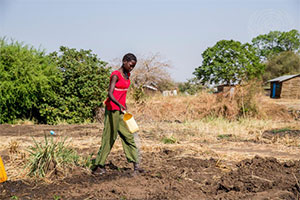 Farming on the Outskirts of Juba. Credit: UN Photo/JC McIlwaine
Promoting human and planetary health is a central focus of the United Nations, as laid out in the 2030 Sustainable Development Goals (SDGs). World hunger and unsustainable farming practices continue to be pressing concerns for the world. According to the 2025 State of Food Security and Nutrition in the World report by the Food and Agriculture Organization (FAO), 673 million people faced hunger in 2024. There are stark regional disparities, with the FAO projecting that 60% of the world population facing hunger will reside in Africa by 2030. Globally, the prevalence of food insecurity has remained consistently higher for women than men.
Sustainable and efficient national food systems are essential in preserving health, education, environmental well-being, peace, economy, and security. However, creating sustainable food systems can be a challenging endeavor, as food production takes a heavy toll on the environment. The agricultural sector accounts for a significant portion of greenhouse gases. Finding safe, sustainable, and ethical strategies to feed the world is crucial in ensuring planetary longevity. A recent initiative from 2023, the EU Regulation on Deforestation-free Products (EUDR), seeks to advocate for sustainable food systems. The main driver of deforestation is the expansion of agricultural land used to produce commodities like cattle, wood, cocoa, coffee, etc. The EUDR is part of the 2020 European Green New Deal and the EU Biodiversity Strategy for 2030 and aims to limit Europe’s consumption of products linked with deforestation by requiring that companies prove that their products are deforestation-free. Despite aiming to achieve major strides in sustainability, policies such as EUDR also raise socioeconomic concerns for targeted countries. Many emerging Latin American economies are impacted by the policy, and have raised the question of how developing countries can grapple with the tensions between economic development and advancing sustainability.
IPS has been at the forefront of providing compelling and insightful stories on communities facing hunger as well as the cost of food production. IPS uses statistics from FAO, the World Food Programme (WFP) and the International Fund for Agricultural Development (IFAD) to bring relevant and hard-hitting facts to readers. This gathering of information and data from such organizations helps bring the best stories from IPS journalists working in the different regions in consultation with experts on the ground.

The Week with IPS

NEXT STOP - SDGs
Tracking global progress towards a sustainable world
Tracking global progress towards a sustainable world