Languages
Friday, November 13, 2026



News and Views from the Global South
Food and Agriculture

Conflicts Force Up Global Hunger Levels
Largely driven by conflict, the number of hungry people has dramatically increased around the world, reversing decades of progress, according to a new report.
Celebrations Herald a New Set of Hurdles for Bangladesh
Bangladesh’s great strides in human development were widely celebrated this month, although they come at the potential cost of Western trade benefits that have helped underpin the nation’s export success for decades.
High and Dry: Can We Fix the World’s Water Crisis?
April 12 is expected to be the infamous “Day Zero” in South Africa’s second largest city of Cape Town, a tourist hub which attracts millions of visitors every year.
Water Scarcity: India’s Silent Crisis
As Cape Town inches towards ‘Zero Hour’ set for July 15, 2018, the real threat of water scarcity is finally hitting millions of people worldwide. For on that day, the South African city's 3.78 million citizens -- rich and poor, young and old, men and women -- will be forced to queue up with their jerry cans at public outlets for their quota of 25 litres of water per day.
How Can the Large-Scale Poaching in the South Atlantic Be Stopped?
The capture of a Spanish vessel illegally fishing in the so-called Argentine Sea made headlines, once again, although it is not news that hundreds of boats regularly pillage the South Atlantic, taking advantage of the lack of regulations and controls.
Want to Learn How to Save a Planet?
The agricultural sector in the Mediterranean Area is facing tough challenges and incredible opportunities at the same time: beyond a shadow of doubt, the farming sector is experiencing a critical time of change and transition towards a new era.
Forest Communities Join Forces to Fight Land Degradation in Mexico
Forest communities play a fundamental role in Mexico in combating land degradation, but they need more support to that end.
Three Things Cape Town Teaches Us About Managing Water
Cape Town has always been water insecure. The city has done some things well to prepare for a situation like this, but if the drought has shown us something, it is that you need to get everything right and have some luck on top to get out unscathed when the unexpected actually happens.
Rural Women Are Essential to the Struggle Against Hunger
Adelaida Marca, an Aymaran indigenous woman who produces premium oregano in Socoroma, in the foothills of the Andes in the far north of Chile, embodies the recovery of heirloom seeds, and is a representative of a workforce that supports thousands of people and of a future marked by greater gender equality.
A Long Way Still to Achieving Gender Equality: International Women’s Day
International Women's Day is a call to celebrate the extraordinary achievements of women and a reminder that globally, we are a long way from achieving gender equality.
Costa Rica Studies Its Land, to Keep from Losing It
Donald Vásquez points to the soil on a farm located in one of the most degraded basins on the Pacific Ocean side of Costa Rica. Below, where he points with his index finger, there is a huge layer of white earth, with dozens of bare coffee plants struggling to produce beans in the next harvest.
Dung-Eating Earthworms Restore Soil Nutrients in Bangladesh
In Kaliganj village, 20 kilometres south of Rangpur city in Bangladesh, small farmers are turning to vermicomposting after crop yields started dropping. The problem was that soil fertility eroded due to organic nutrient depletion.
For the Rural Poor of Peru, the Social Agenda is Far Away
“The day will come when people do not have to go to the cities to overcome poverty," says Elmer Pinares, mayor of an Andean highlands municipality in Cuzco, in southern Peru, where malnutrition and lack of support for subsistence farming are among the main problems.
New Technology Alone Won’t Halt Aflatoxin Menace, Experts Warn
In the absence of concerted efforts to raise awareness on the dangers of aflatoxin to humans and domestic animals, advances in technology for early detection of aflatoxin in cereals and seeds such as maize will come to naught, experts warn.
Latin America Focuses on Attacking Pockets of Rural Poverty
Identifying territories where rural poverty is most entrenched in Latin America and the Caribbean to apply new tools and innovative policies to combat hunger is the new strategy that will be discussed at a ministerial meeting to be held in early March.
Village Savings: Helping Small Farmers Weather Climate Shocks
In the past, Lameck Sibukale only knew savings in the form of rearing chickens, goats and more importantly, cattle—a long cherished cultural heritage of the Tonga-speaking people of southern Zambia.
Survival of Indigenous Tribes in Bangladesh Starts at School
Just before sundown on Jan. 30, a group of women day labourers from the Shantal indigenous community are in a rush to wind up their work harvesting potatoes in a field in the village of Boldipukur, some 15 km away from Rangpur district in northern Bangladesh.
Healthy Nutrition Spreads in El Salvador’s Schools
Eating healthy and nutritious food in schools in El Salvador is an effort that went from a pilot plan to a well-entrenched programme that has now taken off.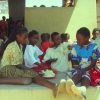
The Potential of School Meals to Change the Nutrition Landscape in Africa
Tackling malnutrition is essential for the realisation of the Sustainable Development Goals by 2030, and will be critical for the African continent to reach its full development potential.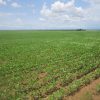
Latin America Makes Headway Against Land Degradation
Two-thirds of the 33 countries of Latin America and the Caribbean have already submitted or are preparing to submit to the United Nations their land degradation goals, to combat a problem that threatens agriculture and the lives of their people.
Women on the Front Lines of Halting Deforestation
In Zimbabwe, the bulk of rural communities and urban poor still get their energy supplies from the forests, leading to deforestation and land degradation.« Previous Page — Next Page »


 Farming on the Outskirts of Juba. Credit: UN Photo/JC McIlwaine
Promoting human and planetary health is a central focus of the United Nations, as laid out in the 2030 Sustainable Development Goals (SDGs). World hunger and unsustainable farming practices continue to be pressing concerns for the world. According to the 2025 State of Food Security and Nutrition in the World report by the Food and Agriculture Organization (FAO), 673 million people faced hunger in 2024. There are stark regional disparities, with the FAO projecting that 60% of the world population facing hunger will reside in Africa by 2030. Globally, the prevalence of food insecurity has remained consistently higher for women than men.
Sustainable and efficient national food systems are essential in preserving health, education, environmental well-being, peace, economy, and security. However, creating sustainable food systems can be a challenging endeavor, as food production takes a heavy toll on the environment. The agricultural sector accounts for a significant portion of greenhouse gases. Finding safe, sustainable, and ethical strategies to feed the world is crucial in ensuring planetary longevity. A recent initiative from 2023, the EU Regulation on Deforestation-free Products (EUDR), seeks to advocate for sustainable food systems. The main driver of deforestation is the expansion of agricultural land used to produce commodities like cattle, wood, cocoa, coffee, etc. The EUDR is part of the 2020 European Green New Deal and the EU Biodiversity Strategy for 2030 and aims to limit Europe’s consumption of products linked with deforestation by requiring that companies prove that their products are deforestation-free. Despite aiming to achieve major strides in sustainability, policies such as EUDR also raise socioeconomic concerns for targeted countries. Many emerging Latin American economies are impacted by the policy, and have raised the question of how developing countries can grapple with the tensions between economic development and advancing sustainability.
IPS has been at the forefront of providing compelling and insightful stories on communities facing hunger as well as the cost of food production. IPS uses statistics from FAO, the World Food Programme (WFP) and the International Fund for Agricultural Development (IFAD) to bring relevant and hard-hitting facts to readers. This gathering of information and data from such organizations helps bring the best stories from IPS journalists working in the different regions in consultation with experts on the ground.

The Week with IPS

NEXT STOP - SDGs
Tracking global progress towards a sustainable world
Tracking global progress towards a sustainable world

