Languages
Friday, October 23, 2026



News and Views from the Global South
COVID-19

US Policies Slowing World Economy
Few policymakers ever claim credit for causing stagnation and recessions. Yet, they do so all the time, justifying their actions by some supposedly higher purpose.
The Year of Debt Distress and Damaging Development Trade-Off
As the year 2022 drew to an end, the United Nations Conference on Trade and Development (UNCTAD) warned, “Developing countries face ‘impossible trade-off’ on debt”, that spiralling debt in low and middle-income countries (LMICs) has compromised their chances of sustainable development.
New Business Technology Transfer Provides Benefits for African Pharmaceutical Industry
A few months after German biotechnology company BioNTech announced the establishment of the first-ever local vaccine manufacturing in Rwanda, experts believe the successful implementation of such initiatives across the continent will require countries to acquire know-how while encouraging potential industrial partners in the pharmaceutical industry.
The Year of Inflation Exposes Dogma and Class Bias
Inflation worries topped Ipsos’s What Worries the World survey in 2022 overtaking COVID concerns. The return of inflation caught major central banks, e.g., the US Federal Reserve (Fed), Bank of England, European Central Bank “off guard”. The persistence of inflation also surprised the International Monetary Fund (IMF). The return of inflation and its persistence exposed the poverty of the economics profession, unable to agree on its causes and required policy responses. It also exposed the profession’s anti-working class biases.
More Austerity in 2023 Will Fuel Protests
This week world leaders meet in Davos to discuss cooperation to address multiple crises, from COVID-19 and escalating inflation to slowing economic growth, debt distress and climate shocks.
China: From Zero-Covid to Zero-Control
Three years after the coronavirus first emerged in the Chinese city of Wuhan, the Chinese government began in December to abruptly scrap its harsh containment policy known as "zero-Covid."
Africa’s Maternal Deaths Need Urgent Action to Meet SDG Goals
As the effects of COVID-19 on Africa’s health sector become clearer, it looks the continent will need to take urgent steps to overcome the disruptions suffered in the breakdown in antenatal and postnatal care for women and newborns and neonatal intensive care units. The pandemic brought some setbacks to the gains achieved in maternal mortality over the past decade.
Living Another Year Dangerously
2022 has been a year of great uncertainty when it seemed the world perilously reached the brink of self-destruction – be it human-induced climate change or military conflict. Welcoming 2022, we had enough reasons to be optimistic; but it was another ‘year of living dangerously’ – Tahun vivere pericoloso in the words of Soekarno, or an annus horribilis in the words of the late Queen Elizabeth.
War, Famine, Disease, Disasters – 2022 – a Year Staring at Apocalypse
A year that started with Russia’s invasion of Ukraine and is ending with famine in Africa, while still spreading death and misery through an enduring pandemic and a deteriorating climate crisis -- 2022 has been an apocalyptic warning of the frailty of our planet and the woeful shortcomings of humankind.
Thoughts for 2023: Promoting Innovation & New Technologies
Promoting innovation and technology to promote inclusive development means using new technologies to enhance equal access to services, eliminate discrimination, increase transparency, and create a stable and just future for all – especially the most vulnerable and marginalized.
Europe and the Refugee Crisis: It’s all About Tackling Racism & Discrimination
 In 2019, when the President-elect of the European Union (EU) Ursula von der Leyen had presented a list for her soon-to-be European Commission, and on that list was a portfolio called “Protecting the European way of life”, a lot of noise was made questioning what that meant. “Protection” was later changed to the “Promotion” of the European Way of Life. It’s been over three years since this very controversial, much debated and widely criticised portfolio as many continue to question what uniquely is the ‘European way of life’?
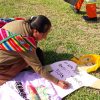
Pandemic Aggravated Violence against Women in Latin America
Violence against women has failed to decline in the Latin American region after the sharp rise recorded during the COVID-19 pandemic, while preventing the causes of such violence remains a major challenge.
Developing Countries Need Monetary Financing
Developing countries have long been told to avoid borrowing from central banks (CBs) to finance government spending. Many have even legislated against CB financing of fiscal expenditure. Central bank fiscal financing Such laws are supposedly needed to curb inflation – below 5%, if not 2% – to accelerate growth. These arrangements have also constrained a potential CB developmental role and government ability to respond better to crises.
A New Digitalisation Effort in Bangladesh Could Change Community Health Globally
The digital transformation of thousands of community health workers in Bangladesh has dramatically enhanced their work, while enabling the creation and tracking of a healthcare database covering 64 million people. The resulting model holds remarkable promise for the health of the world, especially in the context of evolving pandemics.
Macroeconomic Policy Coordination More One-Sided, Ineffective
Widespread adverse reactions to the UK government’s recent ‘mini-budget’ forced new Prime Minister Liz Truss to resign. The episode highlighted problems of macroeconomic policy coordination and the interests involved.
Public Development Banks Can’t Drag Their Feet When It Comes to Building a Sustainable Future
A coalition of civil society organisations is demanding public development banks (PDBs) to take radical and innovative steps to tackle human rights violations and environmental destruction. No project funded by PDBs should come at the expenses of vulnerable groups, the environment and collective liberties, but should instead embody the voices of communities, democratic values and environmental justice.
With Planning Aging Population Could Result in a Silver Dividend
An aging population needn’t be a burden, experts told Parliamentarians at a conference co-hosted by UNFPA Asia Pacific Regional Office and the Asian Population and Development Association (APDA).
Reform Needed As Big Business, Not Vulnerable Communities Benefit from Post-Pandemic Support
Governments and international financial institutions must adopt new ways of providing post-pandemic support, say campaigners after a report found that in many poorer countries, big business benefitted most from Covid-19 recovery funds. At the same time, vulnerable communities have been “left behind.”
How to Get on Track to Eradicate Extreme Poverty
As we approach 2030, the Sustainable Development Goals look harder than ever to achieve. Shocks to the global economy caused by climate change, COVID-19, and conflict threaten humanity's survival. For the most vulnerable, trends are moving in the wrong direction with an additional 75 to 95 million people now living in extreme poverty compared to pre-pandemic World Bank projections. By the end of this year more than 657 million people will still be living in extreme poverty substantially more than in 2018.
Education Cannot Wait Interviews Sigrid van Aken, CEO Novamedia/Postcode Lottery Group
Sigrid van Aken is the CEO of Novamedia/Postcode Lottery Group, a private company with a social purpose, that brings together business and ideals. It sets up and operates Postcode Lotteries worldwide to raise funds for charity. With a lucky winning postcode (zipcode), neighbours win together. At the same time, thanks to these player communities, vital funding is raised for charities and good causes (yearly €825 million), making the Postcode Lottery Group the 3rd largest private charity donor in the world after the Bill & Melinda Gates Foundation and the Wellcome Trust.

United We Stand to Achieve Sustainable Development
The world today faces a future that is in peril. Our challenges have become more complex and interconnected, as we see the impacts of the COVID-19 pandemic, an uneven economic recovery, a climate emergency, growing inequalities, and an increase in conflicts globally. This year also marks a grim milestone, with over 100 million people forcibly displaced.« Previous Page — Next Page »





The Week with IPS

NEXT STOP - SDGs
Tracking global progress towards a sustainable world
Tracking global progress towards a sustainable world
