Languages
Thursday, November 12, 2026



News and Views from the Global South
Health

Global Campaign to Smoke Out Tobacco Firms from UN Body
The world’s tobacco companies – which have been widely ostracized in the UN system – may be ousted from one of their last fortified strongholds in the United Nations: the International Labour Organization (ILO).
An Inequality Beyond Wealth: Gaps in Women’s Health
While many often focus on wealth disparities, economic inequality is often a symptom and cause of other inequalities including women’s access to sexual and reproductive health.
Driven to Extremes–How Poverty Fuels Extremism, and How to Help Africa’s Youth
Poverty is a blight, and one that disproportionately affects sub-Saharan Africa. It is a vast and complex issue whose tentacles reach into many areas, including climate change, sustainable development and–crucially–global security. The link between poverty and violent extremism is compelling, and means that if we want to address extremism, we must fight inequality too.
Land Settlement Empowers: Bangladesh Sets an Example
History was made for 400 landless families in the remote char lands of Noakhali district. On 4th October, they all received land titles from the government for which they had waited for over two decades. In Bangladesh, as in other countries, the title is a permanent legal ownership document.
Rohingya Refugee Women Bring Stories of Unspeakable Violence
Yasmin, 26, holds her 10-day-old baby, who she gave birth to in a crowded refugee camp in Cox’s Bazar, a southeastern district bordering Myanmar.
Searching for a Doctor at 3,000 Metres High
Good healthcare can be hard to get – particularly when one lives on top of a mountain. The road to Porcón in the Cajamarca region of Peru, therefore, is as breathtaking as it is sobering. With every step further into its isolated natural beauty, a group of volunteers sent to deliver healthcare essentials are reminded how long the trek would be in an emergency.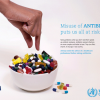
The World Is Running Out of Much Needed New Antibiotics
The world is running out of new antibiotics to combat the growing threat of antimicrobial resistance, a new specialised report warns ahead of this year's World Antibiotic Awareness Week, adding that most of the drugs currently in the clinical pipeline are modifications of existing classes of antibiotics and are only short-term solutions.
Making an Economic Case for Climate Action
Having faced a year of record temperatures and devastating hurricanes, the United States stands more to lose if it doesn't take steps to reduce the risk and impact of climate change, according to a new report.
Non-violence and lasting peace are key to secure the long-term stability of the Arab region
The Chairman of the Geneva Centre Dr. Hanif Hassan Ali Al Qassim is calling on the international community to address the surge of extremist violence exacerbating the volatile security situation in the Arab region. This appeal was made by Dr. Al Qassim in relation to the commemoration of the 2017 International Day of Non-Violence observed on 2 October 2017.
Falling off the health-care radar
Care for the elderly needs to be better targeted by the health system and social networks. The National Health Policy (NHP), 2017 is unable to see the wood for the trees. Life and death questions are dealt with perfunctorily or simply overlooked. For example, it overlooks the rapid rise in the share of the old (60 years or more), and associated morbidities, especially sharply rising non-communicable diseases (NCDs) and disabilities. With rising age, numerous physiological changes occur and the risk of chronic diseases rises. The co-occurrence of chronic diseases and disability elevates the risk of mortality.
Philanthropists Join Forces to Fund Africa’s Cash-Strapped Health Sector
In the 2017 World Happiness Report by Gallup, African countries score poorly. Of the 150 countries on the list, the Central African Republic, Tanzania and Burundi rank as the unhappiest countries in the world.
Where Do 50 Million Tonnes a Year of Toxic E-Waste Go?
Each year, the electronics industry generates up to 41 million tonnes of e-waste, but as the number of consumers rises, and the lifespan of devices shrinks in response to demand for the newest and best, that figure could reach 50 million tonnes this year, according to specialised studies.
Mercury Mining Awaits International Control in Mexico
For environmentalist Patricia Ruiz the only word that comes to mind is “devastating,” when describing the situation of mercury mining in her home state of Querétaro in central Mexico.
More Public Spending, Not Tax Cuts, for Sustainable, Inclusive Growth
The Trump administration’s promise to increase infrastructure spending should break the straightjacket the Republicans imposed on the Obama administration after capturing the US Congress in 2010. However, in proportionate terms, it falls far short of Roosevelt’s New Deal effort to revive the US economy in the 1930s.
Torturing Detainees Is Immoral and Ineffective, Says UN Human Rights Chief
A Manual for Investigative Interviewing to abolish torture among detainees suspected of crime is in the pipeline, UN High Commissioner for Human Rights Zeid Ra'ad Al Hussein said today.
A Trump Doctrine of Hypocrisy
In his first address on the global stage of the General Assembly, United States’ President Donald Trump touted an “America First” approach at the very institution that is meant to inspire collaboration between nations.
Aung San Suu Kyi: A Leader in Denial?
After finally breaking silence with a much anticipated address on the ongoing crisis in Rakhine State, Myanmar’s de facto leader Aung San Suu Kyi has disappointed the world as she refuses to acknowledge the plight of her country’s Rohingya community.
Out of Africa: Understanding Economic Refugees
Not a single month has passed without dreadful disasters triggering desperate migrants to seek refuge in Europe. According to the International Organization for Migration (IOM), at least 2,247 people have died or are missing after trying to enter Europe via Spain, Italy or Greece in the first half of this year. Last year, 5,096 deaths were recorded.
Rohingya: A Trail of Misfortune
Forsaken and driven out by their home country Myanmar, tens of thousands of Rohingyas are struggling to survive in Bangladesh’s border districts amid scarcities of food, clean water and medical care, mostly for children and elderly people.
Civilians ‘Direct Targets’ as Conflict Spreads in Central African Republic
Rape, torture, pillage, murder and forced displacement by the Union for Peace in Central Africa (UPC) rebel forces are the new horrifying realities faced by communities in Basse-Kotto, Central African Republic, according to the prominent London-based human rights group Amnesty International.
Floods, Hurricanes, Droughts… When Climate Sets the Agenda
When officials and experts from all over the world started the first-ever environmental summit hosted by China, they were already aware that climate and weather-related disasters were already seriously beginning to set the international agenda – unprecedented floods in South Asia, strongest ever hurricanes Harvey and Irma, and catastrophic droughts striking the Horn of Africa, among the most impacting recent events.« Previous Page — Next Page »





 Bangladesh: Sarid, born one month early, receives specialized newborn care and grows stronger every day. Credit: UNICEF/UNI944397/Mojumder
Since the onset of the 2000s, global life expectancy has seen an overall rise, attributed to significant technological and scientific innovations in healthcare. Due to an increased understanding of different conditions as well as a rise in cooperation among healthcare experts around the world, there have been major strides made in ensuring that as few people die from chronic illnesses as possible. Despite the belief that healthcare is a fundamental human right, people from low- or middle-class backgrounds, marginalized groups, and underdeveloped countries have far more limited access to basic healthcare services.
The COVID-19 pandemic showed how marginalized communities are disproportionately affected by health crises, proving that we have much work to do in ensuring that no one dies of terminal conditions. While the global response to the coronavirus saw significant strides in immunization and vaccine development, the global outbreak of mpox in 2022 and its upsurge in parts of Africa in 2024 must remind us to remain vigilant.
Other major disease outbreaks in recent years have been linked to the destruction of infrastructure during warfare. Notably, in 2024, the Gaza Strip witnessed a return of the poliovirus since its eradication in the region 25 years ago. Israel’s blockade on Gaza has resulted in the collapse of the region’s sewage plants and desalination plants, and also destroyed healthcare capacities. The UN stated that this lack of clean water and sanitation would lead to an outbreak of cholera and other deadly infectious diseases. The 2026 OCHA Humanitarian Situation Report confirmed that the over two years of conflict in Gaza has produced a catastrophic health emergency, with millions remaining dependent on relief aid amid tight restrictions and no functioning public health system.
IPS is committed to providing full and comprehensive coverage on healthcare challenges around the world. IPS seeks to address the multifaceted causes of such challenges, including unprecedented pandemics, conflict-driven disease outbreaks, as well as socioeconomic barriers to equal healthcare access. IPS is also dedicated to reporting on innovations in the healthcare industry.

The Week with IPS

NEXT STOP - SDGs
Tracking global progress towards a sustainable world
Tracking global progress towards a sustainable world
