Languages
Friday, November 13, 2026



News and Views from the Global South
Health
Killing of Aid Workers Threatens Humanitarian Response in Yemen
With 21 million Yemeni civilians caught in the grips of a conflict that has been escalating since March, the killing of two local aid workers Wednesday could worsen their misery, as a major humanitarian organisation considers the future of its operations in parts of the war-torn country.
CORRECTION/Who Will Pay the Price for Australia’s Climate Change Policies?
Rowan Foley has spent many years as a ranger and park manager, caring for Uluru–Kata Tjuta National Park Aboriginal lands in the spiritual heart of Australia’s Red Centre in the Northern Territory. He has been observing the effects of soaring temperatures and extreme weather events on his people, residing in some of the hottest regions of the country.U.N. Officials Warn of Dengue Outbreak in War-Torn Yemen
An outbreak of dengue fever in Yemen’s most populated governorate has prompted urgent calls from the World Health Organisation (WHO) for a “humanitarian corridor” to facilitate the flow of medicines to over three million civilians trapped in the war-torn area.
Deliberate Targeting of Water Sources Worsens Misery for Millions of Syrians
Imagine having to venture out into a conflict zone in search of water because rebel groups and government forces have targeted the pipelines. Imagine walking miles in the blazing summer heat, then waiting hours at a public tap to fill up your containers. Now imagine realizing the jugs are too heavy to carry back home.
Majority of Child Casualties in Yemen Caused by Saudi-Led Airstrikes
Of the 402 children killed in Yemen since the escalation of hostilities in March 2015, 73 percent were victims of Saudi coalition-led airstrikes, a United Nations official said Monday.
U.N. Aid Agencies Launch Emergency Hotline for Displaced Iraqis
In the hopes of better responding to the needs of over three million displaced Iraqis, United Nations aid agencies today launched a national hotline to provide information on emergency humanitarian services like food distribution, healthcare and shelter.
Q&A: MDG Victories Take Spotlight at South-South Awards
Next month, the South-South Awards will be taking place for the fifth time, honouring the achievements and contributions of heads of state and government, as well as representatives from the private sector and civil society in promoting sustainable development in the Global South.
U.N. Remains Helpless Watching Rising Deaths of Children in War Zones
The rising death toll of civilians, specifically women and children, in ongoing military conflicts is generating strong messages of condemnation from international institutions and human rights organisations – with the United Nations remaining helpless as killings keep multiplying.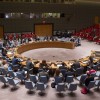
U.N. Official Says Human Suffering in Yemen ‘Almost Incomprehensible’
With a staggering four in five Yemenis now in need of immediate humanitarian aid, 1.5 million people displaced and a death toll that has surpassed 4,000 in just five months, a United Nations official told the Security Council Wednesday that the scale of human suffering is “almost incomprehensible”.
Humanitarian Response in Afghanistan Falters in the Face of Intensifying Conflict
As the number of civilians impacted by the intensifying conflict in Afghanistan rises along with the fighting, humanitarian agencies are struggling to meet the needs of the wounded, hungry and displaced.
Kashmir: Where a Pilgrimage Threatens a Delicate Ecosystem
As he struggled to find a section of the stream clean enough to rinse off his muddy shoes, Mohan Kumar, a Hindu pilgrim on his way to the holy Amarnath shrine in Indian-administered Kashmir, gazed with despair over the filth that lay thick on the landscape.
The U.N. at 70: Leading the Global Agenda on Women’s Rights and Gender Equality – Part Two
The efforts of the United Nations and the global women’s movement to promote the women’s rights agenda and make it a top international priority saw its culmination in the creation of U.N. Women, by the General Assembly in 2010.
The U.N. at 70: Leading the Global Agenda on Women’s Rights and Gender Equality – Part One
If there is any idea and cause for which the United Nations has been an indispensable engine of progress globally it is the cause of ending all forms of “discrimination and violence against women and girls, ensuring the realization of their equal rights and advancing their political, economic and social empowerment.Impressive Relief Effort Alleviating Hardship in Flood-Affected Myanmar
With the rainy season still far from over, flood-affected communities in the Sagaing Region and other parts of northern and western Myanmar are preparing for more hardships, while the government continues what the United Nations has called an “incredible” relief effort.
Protests Greet Japan’s Relaunch of Nuke Power
Protesters rallied outside Japan's Sendai nuclear plant a day ahead of its planned opening and four years after the Fukushima disaster galvanised opposition to nuclear power in the country.
Trans Fat Substitute May Lead to More Deforestation
Following growing concerns in the United States about the risks of trans fat since 1999, demand for palm oil, a cheap substitute for trans fat, more than doubled over the last decade and is expected to increase, eliciting concerns about deforestation in several Southeast Asian countries that provide 85 percent of the world’s palm oil.
Humanitarian Crisis Looming Over Venezuela, Says ICG
A Brussels-based think-tank has warned Venezuela of an impending humanitarian calamity in tandem with growing political instability.
Mandela Prizewinner from Namibia Still Bringing Sight to the Blind
There was pure emotion in the face of Dr. Helena Ndume, more used to bringing sight to the blind than wiping away tears of her own.
U.N. Targets Trillions of Dollars to Implement Sustainable Development Agenda
After more than two years of intense negotiations, the U.N.’s 193 member states have unanimously agreed on a new Sustainable Development Agenda (SDA) with 17 goals -- including the elimination of extreme poverty and hunger -- to be reached by 2030.
Opinion: Hungry for Change, Achieving Food Security and Nutrition for All
With the enthusiasm of the recent Financing for Development conference behind us, the central issues and many layers of what is at stake are now firmly in sight. In fact, a complex issue like hunger, which is a long standing development priority, remains an everyday battle for almost 795 million people worldwide.
Birth Registrations Plummet in Wake of Ebola Epidemic
Liberia's Ebola epidemic may have subsided but its after-effects are still being felt, with tens of thousands of infants going unregistered at birth, the U.N. children's agency UNICEF says.« Previous Page — Next Page »


 Bangladesh: Sarid, born one month early, receives specialized newborn care and grows stronger every day. Credit: UNICEF/UNI944397/Mojumder
Since the onset of the 2000s, global life expectancy has seen an overall rise, attributed to significant technological and scientific innovations in healthcare. Due to an increased understanding of different conditions as well as a rise in cooperation among healthcare experts around the world, there have been major strides made in ensuring that as few people die from chronic illnesses as possible. Despite the belief that healthcare is a fundamental human right, people from low- or middle-class backgrounds, marginalized groups, and underdeveloped countries have far more limited access to basic healthcare services.
The COVID-19 pandemic showed how marginalized communities are disproportionately affected by health crises, proving that we have much work to do in ensuring that no one dies of terminal conditions. While the global response to the coronavirus saw significant strides in immunization and vaccine development, the global outbreak of mpox in 2022 and its upsurge in parts of Africa in 2024 must remind us to remain vigilant.
Other major disease outbreaks in recent years have been linked to the destruction of infrastructure during warfare. Notably, in 2024, the Gaza Strip witnessed a return of the poliovirus since its eradication in the region 25 years ago. Israel’s blockade on Gaza has resulted in the collapse of the region’s sewage plants and desalination plants, and also destroyed healthcare capacities. The UN stated that this lack of clean water and sanitation would lead to an outbreak of cholera and other deadly infectious diseases. The 2026 OCHA Humanitarian Situation Report confirmed that the over two years of conflict in Gaza has produced a catastrophic health emergency, with millions remaining dependent on relief aid amid tight restrictions and no functioning public health system.
IPS is committed to providing full and comprehensive coverage on healthcare challenges around the world. IPS seeks to address the multifaceted causes of such challenges, including unprecedented pandemics, conflict-driven disease outbreaks, as well as socioeconomic barriers to equal healthcare access. IPS is also dedicated to reporting on innovations in the healthcare industry.

The Week with IPS

NEXT STOP - SDGs
Tracking global progress towards a sustainable world
Tracking global progress towards a sustainable world
