Languages
Friday, November 13, 2026



News and Views from the Global South
Health

Medicinal Plants Popular and Unprotected in Mexico
“This plant heals 150 ailments, like diabetes, high blood pressure and gastritis. It's prepared as an infusion or blended with water, and you take it every day," says Clemente Calixto, a traditional indigenous healer in Mexico, holding up a green leafy branch.
Zimbabwe’s Smallholder Farmers Seek Address Food Security and Health Risks with Air Tight Storage Technology
Last season, Mollene Kachambwa lost a tonne of the 5 tonnes of maize the family harvested to weevils and fungi.
Agricultural Keys to Malaria in African Highlands
Sixty-five years after a major international summit here on malaria, the mosquito-borne disease remains a scourge and its incidence may even be rising in parts of sub-Saharan Africa due to the combined effects of climate change, agricultural practices and population displacement.
Opinion: TPP is Bad for One’s Health
Reflecting President Barack Obama’s pivot to Asia, the US, Japan and 10 other Pacific Rim nations have inked a Trans-Pacific Partnership (TPP) agreement. This is the largest mega free trade agreement (FTA) in two decades and represents 40 per cent of the global economy.
Africa’s Senior Citizens Cornered By Poverty
Kenya has made tremendous steps towards ensuring that the elderly population does not slide into extreme poverty, hunger and, consequently, premature death.
Kenya: Transforming Mandera County’s Deadly Reputation for Maternal Health
For many women in Mandera County – a hard to reach, insecure and arid part of North Eastern Kenya – the story of life from childhood to adulthood is one about sheer pain and struggle for survival.
In Hawaii, Concern Rises about Use of Farm Pesticides
Tammy Brehio stood on the back balcony of her home in Kihei on the island of Maui and pointed to a brown field a few hundred yards away.Trans-Pacific partnership raise the barriers for the access to affordable medicines
The pharmaceutical industry from the US and Europe scored a major victory with the adoption, in 1994, of a binding agreement on intellectual property (Agreement on Trade Related Aspects of Intellectual Property Rights - TRIPS) in the context of the nascent World Trade Organization (WTO).
Youngster Uses Technology to Fight Teen Pregnancy in Honduran Village
Four years ago, Cinthia Padilla, who is now 16, learned how to use a computer in order to teach children, adolescents and adults in this isolated fishing village in northern Honduras how to use technology to better their lives.
Pakistan Initiative Seeks to Improve Maternal-Child Care in Rural Areas
“We are extremely happy over the government’s initiative to give money to the pregnant women and enable them to seek proper treatment,” said Sharif Ahmed at a basic health unit (BHU), near Peshawar, the capital of Khyber Pakhtunkhwa (KP) province.
Opinion: “Sanitation, Water & Hygiene For All” Cannot Wait for 2030
The new Sustainable Development Goals, agreed upon recently by the member states of the United Nations, are all interconnected, as has been reiterated time and again. However, it is in the new Goal 6 – “Ensure access to water and sanitation for all”—for which this interconnectedness is most apparent.TPP is “Worst Trade Agreement” for Medicine Access, Says Doctors Without Borders
“The TPP [Trans-Pacific Partnership] will…go down in history as the worst trade agreement for access to medicines in developing countries,” said Doctors without Borders/Médecins Sans Frontières (MSF) in a statement following the signing of the TPP trade deal.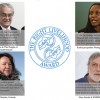
Italy and Uganda Bag Right Livelihood Awards Fist Time Ever
The 2015 Right Livelihood Awards were announced today in Stockholm at the Swedish Foreign Office International Press Centre by Ole von Uexkull, Executive Director, and Dr Monika Griefahn, Chair of the Board of the Right Livelihood Award Foundation.
Latin America to Adopt SDGs, Still Lagging on Some MDGs
In the last 15 years, Latin America and the Caribbean have met several key targets included in the Millennium Development Goals (MDGs), such as reducing extreme poverty, hunger and child mortality, incorporating more girls in the educational system, and expanding access to clean water.
Opinion: Fifteen Years and Forever
The next 15 years will be decisive for our planet’s future. During this period we will face some of the 21st Century’s greatest challenges, amidst an ongoing and profound transition in the global economy.
How to Fix Environmental Woes in Buenos Aires Shantytown
Children have been poisoned by lead in Villa Inflamable, a shantytown on the south side of the capital of Argentina. Resettling their families involves a socioenvironmental process as complex as the sanitation works in one of the most polluted river basins in the world.
Activists Say Fracking Fails to ‘Keep Pennsylvania Beautiful’
U.S. activist Vera Scroggins has been sued five times by the oil industry, and since October 2013 she has faced a restraining order banning her from any properties owned or leased by one of the biggest players in Pennsylvania’s natural gas rush, Cabot Oil & Gas Corporation.
Costa Rica Finally Allows In Vitro Fertilisation after 15-Year Ban
After banning in vitro fertilisation for 15 years and failing to comply with an Inter-American Court of Human Rights ruling for nearly three years, Costa Rica will finally once again allow the procedure for couples and women on their own.
Mental Health Another Casualty of Changing Climate
Jun* is in chains, tied to a post in the small house that resembles a fragile nipa hut. His brother did this to prevent him from hurting their neighbours or other strangers he meets when he’s in a ballistic mood. Jun has been like this for three years now, but since Typhoon Haiyan hit the Philippines two years ago, his symptoms have worsened.
Opinion: From Inequality to Inclusion
Recent years have seen a remarkable resurgence of interest in economic inequality, thanks primarily to growing recognition of some of its economic, social, cultural and political consequences in the wake of Western economic stagnation.
Q&A: “We Must Put Everything Aside and Just Focus on Water”
Globally, more than 748 million people do not have access to safe drinking water. That is more than double the population of the entire United States.« Previous Page — Next Page »


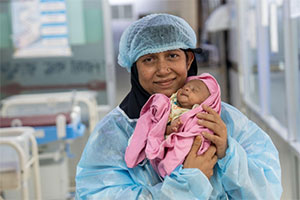 Bangladesh: Sarid, born one month early, receives specialized newborn care and grows stronger every day. Credit: UNICEF/UNI944397/Mojumder
Since the onset of the 2000s, global life expectancy has seen an overall rise, attributed to significant technological and scientific innovations in healthcare. Due to an increased understanding of different conditions as well as a rise in cooperation among healthcare experts around the world, there have been major strides made in ensuring that as few people die from chronic illnesses as possible. Despite the belief that healthcare is a fundamental human right, people from low- or middle-class backgrounds, marginalized groups, and underdeveloped countries have far more limited access to basic healthcare services.
The COVID-19 pandemic showed how marginalized communities are disproportionately affected by health crises, proving that we have much work to do in ensuring that no one dies of terminal conditions. While the global response to the coronavirus saw significant strides in immunization and vaccine development, the global outbreak of mpox in 2022 and its upsurge in parts of Africa in 2024 must remind us to remain vigilant.
Other major disease outbreaks in recent years have been linked to the destruction of infrastructure during warfare. Notably, in 2024, the Gaza Strip witnessed a return of the poliovirus since its eradication in the region 25 years ago. Israel’s blockade on Gaza has resulted in the collapse of the region’s sewage plants and desalination plants, and also destroyed healthcare capacities. The UN stated that this lack of clean water and sanitation would lead to an outbreak of cholera and other deadly infectious diseases. The 2026 OCHA Humanitarian Situation Report confirmed that the over two years of conflict in Gaza has produced a catastrophic health emergency, with millions remaining dependent on relief aid amid tight restrictions and no functioning public health system.
IPS is committed to providing full and comprehensive coverage on healthcare challenges around the world. IPS seeks to address the multifaceted causes of such challenges, including unprecedented pandemics, conflict-driven disease outbreaks, as well as socioeconomic barriers to equal healthcare access. IPS is also dedicated to reporting on innovations in the healthcare industry.

The Week with IPS

NEXT STOP - SDGs
Tracking global progress towards a sustainable world
Tracking global progress towards a sustainable world
