Languages
Friday, November 20, 2026



News and Views from the Global South
Health
CARIBBEAN: Still Fighting HIV Stigma After 30 Years
An inescapable fact of living in societies that are as small and highly personalised as those in the Caribbean is that information travels very quickly and not always very accurately.
SOUTHERN AFRICA: Small Amounts of Cash Make a Big Difference
After being diagnosed HIV-positive Margaret Bikyele could not even manage the simplest of household chores, let alone being able to work to generate an income for her and her two sons.
ECONOMY-SOUTHERN AFRICA: Threat of States Collapsing Looms Large
The mooted restructuring of the revenue-sharing agreement of the world’s oldest customs union could lead to at least two of its Southern African members collapsing into "failed states" status as well as macroeconomic crises in two of their neighbours in the sub-region.
CAMBODIA: Methadone Scheme Steps Up Drug Treatment Efforts
Twenty-nine-year-old Ramy shuddered as he described the years he has spent addicted to heroin. Lying to his family, stealing from friends to scrape together the money to feed his addiction – until a few months ago, that was the life he led.
WHO – Maternal Deaths Fall
The number of women dying from pregnancy related causes around the world is falling. Sub-Saharan Africa remains one of the most dangerous place for pregnant women, despite recording a 26 percent reduction in maternal mortality rates.SOUTH AFRICA: CSOs Urge Binding Commitment on Socio-Economic Rights
A grouping of six civil society organisations (CSOs) has called on the South African government to ratify the International Covenant on Economic, Social and Cultural Rights (ICESCR).
PAKISTAN: Floods Bring Out Another Crisis – Maternal Risks
The floods that have submerged one-fifth of Pakistan have begun to recede, but the crisis has brought to light one of the country’s hidden miseries: the plight of mothers, who are dying in tens of thousands each year.
Financing Public Health in Africa
Campaigners for increased health financing welcome the commitment by African Union member states to direct more resources to health. But the needs of the continent seem to dwarf available budgets.Summit Failure on Water, Sanitation Would Be Recipe for Disaster
A weeklong international conference here has transmitted a strong political message to next week's U.N. summit meeting of world leaders: what good is the fight against poverty, hunger, maternal mortality and child deaths if water and sanitation are not given the high priority they deserve?
KENYA: TB Patients Held in Prison
When a doctor instructs a patient to take one tablet three times a day, she often has no way to ensure the instructions are followed.Women, Children Top U.N.’s Anti-Poverty Agenda
All eight of the U.N.'s Millennium Development Goals (MDGs) are critical to development, but numbers four and five on child and maternal health are the real priority areas for this year. That was the main takeaway from a series of briefings with U.N., NGO and country officials in which IPS participated this week.CAMBODIA: Gov’t Heats Up Anti-Smoking Campaign
For anti-smoking advocate Mom Kong, the ubiquitous flashy cigarette advertisements he sees throughout Cambodia’s capital city are a major barrier to reducing smoking.
“Orange” Maize Could Save Eyesight of Millions of African Children
'Orange' maize, a variety of the common cereal crop, could improve the lives of millions of malnourished people by providing increased vitamin A in their diet, according to a new study released here this week.Africa’s Water Security Hinges on Better Infrastructure
As Africa continues its seemingly endless struggle for water security, why is the beleaguered continent lagging behind Asia and Latin America - despite commitments and declarations by political leaders?
AFRICA: Governments Failing to Take the Threat of HIV Seriously
Experts worry that African governments are failing to take the threat of HIV seriously enough by not dedicating enough of their resources to prevention of mother-to-child transmission (PMTCT) efforts.Scarce Water Diverted by Greased Palms
The battle to resolve the global water crisis is being grossly undermined by bad governance: bribery, extortion, embezzlement and high-level corruption.Mexico in Debt to the Disabled
Ángel Valencia was admitted to a psychiatric hospital in Mexico four years ago with a bipolar disorder. Today, after treatment, he is back in society and is an activist with the Washington-based organisation Disability Rights International.
INDIA: Buoyed by Growing Market, More Farmers Go Organic
He had decided to grow watermelons this summer on his one-acre (.405 hectare) plot, and so Veera Narayana went about preparing the arid red earth by first ploughing it and then lighting fires in the furrows.
AFRICA: Stronger Will Needed from Governments to Save Poorest Children
"Herding goats is tough with the thirst, sun, loneliness and hunger each day. And it can last forever. You herd as a girl, then as a wife, as a pregnant woman, as a mother and even as a grandmother," says Rukia Ibrahim whose 13-year-old younger sister was married off to a herdsman.
Fighting Dirty Water Is World’s New Ecological Battle
A primary topic of discussion at a weeklong international water conference here can best be summed up in two words: "dirty water".HEALTH: H1N1 Pandemic Is Over, But Vigilance Needed – WHO
The World Health Organisation (WHO) is urging countries in Asia to remain vigilant about the spread of the H1N1 influenza virus, which the international body declared was no longer a pandemic a month ago.« Previous Page — Next Page »


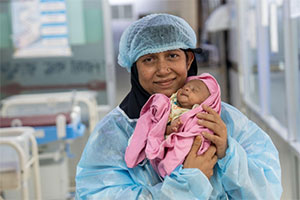 Bangladesh: Sarid, born one month early, receives specialized newborn care and grows stronger every day. Credit: UNICEF/UNI944397/Mojumder
Since the onset of the 2000s, global life expectancy has seen an overall rise, attributed to significant technological and scientific innovations in healthcare. Due to an increased understanding of different conditions as well as a rise in cooperation among healthcare experts around the world, there have been major strides made in ensuring that as few people die from chronic illnesses as possible. Despite the belief that healthcare is a fundamental human right, people from low- or middle-class backgrounds, marginalized groups, and underdeveloped countries have far more limited access to basic healthcare services.
The COVID-19 pandemic showed how marginalized communities are disproportionately affected by health crises, proving that we have much work to do in ensuring that no one dies of terminal conditions. While the global response to the coronavirus saw significant strides in immunization and vaccine development, the global outbreak of mpox in 2022 and its upsurge in parts of Africa in 2024 must remind us to remain vigilant.
Other major disease outbreaks in recent years have been linked to the destruction of infrastructure during warfare. Notably, in 2024, the Gaza Strip witnessed a return of the poliovirus since its eradication in the region 25 years ago. Israel’s blockade on Gaza has resulted in the collapse of the region’s sewage plants and desalination plants, and also destroyed healthcare capacities. The UN stated that this lack of clean water and sanitation would lead to an outbreak of cholera and other deadly infectious diseases. The 2026 OCHA Humanitarian Situation Report confirmed that the over two years of conflict in Gaza has produced a catastrophic health emergency, with millions remaining dependent on relief aid amid tight restrictions and no functioning public health system.
IPS is committed to providing full and comprehensive coverage on healthcare challenges around the world. IPS seeks to address the multifaceted causes of such challenges, including unprecedented pandemics, conflict-driven disease outbreaks, as well as socioeconomic barriers to equal healthcare access. IPS is also dedicated to reporting on innovations in the healthcare industry.

The Week with IPS

NEXT STOP - SDGs
Tracking global progress towards a sustainable world
Tracking global progress towards a sustainable world
