Languages
Friday, November 20, 2026



News and Views from the Global South
Health

ECONOMY: Growing Obesity in Africa Bad for Worker Productivity
Obesity is no longer a problem confined to wealthy nations. In their developing counterparts in Africa, an increasing number of people can be categorised as obese. According to researchers this trend could be detrimental to countries’ already fragile economies.Progress in Prevention of Mother-to-Child Transmission of HIV
The number of pregnant women being tested for HIV and accessing treatment in Sub-Saharan Africa has shown significant progress – indicating that virtual elimination of mother-to-child transmission of the virus by 2015 is possible.Tighter Budgets Threaten HIV/AIDS Gains
Although the world will miss the 2010 deadline for universal access to HIV treatment, some countries, notably in sub- Saharan Africa, have made real strides forward, three United Nations agencies reported Tuesday.U.S.: 9/11 Rescue Workers Still Waiting for Healthcare
Election-year interparty political wrangling is threatening to again sabotage congressional efforts to provide medical help for tens of thousands of firefighters and other first responders whose health was damaged by the Sep. 11, 2001 terrorist attacks on New York's World Trade Centre.
Q&A: “The Beer Industry Is a Leader in Self-Regulation”
Some two billion people around the world drink alcohol, a practice that has been around since time immemorial. Responsible drinking is only part of the picture; the WHO reports that the harmful use of alcohol affects tens of millions of people and kills two and a half million people every year, from causes ranging from illnesses to traffic accidents.MALAWI: Village Chief Leads Fight For Maternal Health
In Ntcheu, a rural district in central Malawi, villagers have taken the fight against the country's high maternal mortality rate into their own hands. They have almost eradicated maternal deaths in the area by urging pregnant women to give birth in hospitals, under medical supervision.Trinidad Scraps Controversial Smelter
The new government of Trinidad and Tobago wasted little time. In fact, Finance Minister Winston Dookeran took less than 30 seconds of a two-hour budget presentation to announce that the People's Partnership government, headed by the country's first female prime minister, Kamla Persad Bissessar, was scrapping the $66.6 million dollar smelter plant project involving investors from China and Brazil.MEXICO: Soaring Bottled Water Use Highlights Mistrust of Tap Water
More bottled water is consumed per capita in Mexico than in any other country in the world, according to a U.S. consultancy -- a fact that alarms non-governmental organisations because it highlights the lack of access to safe tap water.Water Strategy Key to Cities of the Future
A diverse group of more than 4,500 professionals from the water industry gathered here to send a resounding message: a sharp break from past practices of water distribution and wastewater management is needed to cope with the burgeoning population growth in cities and impending water scarcity.
$40 Billion for Women and Children, Millions of Lives at Stake
As a three-day anti-poverty talkfest drew to a close Wednesday, the United Nations shifted its focus from the poor and the hungry to two of the most vulnerable and disadvantaged groups in society: women and children.
Surfing the Web without Being Swept Away
City life and access to information technologies can open up a whole new arena of possibilities for young girls: better education, access to healthcare, new skills and a plethora of new ideas.
LIBERIA: Chronic Malnutrition Blamed on Mothers
Mercy Freeman sits on a small hospital cot in one of Liberia’s emergency hospitals, looking down at her frail son, whose dark eye sockets have sunk into his bony face.
PAKISTAN: When the Doors Are Open, But Women Choose to Stay Away
For five years, Sana Yasir toiled through medical school and then was awarded at the end with a diploma and a bright future. After completing the required year-long clinical practice, however, Yasir got married and quit the workplace.
HEALTH-SRI LANKA: All-Out War on Dengue Fever Eases Deaths
An aggressive public health and information programme is giving Sri Lanka a key weapon in its battle against the deadly dengue fever, bringing it under control after hitting epidemic proportions in the last two years.SOUTH-EAST ASIA: Health Inequity Slows Decline in Child Mortality
Cambodia’s partial success in reducing child mortality rates has exposed a fault line of inequity, one that underscores the advantage that the country’s urban population has had over the rural poor.
MOZAMBIQUE: BHP Billiton Plans Six Month Bypass of Smelter Smokestack Scrubbers
Civil society groups are challenging a six-month authorisation granted aluminium giant BHP Billiton to emit potentially dangerous fumes from its Mozal smelter into the air without treating them first.CHINA: Second Richest Plays Poor
As China basks in international praise for its spectacular economic transformation over the last 30 years, some shadow sides of this story of triumph have begun to emerge.
South Africa’s Progress on MDGs Questioned
With five years left till the Millennium Development Goals' 2015 deadline, civil society groups say South Africa has made progress on some goals but regressed on others.SOUTHERN AFRICA: Social Protection, a Human Right?
Without contributions from well wishers and government grants of between 68 and 104 dollars per month per child, the House of Mother and Child in Ennerdale, south of Johannesburg, would barely be able to provide for the 18 vulnerable children who call the place home.MALAYSIA: Plan to Use ‘Killer’ Mosquitoes vs Dengue Draws Fire
Genetically modified ‘terminator’ mosquitoes are the latest weapons that the Malaysian government wants to use against the deadly dengue fever, but activists and environmentalists say the public health risks of introducing a new ‘artificial’ strain of mosquito are far too high.Hunger Drops Mere Half a Percent over Last Decade
Ten years after setting the goal of halving the proportion of people suffering from poverty and hunger by 2015, only mixed success can be found for the U.N.'s Millennium Development Goals (MDGs), and the degree of success is dependent not only on what country is examined but which evaluation is used.« Previous Page — Next Page »


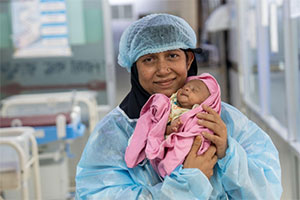 Bangladesh: Sarid, born one month early, receives specialized newborn care and grows stronger every day. Credit: UNICEF/UNI944397/Mojumder
Since the onset of the 2000s, global life expectancy has seen an overall rise, attributed to significant technological and scientific innovations in healthcare. Due to an increased understanding of different conditions as well as a rise in cooperation among healthcare experts around the world, there have been major strides made in ensuring that as few people die from chronic illnesses as possible. Despite the belief that healthcare is a fundamental human right, people from low- or middle-class backgrounds, marginalized groups, and underdeveloped countries have far more limited access to basic healthcare services.
The COVID-19 pandemic showed how marginalized communities are disproportionately affected by health crises, proving that we have much work to do in ensuring that no one dies of terminal conditions. While the global response to the coronavirus saw significant strides in immunization and vaccine development, the global outbreak of mpox in 2022 and its upsurge in parts of Africa in 2024 must remind us to remain vigilant.
Other major disease outbreaks in recent years have been linked to the destruction of infrastructure during warfare. Notably, in 2024, the Gaza Strip witnessed a return of the poliovirus since its eradication in the region 25 years ago. Israel’s blockade on Gaza has resulted in the collapse of the region’s sewage plants and desalination plants, and also destroyed healthcare capacities. The UN stated that this lack of clean water and sanitation would lead to an outbreak of cholera and other deadly infectious diseases. The 2026 OCHA Humanitarian Situation Report confirmed that the over two years of conflict in Gaza has produced a catastrophic health emergency, with millions remaining dependent on relief aid amid tight restrictions and no functioning public health system.
IPS is committed to providing full and comprehensive coverage on healthcare challenges around the world. IPS seeks to address the multifaceted causes of such challenges, including unprecedented pandemics, conflict-driven disease outbreaks, as well as socioeconomic barriers to equal healthcare access. IPS is also dedicated to reporting on innovations in the healthcare industry.

The Week with IPS

NEXT STOP - SDGs
Tracking global progress towards a sustainable world
Tracking global progress towards a sustainable world
