Languages
Friday, November 20, 2026



News and Views from the Global South
Health

HIV-positive Kenyans Need Tribunal to Address Rights Violations
Nancy Njeri’s life changed when she contracted HIV through a gang rape. Not only did the infection traumatise her, she was ostracised by close friends and neighbours whom she had known for almost a decade. She was fired from her job and when she attempted to sell vegetables, people boycotted her stand because of her status.MEXICO: Asbestos, a Toxic Neighbour
It's summertime, so the "Año de Juárez" public primary school in Barrios de San Lucas, a working-class neighbourhood on the east side of the Mexican capital, is deserted.KENYA: Herbal Contraceptives Under the Radar
An arrow points the way from a busy street along a rough pathway; visitors clutch their bags more closely. The door is open: sachets are displayed on the table with labels indicating treatment for ulcers, diabetes, hypertension, fibroids. But not the contraceptive pill IPS is looking for.INDIA: Trade Talks with EU Put Drug Manufacturers on Edge
Their ongoing negotiations remain shrouded in secrecy, but there are already reports that India and the European Union (EU) will have a free-trade agreement ready by the end of August, and that they will be putting signatures to it before the end of 2010.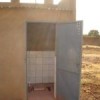
BURKINA FASO: Race to Achieve Goals on Sanitation
The government of Burkina Faso has embarked on the construction of 55,000 latrines each year to improve access to proper sanitation for the population from the present 10 percent to 54 percent by 2015.KENYA: Claim Disputed that Trade Measures “Aid” Counterfeiters
A major pharmaceutical company in Kenya alleges that special trade measures to make medicines available in poor countries create "loopholes" for counterfeit medicines to enter the market – a claim that health rights advocates refute.HEALTH: Uganda Authority Finding Less Counterfeit Drugs
Uganda’s National Drug Authority (NDA) says the failure rate among samples of medicines tested at their laboratories has fallen by 15 percent from the early 2000s. This serves as a possible indication of a drop in the availability of counterfeit medicines in the East African country.PERU: Adios, Doe Run
Peruvian President Alan García confirmed Wednesday that the permit of the U.S. mining and metallurgical company Doe Run to operate a major smelter complex was being cancelled because the firm missed the deadline for proving that it had the necessary financing to restart operations and complete an environmental cleanup.
U.N. Declares Water and Sanitation a Basic Human Right
When the United Nations General Assembly adopted the Universal Declaration of Human Rights (UDHR) back in December 1948, 58 member states voted for a historic document covering political, economic, social and cultural rights.
Familiar Pledges on Child and Maternal Health in Africa
During the three-day summit of African Union heads of state, roughly 37,000 children and 2,000 women died across Africa, mostly from preventable causes, says a civil society coalition for child and maternal health. The coalition welcomed African leaders' pledge to make more resources available.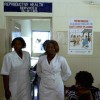
SIERRA LEONE: Defining New Role for Traditional Birth Attendants
Posseh Sesay will never be able to bear children again following a tragic birthing experience at the hands of her village traditional birth attendant (TBA).ZIMBABWE: Rural Children with HIV a ‘Lost Cause’
Eleven-year-old Irene Thembo* lies curled like a foetus on a white wooden bench for outpatients at a clinic in rural Zimbabwe. The orphan, whose parents died of HIV-related illnesses, is terribly sick.URUGUAY: Millennium Goal on Maternal Health in Sight
Uruguay is on the point of reaching the Millennium Development Goal for reducing the maternal mortality ratio, but it is still behind in other aspects of maternal health, like providing integrated sexual and reproductive health care, fighting syphilis and checking on mothers and babies during the postpartum period.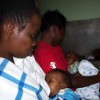
KENYA: Jury Still Out on Traditional Birth Attendants
The government of Kenya has been encouraging women to deliver in hospital. Home deliveries by traditional birth attendants are considered to be a major contributor to maternal deaths.ZIMBABWE: ‘Free’ Maternal Health Care Too Costly For Most
As African Union heads of state consider child and maternal health at the 2010 summit in Kampala, Uganda, the perennial question of user fees has reared its head in Zimbabwe. Fees for services are opening a growing gap between policy and implementation in maternal health care in the Southern African country.Lack of Funds Hampers Global Fight Against AIDS
The global conference on AIDS in Vienna last week will be remembered for "Broken Promises Kill", a slogan echoed by a coalition of activists who had gathered from around the world.Mentally Ill Adrift in U.S. Immigration System
Mentally disabled legal permanent residents of the United States and asylum seekers face indefinite detention, erroneous deportation, and unfair hearings in U.S. courts, according to a new joint report from two leading human rights organisations.Worse Than HIV, the Stigma
Kiren Kaur, 37, has come to terms with HIV she contracted from her husband in 1997. The HIV positive status, per se, is not difficult to deal with. But dealing with the stigma that comes with it is an excruciating experience.ZIMBABWE: Pregnant Teens Shun HIV Treatment for Fear of Stigmatisation
At a local maternity clinic in one of Bulawayo’s high density suburbs, midwives are at pains to explain to a pregnant 15-year-old girl why she must be tested for HIV before she gives birth.LATIN AMERICA: Prevention Is Weakest Link in AIDS Fight
Many Latin American countries have made strides in legislation and policies that promote sex education and health services for young people, which are essential for fighting AIDS. But implementation has been slow and often faces opposition, warn experts.HEALTH: Kenyans’ Right to Affordable Drugs in Hands of Court
Kenya’s Constitutional Court is due to set a date on Jul 22 for a hearing on the application against the Anti-Counterfeit Act of 2008, of which clauses pertaining to medicines have been suspended pending the court’s decision on whether the law violates the right to health and life.« Previous Page — Next Page »


 Bangladesh: Sarid, born one month early, receives specialized newborn care and grows stronger every day. Credit: UNICEF/UNI944397/Mojumder
Since the onset of the 2000s, global life expectancy has seen an overall rise, attributed to significant technological and scientific innovations in healthcare. Due to an increased understanding of different conditions as well as a rise in cooperation among healthcare experts around the world, there have been major strides made in ensuring that as few people die from chronic illnesses as possible. Despite the belief that healthcare is a fundamental human right, people from low- or middle-class backgrounds, marginalized groups, and underdeveloped countries have far more limited access to basic healthcare services.
The COVID-19 pandemic showed how marginalized communities are disproportionately affected by health crises, proving that we have much work to do in ensuring that no one dies of terminal conditions. While the global response to the coronavirus saw significant strides in immunization and vaccine development, the global outbreak of mpox in 2022 and its upsurge in parts of Africa in 2024 must remind us to remain vigilant.
Other major disease outbreaks in recent years have been linked to the destruction of infrastructure during warfare. Notably, in 2024, the Gaza Strip witnessed a return of the poliovirus since its eradication in the region 25 years ago. Israel’s blockade on Gaza has resulted in the collapse of the region’s sewage plants and desalination plants, and also destroyed healthcare capacities. The UN stated that this lack of clean water and sanitation would lead to an outbreak of cholera and other deadly infectious diseases. The 2026 OCHA Humanitarian Situation Report confirmed that the over two years of conflict in Gaza has produced a catastrophic health emergency, with millions remaining dependent on relief aid amid tight restrictions and no functioning public health system.
IPS is committed to providing full and comprehensive coverage on healthcare challenges around the world. IPS seeks to address the multifaceted causes of such challenges, including unprecedented pandemics, conflict-driven disease outbreaks, as well as socioeconomic barriers to equal healthcare access. IPS is also dedicated to reporting on innovations in the healthcare industry.

The Week with IPS

NEXT STOP - SDGs
Tracking global progress towards a sustainable world
Tracking global progress towards a sustainable world
