Languages
Friday, November 20, 2026



News and Views from the Global South
Health
Former Presidents Denounce Drug War Ahead of AIDS Meet
The failed "war on drugs" has not only badly damaged countries where it is waged, it is responsible for driving up HIV infection rates in some countries, says an official declaration endorsed Wednesday by three former Latin American presidents in advance of the XVIII International AIDS Conference that begins Jul. 18 in Vienna.
COLOMBIA: Midwives Seek Legal Recognition, Respect
In Colombia, western medicine has nearly succeeded in pushing midwives -- "parteras" or "comadronas," as they are known in Spanish -- out of existence. But some tenacious practitioners are pushing for a law to formalise the role of midwife as a health worker.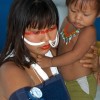
More Than 200 Ways of Becoming a Mother
"You can only have one mother," as the saying goes, but in Brazil there are 215 ways of becoming a mother, one for each of the ethnic groups in this South American country. Promoting maternal health while respecting cultural traditions is a major health challenge.CLIMATE CHANGE: Uruguay Fends Off Health Threats – So Far
The incidence of cardiovascular, respiratory and water-borne diseases is rising in Uruguay in tandem with climate change, while dengue fever and malaria lurk at the country's borders. Higher temperatures are encouraging the presence of insect vectors carrying diseases that were eradicated decades ago, experts say.EDUCATION: Taking Science into the Streets
A group of 80 students, broken into smaller groups with their notebooks in tow, troop through the boroughs of New York City to survey the produce that populates farmers' markets and grocery stores in their neighbourhoods. Across the world, a similar image emerges in Dar es Salaam, Tanzania, where female students are learning to grow edible mushrooms in their villages.New Indian Vaccines Fight H1N1
At a time when the World Health Organisation (WHO) faces charges that it hyped up the swine flu pandemic to benefit pharmaceutical companies, India is sprucing up its indigenous capacity to manufacture vaccines against the H1N1 virus.
MALAWI: Concerns over Cost of New HIV/AIDS Treatment Regime
As government implements a new HIV/AIDS treatment regimen according to latest world standards, a major grouping of non-governmental organisations are concerned that the high cost of the new medication will mean government will no longer be able provide free treatment to as many people as before.Controversy Dogs Brazil’s Racial Equality Law
The Statute of Racial Equality, soon to be signed into law in Brazil, is at the centre of a controversy between those who consider it a historical achievement, like the abolition of slavery in 1888, and those who see it as failing to satisfy the demands of the black movement.Midwives vs. Doctors in U.S. Maternal Mortality Crisis
"I was baking a cake when my contractions were two minutes apart," Kristine says, her voice warm with memory, "not in a hospital, holding onto a bedside somewhere screaming."HEALTH-PAKISTAN: Children’s Cancer A Hidden Crisis
Her husband works as a nurse in one of Pakistan’s most prestigious private hospitals, but when their two-year-old daughter Mary was diagnosed with leukaemia, Sadaf John could only be thankful that the Children’s Cancer Hospital (CCH) existed in this country.
Making 2010 a Turning Point for Women’s Health
As the international community readies to commemorate World Population Day Sunday, the United Nations is reviewing the state of the world's women - and how they stack up against the risks of maternal mortality and the lack of universal access to reproductive health.HIV Vaccine Advances Made Ahead of Global Conference
In 1984, then-U.S. Secretary of Health and Human Services Margaret Heckler famously declared, "We hope to have such a vaccine ready for testing in approximately two years." The vaccine in question would prevent AIDS and the goal Heckler set has been missed by over 26 years.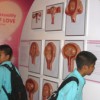
THAILAND: Sexuality 101 Exhibit Says It Straight
Teenage boys gape at a coloured photograph of a vagina, while girls give embarrassed smiles as they watch a cartoon that showed penises 'talking' about masturbation. Young girls crowd around a display panel about love and relationships, as a boy embraces a female mannequin with all his might in order to measure the strength of his hug.
PAKISTAN: More Action, Less Words, Needed to Ease Population Bulge
While militancy, power outages and skyrocketing food prices hog the limelight in parliamentary and media discussions in Pakistan, health experts warn that it is a neglected issue – the population bulge – that will prove to be a more insidious problem.ZAMBIA: Parents’ Fears Slowing Uptake of Paediatric AIDS Treatment
Diana Banda* is quickly running out of excuses to give her six-year-old son about why he has to take a schedule of drugs every day.The Return of the Bicycle
The bicycle has many attractions as a form of personal transportation. It alleviates congestion, lowers air pollution, reduces obesity, increases physical fitness, does not emit climate-disrupting carbon dioxide, and is priced within the reach of the billions of people who cannot afford a car.
AUSTRALIA: Hunger Far from Unknown in A Land of Plenty
Devina Celeste, 50, waits in a queue of about 40 people at the neighbourhood centre in the Australian inner-city suburb of Newtown for the only hot meal she will get on this cold winter night.CHINA: School Attacks Expose Quiet Crisis Around Mental Illness
When a distraught landlord wielding a kitchen cleaver stormed into a kindergarten classroom in south-east China’s Fujian province in May and killed several people, including children, it was the bloodiest of five recent attacks at schools across the country.
RIGHTS: Poor Foreigners Working Like “Modern Slaves” in Mauritius
Workers from Bangladesh have helped Mauritius to achieve the economic success and world market share that the Indian Ocean island state boasts about. But many live and work in conditions described as akin to "modern slavery", apart from facing discrimination, the denial of labour rights and even violence.
PERU: ‘Don’t Minimise’ Impacts of Amazon Oil Spill
Pluspetrol's Jun. 19 petroleum spill has left the Marañón River, in the Peruvian Amazon, with oil and grease levels thousands of times greater than the maximum allowed for human consumption, affecting more than 4,000 local residents.
KENYA: Tradition an Obstacle to Maternal Health
Their kangas and heavy bead necklaces are the only colour in an arid landscape. The weary women waiting outside the Kangatotha dispensary have walked up to 50 kilometres to receive food aid; now they will walk home carrying their share.« Previous Page — Next Page »


 Bangladesh: Sarid, born one month early, receives specialized newborn care and grows stronger every day. Credit: UNICEF/UNI944397/Mojumder
Since the onset of the 2000s, global life expectancy has seen an overall rise, attributed to significant technological and scientific innovations in healthcare. Due to an increased understanding of different conditions as well as a rise in cooperation among healthcare experts around the world, there have been major strides made in ensuring that as few people die from chronic illnesses as possible. Despite the belief that healthcare is a fundamental human right, people from low- or middle-class backgrounds, marginalized groups, and underdeveloped countries have far more limited access to basic healthcare services.
The COVID-19 pandemic showed how marginalized communities are disproportionately affected by health crises, proving that we have much work to do in ensuring that no one dies of terminal conditions. While the global response to the coronavirus saw significant strides in immunization and vaccine development, the global outbreak of mpox in 2022 and its upsurge in parts of Africa in 2024 must remind us to remain vigilant.
Other major disease outbreaks in recent years have been linked to the destruction of infrastructure during warfare. Notably, in 2024, the Gaza Strip witnessed a return of the poliovirus since its eradication in the region 25 years ago. Israel’s blockade on Gaza has resulted in the collapse of the region’s sewage plants and desalination plants, and also destroyed healthcare capacities. The UN stated that this lack of clean water and sanitation would lead to an outbreak of cholera and other deadly infectious diseases. The 2026 OCHA Humanitarian Situation Report confirmed that the over two years of conflict in Gaza has produced a catastrophic health emergency, with millions remaining dependent on relief aid amid tight restrictions and no functioning public health system.
IPS is committed to providing full and comprehensive coverage on healthcare challenges around the world. IPS seeks to address the multifaceted causes of such challenges, including unprecedented pandemics, conflict-driven disease outbreaks, as well as socioeconomic barriers to equal healthcare access. IPS is also dedicated to reporting on innovations in the healthcare industry.

The Week with IPS

NEXT STOP - SDGs
Tracking global progress towards a sustainable world
Tracking global progress towards a sustainable world
