Languages
Friday, November 20, 2026



News and Views from the Global South
Health
HEALTH-SOUTH AFRICA: More Funds Needed for HIV Prevention and Treatment
Decreasing or levelling HIV funding will destabilise developing countries’ health systems, a group of non-governmental organisations (NGOs) warned. They demand that governments worldwide own up to their promise of achieving universal access to HIV treatment.HEALTH-SOUTH AFRICA: Five Years to Children Born Free of HIV
A world where all children are born free of HIV infection is possible in only five years if donors continue to fund global efforts to combat the virus.COSTA RICA: Headhunting First-World Seniors
The Costa Rican government has declared retirement communities, aimed at attracting U.S. pensioners, to be "of national interest." Plans to create "retirement clusters" providing complete health services for older adults are seen as a profitable prospect for this Central American country.HEALTH: Potato Drags GM Food Into Europe
Genetically modified (GM) foods appear to be back on the European Union's political menu - thanks to a potato.
HEALTH-SOUTH AFRICA: Prescription Drug Abuse on the Increase
Twenty-two-year-old Sara Allen* uses prescription medication to get high.GUATEMALA: Off Track for Millennium Development Goals
Guatemala knows that when it comes time to demonstrate compliance with the Millennium Development Goals (MDGs), a set of global anti-poverty and development target to be met by 2015, it will make a poor showing.POLITICS: U.S. Still Noncommittal on Landmine Treaty
As the 11th anniversary of the Mine Ban Treaty entering into effect came and went Monday, the United States remained one of only 37 countries to have yet to sign on to the agreement.HEALTH: Neoliberalism not Liberal Enough for AIDS Investments
Neoliberal economic ideas have grown increasingly dominant over the last 30 years. During that same time, the spread of HIV/AIDS has reached an epidemic crescendo.EAST EUROPE: Taxing Fast Foods for Health
Health experts have called on European governments to use a pioneering tax on fast foods to be introduced in Romania as a model for the entire continent as the battle with obesity spreads to the former communist bloc.HEALTH: Chained to Smoking
Arab governments have stepped up efforts to curtail tobacco use, but initiatives have met stiff resistance from the region's smokers.
BOLIVIA: Cash for Checkups to Slash Maternal Deaths
A social programme in Bolivia that prevents the deaths of two mothers a day from complications related to pregnancy and childbirth is making headway despite administrative difficulties, and has the potential to cut the alarmingly high maternal mortality rate in this country by up to 80 percent in just five years.PAKISTAN: Emergency Contraception More Popular, But Myths Abound
The first time he and his wife had an ‘accident’, 40-year-old Kamran Rehman worried that they may have inadvertently paved the way for child number three. A chemist he consulted, however, recommended that his wife try the emergency contraceptive pill (ECP).U.S.: Healthcare Should Include Abortion Access, Women Say
Last fall, the push to reform healthcare in the United States was all but hijacked by one of the country's most passionate recurring cultural debates.MEXICO: Ecological Smoke from Fuel Efficient Stoves
The lives of many rural women and children in Mexico are changing, and the country's high deforestation rate could be reduced, as inexpensive fuel-efficient cook stoves are being distributed by non-governmental organisations with corporate and government support.US-MEXICO: Escalating Drug Violence Rooted in Northern Demand
As the war over health care continues in Washington and a war of a bloodier nature heats up in Ciudád Juárez and elsewhere in Mexico, top U.S. and Mexican officials are hoping to reduce both pressures on the health system and the ongoing bloodshed.RIGHTS-BURMA: For Sex Workers, A Life of Risks
When Aye Aye (not her real name) leaves her youngest son at home each night, she tells him that she has to work selling snacks. But what Aye actually sells is sex so that her 12-year-old son, a Grade 7 student, can finish his education.
SWAZILAND: Long-distance Learning Certificate for Caregivers
Every Tuesday you will find 70-year-old Precious Dlamini under a tree, weighing children and babies from her local community as she monitors their health and nutrition.HEALTH: Addressing Preterm Births Crucial to Anti-Poverty Goals
Reducing the annual 13 million preterm births and 3.2 million stillbirths should be a global public health priority, says a report released Monday which asserts that significant reductions in these numbers could be achieved by improving access to low-cost interventions in both low and high-income countries.
MALAWI: Catapults Against Cholera
By this time last year, Mkanda had recorded 14 cholera cases as rainy season descended on central Malawi. This year, there has not been a single report of cholera.THAILAND: Temple Grounds A Venue for Curbing Domestic Violence
When the conversation here shifts to domestic violence, even the way a woman got pregnant becomes an issue of concern, particularly if the price for bearing a child means getting infected with HIV.
ENVIRONMENT: Tsunami of E-Waste Could Swamp Developing Countries
The mighty mountains of hazardous electronic waste are growing by about 40 million tonnes a year globally. In China, India and South Africa, those mountains are expected to grow 200 to 500 percent in the next decade, a new report warns.« Previous Page — Next Page »


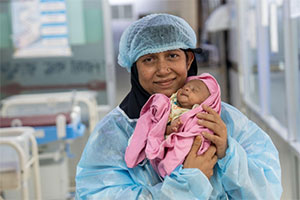 Bangladesh: Sarid, born one month early, receives specialized newborn care and grows stronger every day. Credit: UNICEF/UNI944397/Mojumder
Since the onset of the 2000s, global life expectancy has seen an overall rise, attributed to significant technological and scientific innovations in healthcare. Due to an increased understanding of different conditions as well as a rise in cooperation among healthcare experts around the world, there have been major strides made in ensuring that as few people die from chronic illnesses as possible. Despite the belief that healthcare is a fundamental human right, people from low- or middle-class backgrounds, marginalized groups, and underdeveloped countries have far more limited access to basic healthcare services.
The COVID-19 pandemic showed how marginalized communities are disproportionately affected by health crises, proving that we have much work to do in ensuring that no one dies of terminal conditions. While the global response to the coronavirus saw significant strides in immunization and vaccine development, the global outbreak of mpox in 2022 and its upsurge in parts of Africa in 2024 must remind us to remain vigilant.
Other major disease outbreaks in recent years have been linked to the destruction of infrastructure during warfare. Notably, in 2024, the Gaza Strip witnessed a return of the poliovirus since its eradication in the region 25 years ago. Israel’s blockade on Gaza has resulted in the collapse of the region’s sewage plants and desalination plants, and also destroyed healthcare capacities. The UN stated that this lack of clean water and sanitation would lead to an outbreak of cholera and other deadly infectious diseases. The 2026 OCHA Humanitarian Situation Report confirmed that the over two years of conflict in Gaza has produced a catastrophic health emergency, with millions remaining dependent on relief aid amid tight restrictions and no functioning public health system.
IPS is committed to providing full and comprehensive coverage on healthcare challenges around the world. IPS seeks to address the multifaceted causes of such challenges, including unprecedented pandemics, conflict-driven disease outbreaks, as well as socioeconomic barriers to equal healthcare access. IPS is also dedicated to reporting on innovations in the healthcare industry.

The Week with IPS

NEXT STOP - SDGs
Tracking global progress towards a sustainable world
Tracking global progress towards a sustainable world
