Languages
Friday, November 20, 2026



News and Views from the Global South
Health
INDIA: Swine Flu Tests Privatised Health Care
While the swine flu pandemic has not hit India too hard, it has sorely tested the country’s ailing health delivery system and its plans to remedy the situation through ‘private-public partnerships.’HEALTH: Why Is Viagra Popular and the Condom Controversial?
Why is the popular drug Viagra so praised for its virtues, while the condom is vilified by conservative religious groups among others the world over?HEALTH-AFRICA: South Sudan At Risk from Blindness
In the war-devastated South Sudan, a region with a population of over eight million people, Yeneneh Mulugeta is the only permanent ophthalmologist.AFGHANISTAN-US: Military Translators Risk Low Pay, Death
Murtaza "Jimmy" Farukhi was killed while on patrol with the U.S. Marine Corps on Sep. 9, 2008, at the age of 23. He was not a soldier, but a local translator employed by Columbus, Ohio-based Mission Essential Personnel (MEP).AFGHANISTAN-US: Govt Withholds Information About Bagram Detainees
The U.S. government continues to withhold even the most basic information about prisoners in the Bagram detention facility in Afghanistan, according to the American Civil Liberties Union (ACLU), a New York-based legal rights organisation.ARGENTINA: Safe Shortcut to Sidestep Illegal Abortion
Tired of calling for the decriminalisation of abortion - the leading cause of maternal death in Argentina - a network of women's rights activists launched a telephone hotline to inform women on a safe abortion method that requires no medical intervention: the use of a pill to terminate pregnancy.DEVELOPMENT: Should Water Be Legislated as a Human Right?
The growing commercialisation of water - and the widespread influence of the bottling industry worldwide - is triggering a rising demand for the legal classification of one of the basic necessities of life as a human right.
Q&A: Recipes for Food Sovereignty
In 1975, Brazilian nutritionist and paediatrician Clara Brandão introduced "multimixture" in the diet of 13 preschools in Santarém, in the northern state of Pará, and noted how the malnourished children gained weight and completed their schooling. Some even went on to university.POPULATION: UNFPA Partners With Faith-Based Groups
The United Nations has realised that if it wants to achieve the Millennium Development Goals, it will have to partner with like-minded faith-based organisations (FBOs).ASIA: Prescription for HIV/AIDS Pandemic – Social Justice
The prescription that thousands of participants effectively issued at a just- ended AIDS conference here was clear: It is time to fight social and political inequities so that the medical gains in curbing HIV and AIDS can work with maximum efficacy.
HEALTH-ASIA: Where Are the Religious Leaders?
"Thank God for condoms!" Donald Messer of the U.S.-based Centre of Church and Global AIDS declared during one of the many sessions at an AIDS conference for the Asia-Pacific, which ended here Thursday.
ZIMBABWE: No Water, Just a Bill
City council turns off the water. National minister in charge says turn it back on. Domestic and commercial users alike dispute their unpaid bills. The shadow of a cholera epidemic looms over it all. Must be Harare.RIGHTS-ASIA: Transgenders Assert Identity At AIDS Meet
"There has been so much confusion going around transgenders. We are not MSMs [men who have sex with men] and don't lump us under the transvestite [category either] because we have different needs," declared Kartini Slemeh at the 9th International Conference on AIDS in Asia and the Pacific (ICAAP) here.
HEALTH: Activists Press for ‘People’s Property Rights’ to Medications
Pharmaceutical firms have developed drugs that have lengthened lives and cut death rates from HIV and AIDS, but their financial clout in no way overrides their social responsibility in fighting the pandemic, a key advocate argued at an Asian conference on AIDS Wednesday.HEALTH-ASIA: Media Missing the HIV/AIDS Story
The scant presence of mainstream media organisations at the 9th International Conference on AIDS in Asia and the Pacific (ICAAP) was a sad reflection of how the press was overlooking the big story on HIV/AIDS, say some journalists and development analysts at Asia's largest meeting on the pandemic.ASIA: After Medical Gains in HIV, Time to Tackle Stigma
One can take anti-retroviral therapy to cope with HIV. But how does one remedy the deeply rooted social inequities that marginalises groups like men who have sex with men and drug users, as well as women, putting them out of the reach of efforts to address the pandemic?ENVIRONMENT-US: Urban Farms Take Root
Juxtapose the word urban in front of farm and there’s bound to be a lot of head scratching. But in cities around the U.S. small-scale farms and garden plots are coming to life in unlikely places. Abandoned city lots, and neglected yards are being converted into vegetable gardens - as basic food literacy becomes part of the vocabulary of city dwellers.
HEALTH: Go Away With Your Spray
Zinaldina dos Reus, Zizi for her friends, is washing clothes by a stream near the airport in São Tomé. Her toddler plays nearby. Zizi, 21, can't remember the last time she or her husband had malaria, years ago. She credits the free bed nets and anti-mosquito home spraying regularly supplied countrywide since 2004.ASIA: Stigma, Cash Crunch Undercut Gains in Access to HIV Treatment
The failure to reach the neediest, often the most stigmatised, people and the global financial crisis, loom as Asia-Pacific's biggest challenges in coping with HIV and AIDS at this point, despite the major headway it has made in expanding the number of people with access to treatment.
MIDEAST: Piecing the Injured Back Together
On a Saturday morning in Gaza city, the Artificial Limb and Polio Centre (ALPC) is filled with people waiting to see the director, Dr. Hazem Al-Shawwa.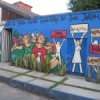
BRAZIL: Bringing Community Mental Health to the Poor
Zilá Ferreira and Juraci Lisboa were in the grip of depression since 1996 – the former over the death of her mother, and the latter because she was "abandoned with seven children under 14."« Previous Page — Next Page »


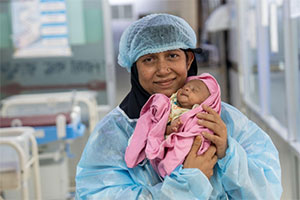 Bangladesh: Sarid, born one month early, receives specialized newborn care and grows stronger every day. Credit: UNICEF/UNI944397/Mojumder
Since the onset of the 2000s, global life expectancy has seen an overall rise, attributed to significant technological and scientific innovations in healthcare. Due to an increased understanding of different conditions as well as a rise in cooperation among healthcare experts around the world, there have been major strides made in ensuring that as few people die from chronic illnesses as possible. Despite the belief that healthcare is a fundamental human right, people from low- or middle-class backgrounds, marginalized groups, and underdeveloped countries have far more limited access to basic healthcare services.
The COVID-19 pandemic showed how marginalized communities are disproportionately affected by health crises, proving that we have much work to do in ensuring that no one dies of terminal conditions. While the global response to the coronavirus saw significant strides in immunization and vaccine development, the global outbreak of mpox in 2022 and its upsurge in parts of Africa in 2024 must remind us to remain vigilant.
Other major disease outbreaks in recent years have been linked to the destruction of infrastructure during warfare. Notably, in 2024, the Gaza Strip witnessed a return of the poliovirus since its eradication in the region 25 years ago. Israel’s blockade on Gaza has resulted in the collapse of the region’s sewage plants and desalination plants, and also destroyed healthcare capacities. The UN stated that this lack of clean water and sanitation would lead to an outbreak of cholera and other deadly infectious diseases. The 2026 OCHA Humanitarian Situation Report confirmed that the over two years of conflict in Gaza has produced a catastrophic health emergency, with millions remaining dependent on relief aid amid tight restrictions and no functioning public health system.
IPS is committed to providing full and comprehensive coverage on healthcare challenges around the world. IPS seeks to address the multifaceted causes of such challenges, including unprecedented pandemics, conflict-driven disease outbreaks, as well as socioeconomic barriers to equal healthcare access. IPS is also dedicated to reporting on innovations in the healthcare industry.

The Week with IPS

NEXT STOP - SDGs
Tracking global progress towards a sustainable world
Tracking global progress towards a sustainable world
