Languages
Friday, November 20, 2026



News and Views from the Global South
Health
RIGHTS: Disfiguring Disease Linked to Right to Food
Noma, an ulcerous disease whose name comes from a Greek word that means "to devour" because it literally eats away at malnourished children's faces in just a few months, is found in the developing world, mainly in Africa.HEALTH-AFRICA: Family Planning: Expand Role For Private Sector
Dwindling donor support in the face of rising contraceptive demand, combined with diminishing government budgets could make already widespread shortfalls in the provision of contraceptives worse. African reproductive health experts are suggesting that the private sector could be the key to filling the gap.MIDEAST: New Israeli Plan to Warn of Impending Attacks
The Israeli Defence Force (IDF) is taking new measures to warn Palestinian civilians about impending aerial attacks. This comes in response to questions raised over whether Israel had complied with international laws during its 2006 war in Lebanon and the Gaza offensive earlier this year.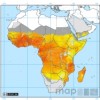
HEALTH-AFRICA: Better Tools to Target Malaria
Roughly a billion dollars a year is spent fighting malaria. Using this money most effectively calls for a detailed understanding of exactly who is at risk - enter the Malaria Atlas Project (MAP).
CULTURE: Young Women in Chat Rooms Beware
Internet and mobile phones have spawned a new kind of marriage in the Gulf.CUBA: Fullest Possible Social Inclusion for the Disabled
Arnoldo Ramón Virgilio’s legs are of little use to him, but he has a way with words that more than makes up for any physical limitations. He’s one of the outpatients at the "América Labadí Arce" Medical and Education Centre, which provides health care and rehabilitation for the disabled in this city in eastern Cuba.
HEALTH-SOUTH AFRICA: Wheeling and Healing
Every weekday morning, a stylish procession leaves the offices of MaAfrika Tikkun NGO in Delft, Cape Town; bumps and jolts through the gravel entry gates; then hits the tar and scatters into every corner of the township...MIDEAST: Traumatised Children Struggle to Rise Again
Tens of thousands of children in Gaza are still suffering from Post Traumatic Stress Disorder (PTSD) following Israel's three-week bombing December- January.
HEALTH-AFGHANISTAN: Patients at Private Doctors' Mercy
Thirty five-year-old Habibulah Khan walks out of a private clinic in the Afghan capital, covered in dust and looking dog-tired.
HEALTH-AFGHANISTAN: Private Care – Designed to Make Money
Forty five-year-old Rahima thought she was going to die. Her family had checked her into Shenuzada, a private hospital in Makroyan in the Afghan capital, for an operation on her abdomen.PARAGUAY: Dance Helps Disabled Kids Leap Barriers
Nicolás, a 14-year-old disabled boy, was finally able to open up and begin expressing himself thanks to Open Wings, a project in Paraguay that uses modern dance as a tool to help youngsters with disabilities develop on both the physical and psychological level.
HEALTH: Fighting AIDS in Conservative Mauritania
Campaigners against HIV/AIDS in Mauritania face an uphill task to put their messages across, especially those that deal with safer sex and condom use. Campaigners have to cut corners in order to avoid angering the country's powerful religious clerics.HEALTH-AFRICA: TB Vaccine In The Pipeline
For the first time in eighty years, a new Tuberculosis (TB) vaccine has entered the efficacy stage of a clinical trial. While the developers are optimistic about the outcome, lung health and TB experts are warning against being overly excited.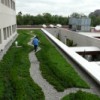
MEXICO: Green Therapy on the Rooftops
In the last two years a Mexico City hospital, kindergarten and municipal government office building have experimented with plant-covered rooftops. Today, workers and visitors are enjoying the benefits.
HEALTH-AFRICA: Early ART: A Stitch in Time…
A global call to put people living with HIV on antiretroviral therapy (ART) at an earlier stage of their illness is intensifying, but most developing countries, especially in Africa, are struggling to meet the current recommendations.U.S.: Coal Power Hitting Roadblocks
As more and more states are turning against coal power facilities in the U.S., advocates have been using the legal system to halt new pending plants.HEALTH-AFRICA: HIV Laws Do More Harm Than Good
In Sierra Leone, a mother who transmits HIV to her child can be fined, jailed for up to seven years, or both. Human Rights Watch reports that in 2008, several men were arrested in Egypt simply for being HIV positive. New legislation is currently being discussed in Angola that could lead to a three to ten year jail sentence for those who knowingly pass on HIV.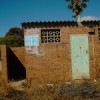
ZIMBABWE: Neglect Sanitation at Your Peril
A functioning public toilet has become a rare sight in Bulawayo. Across this southern Zimbabwean city of about two million residents, public toilets have all but stopped functioning, the buildings now more useful as platforms for graffiti and campaign posters than as public conveniences where people answer the call of nature.ENVIRONMENT: Monsanto, Dow Stacking the Deck, Critics Say
The most complex genetically engineered corn (maize) yet has been approved for use next year in Canada and the United States without its potential health and environmental risks being investigated, anti-biotech activists charged Wednesday.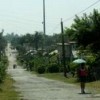
DEVELOPMENT-CUBA: Water Scarce at the 'Singing Frog'
Canta Rana, which somewhat ironically translates as "Singing Frog", is more than just a neighbourhood in this town in the drought-stricken eastern Cuban province of Holguín. Here, at the highest point in the area, which provides a view of the entire town and the sugar mill tower, there is a huge tank marked by rust, the passage of time and the scarcity of water.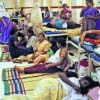
HEALTH-INDIA: High Morbidity Mars Kerala Women’s Progress
While Kerala, in southwest India, enjoys enviable indices when it comes to health and human development, the state seems unable to shake off high chronic morbidity rates among its women.« Previous Page — Next Page »


 Bangladesh: Sarid, born one month early, receives specialized newborn care and grows stronger every day. Credit: UNICEF/UNI944397/Mojumder
Since the onset of the 2000s, global life expectancy has seen an overall rise, attributed to significant technological and scientific innovations in healthcare. Due to an increased understanding of different conditions as well as a rise in cooperation among healthcare experts around the world, there have been major strides made in ensuring that as few people die from chronic illnesses as possible. Despite the belief that healthcare is a fundamental human right, people from low- or middle-class backgrounds, marginalized groups, and underdeveloped countries have far more limited access to basic healthcare services.
The COVID-19 pandemic showed how marginalized communities are disproportionately affected by health crises, proving that we have much work to do in ensuring that no one dies of terminal conditions. While the global response to the coronavirus saw significant strides in immunization and vaccine development, the global outbreak of mpox in 2022 and its upsurge in parts of Africa in 2024 must remind us to remain vigilant.
Other major disease outbreaks in recent years have been linked to the destruction of infrastructure during warfare. Notably, in 2024, the Gaza Strip witnessed a return of the poliovirus since its eradication in the region 25 years ago. Israel’s blockade on Gaza has resulted in the collapse of the region’s sewage plants and desalination plants, and also destroyed healthcare capacities. The UN stated that this lack of clean water and sanitation would lead to an outbreak of cholera and other deadly infectious diseases. The 2026 OCHA Humanitarian Situation Report confirmed that the over two years of conflict in Gaza has produced a catastrophic health emergency, with millions remaining dependent on relief aid amid tight restrictions and no functioning public health system.
IPS is committed to providing full and comprehensive coverage on healthcare challenges around the world. IPS seeks to address the multifaceted causes of such challenges, including unprecedented pandemics, conflict-driven disease outbreaks, as well as socioeconomic barriers to equal healthcare access. IPS is also dedicated to reporting on innovations in the healthcare industry.

The Week with IPS

NEXT STOP - SDGs
Tracking global progress towards a sustainable world
Tracking global progress towards a sustainable world
