Languages
Friday, October 9, 2026



News and Views from the Global South
Health

Are Sustainable Cities a Pipe Dream?
Cities, once thought to be modern utopias that foster innovation, inclusivity, and commerce, actually ended up being hubs for environmental degradation. Although the concept of urban living is inextricable from humanity, there are proposed ways to make them less environmentally taxing. One such solution is the idea of a sustainable city, otherwise known as a metropolis that effectively consumes fossil fuels and disposes of emissions with regards to the longevity of the planet as well as the economic wellbeing of its citizens. Cities can also be considered sustainable so long as they curb the consequences of consumption through means such as recycling or using healthier energy sources. Although this sounds like a simple path forward in Earth’s journey of decarbonizing, we must take a plethora of issues into consideration, such as transportation, housing, manufacturing, trade, and comfort.
From Trauma to Triumph: Kenyan Women’s Courageous Battle Against Female Genital Mutilation
In the heart of Empash village, a fragmented community nestled in Suswa, Narok County, some 62 miles northwest of Nairobi, Naomy Kolian's story unfolds like a gripping saga of pain, resilience, and unyielding determination. It was here, amidst the familiar surroundings of her home, that she was subjected to female genital mutilation (FGM), a brutal tradition that left her with physical and emotional scars. This hidden trauma would linger, haunting her well into adulthood.
Overwhelmed Healthcare Systems in Gaza Struggle Through Evacuation Orders
For nine months, over 2 million people in the Gaza Strip have been forcibly displaced in the wake of the armed conflict between Israel and Hamas. The ongoing fighting and displacement have put significant strain on humanitarian organizations on the ground to address even basic health needs. The United Nations and other humanitarian organizations have stressed that the healthcare system in Gaza has collapsed or has suffered undue pressure as a result of the fighting. Out of 36 hospitals in the area, 13 remain open, operating with partial functionality.
Is Artificial Intelligence The Way Forward or Backward?
Contrary to popular belief, artificial intelligence has been a cornerstone of technological progress for much longer than the past few years. Computer scientist Alan Turing brought forth the concept of computers solving complex human problems with his invention of the Turing Machine in 1936. This machine provided solutions to a seemingly infinite number of problems, yet the technological limitations of the early 1900s proved that this number was indeed very finite. Flash forward to the 2020s, artificial intelligence has become a widespread practice, impacting different fields such as music, art, science, forensics, finance, agriculture, and many others. Although artificial intelligence has been hailed as the future of human progress, it also poses a risk to this future due to its significant carbon footprint.
New Child Marriages, Cohabitation With a Child Law in Sierra Leone Lauded
“A person shall not contract marriage with a child,” Sierra Leone’s landmark Prohibition of Child Marriage Act 2024 says, outlawing, in no uncertain terms, child marriage, giving consent to and attempted child marriage, officiating, attending and promoting child marriage, and use of force or ill-treatment of a child.
Lebanon’s Deep Healthcare Crisis Exposed through Communicable Diseases
This summer is bringing an additional challenge to the public health front in Lebanon, along with higher-than-normal temperatures.
US Fed- Induced World Stagnation Deepens Debt Distress
For some time, most multilateral financial institutions have urged developing countries to borrow commercially, but not from China. Now, borrowers are stuck in debt traps with little prospect of escape.
Pandemic’s ‘Silver Lining’ for Caribbean Was the Use of Technology
 Global South countries did get one benefit from the COVID-19 pandemic. A professor at St. George’s University in Grenada describes it as the pandemic’s “silver lining." He was referring to the widespread use of next-generation genomic sequencing technology to identify, track, and trace the numerous variants of the Sars Cov-2 virus. Researchers and scientists in the Caribbean, Africa, and elsewhere have been eagerly harnessing genomic sequencing technology to develop resilience and greater self-sufficiency in numerous fields, ranging from health surveillance to agriculture and beyond.

Mayurbhanj Kai Chutney: From Forests to Global Food Tables
On a scorching May morning, Gajendra Madhei, a farmer from Mamudiya village, arrives at the local bazaar in Udula, a town in Odisha's Mayurbhanj district. He displays freshly caught red weaver ants, known locally as kai pimpudi, in the bustling tribal market. Thanks to the recent recognition of Mayurbhanj's Kai chutney, or red weaver ant chutney, with a Geographical Indication (GI) tag awarded in January, his business of selling the raw ants has seen a significant surge in profitability.
Kashmir Frontier Woman Leads the Way in Breaking Down Patriarchy
Smelling the toxic smoke coming from burned powder kegs and helplessly watching fields turn into smoke and ash is traumatic. Rushing to the government's safe houses and leaving your homes, belongings and cattle behind whenever the armies of India and Pakistan trade fire is inexplicable. Then came climate-change-induced weather unpredictability.
Finance Healthcare, Not Insurance Premia
Comparative research on healthcare financing options shows revenue-financed healthcare to be the most cost-effective, efficient, and equitable, while all health insurance imposes avoidable additional costs.
Women Warriors Winning Fight to Bring Back Indigenous Food Traditions
As the school lunch bell goes off, 40 eager little bodies—41 if you count the school dog—burst out onto the veranda. Awaiting them are a stack of steel platters, into which will be ladled a nutritious and delicious lunch, all of it indigenous cuisine.
The World Bank Must Double Its Fund for the Poorest Nations like Mine to Tackle Hunger Crisis
After El Niño-induced floods and devastating drought, roughly two in five people in Malawi – a country of some 20 million people – are now facing the looming prospect of acute hunger by the end of the year.
Unveiling the “Dark Matter” of Food, Diets and Biodiversity
This year, bee pollen has become a trendy superfood thanks to a wide range of potential benefits. Last year, sea moss led the superfood trends. Before that, it was turmeric.
Indignity, Disease, Death—The Life of a Sewer Worker in Pakistan
A dark head emerges, followed by the torso. The balding man heaves himself up, hands on the sides of the manhole, as he is helped by two men. Gasping for breath, the man, who seems to be in his late 40s, sits on the edge, wearing just a pair of dark pants, the same color as the putrid swirling water he comes out from.
Turning the Tide: Health Community Turns to UNFCCC for Inclusivity
There is a rapid realization that climate change is impacting health, which is why the recently adopted World Health Organization's Climate Change and Health Resolution is considered pivotal.
People at Risk Need Protection Before Another Hot Summer
Spring has traditionally brought a welcome new beginning: daylight increases, flowers bloom and temperatures are pleasantly warm. However, in recent years, it’s also brought justified fears about extreme heat with summers in Southern Europe getting increasingly hot because of climate change. Older people, children, people with disabilities, and people with mental health conditions are among those at higher risk.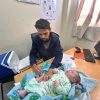
International Community Urged to End Impunity for Violence Against Healthcare in Conflicts
Governments and international agencies must do more to end impunity for violence against healthcare, campaigners have urged, as a new report shows that attacks on healthcare during conflicts reached a new high last year.
Rising Temperatures Drive Human-Wildlife Conflict in Zimbabwe
Rising temperatures are being blamed for an increase in human-wildlife conflicts in Zimbabwe as animals such as snakes leave their natural habitat earlier than usual.
Afghan Women Struggle with Soaring Mental Health Issues
Afghanistan is grappling with a growing crisis of mental illness, particularly among its women, as highlighted in a United Nations report. Officials from the mental health department at Herat regional hospital have observed a concerning uptick in the number of women afflicted by psychological disorders in the province.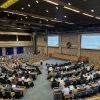
SBSTTA and SBI—Biodiversity Meetings Crucial for the Global South Begin
The 26th meeting of the Subsidiary Body of Scientific, Technical, and Technological Advisors (SBSTTA) of the United Nations Convention on Biological Diversity (UNCBD) started in Nairobi, Kenya, on Monday. Over 1,400 delegates, including 600 representing signatories or parties from over 150 countries, are present for the seven-day meeting at the headquarters of the United Nations Environment Programme (UNEP). A large number of members from Indigenous Peoples and other observer organizations, including women’s groups, are also attending the meetings.« Previous Page — Next Page »





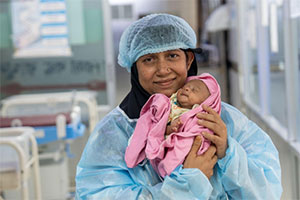 Bangladesh: Sarid, born one month early, receives specialized newborn care and grows stronger every day. Credit: UNICEF/UNI944397/Mojumder
Since the onset of the 2000s, global life expectancy has seen an overall rise, attributed to significant technological and scientific innovations in healthcare. Due to an increased understanding of different conditions as well as a rise in cooperation among healthcare experts around the world, there have been major strides made in ensuring that as few people die from chronic illnesses as possible. Despite the belief that healthcare is a fundamental human right, people from low- or middle-class backgrounds, marginalized groups, and underdeveloped countries have far more limited access to basic healthcare services.
The COVID-19 pandemic showed how marginalized communities are disproportionately affected by health crises, proving that we have much work to do in ensuring that no one dies of terminal conditions. While the global response to the coronavirus saw significant strides in immunization and vaccine development, the global outbreak of mpox in 2022 and its upsurge in parts of Africa in 2024 must remind us to remain vigilant.
Other major disease outbreaks in recent years have been linked to the destruction of infrastructure during warfare. Notably, in 2024, the Gaza Strip witnessed a return of the poliovirus since its eradication in the region 25 years ago. Israel’s blockade on Gaza has resulted in the collapse of the region’s sewage plants and desalination plants, and also destroyed healthcare capacities. The UN stated that this lack of clean water and sanitation would lead to an outbreak of cholera and other deadly infectious diseases. The 2026 OCHA Humanitarian Situation Report confirmed that the over two years of conflict in Gaza has produced a catastrophic health emergency, with millions remaining dependent on relief aid amid tight restrictions and no functioning public health system.
IPS is committed to providing full and comprehensive coverage on healthcare challenges around the world. IPS seeks to address the multifaceted causes of such challenges, including unprecedented pandemics, conflict-driven disease outbreaks, as well as socioeconomic barriers to equal healthcare access. IPS is also dedicated to reporting on innovations in the healthcare industry.

The Week with IPS

NEXT STOP - SDGs
Tracking global progress towards a sustainable world
Tracking global progress towards a sustainable world
