Languages
Monday, August 17, 2026



News and Views from the Global South
Health

Better Late than Never, but Act Now
The world should now be more aware of likely COVID-19 devastation unless urgently checked. Last week, the World Health Organization (WHO) announced an US$8 billion plan to quickly vaccinate many more people to expedite ending the pandemic.
Mental Health at a Cost, Inequality
World Mental Health Day was on October 10, 2021. The theme for this year was "Mental Health in an unequal World". This is an appropriate focus given the extreme inequities to access to mental health services that exist in our society.
China and the UN at 50- What We Can Achieve Together
China was one of the architects of the United Nations and was the first signatory of the UN Charter in San Francisco in 1945. But it was only in October 1971, with the Chinese delegation led by Mr. Qiao Guanhua, that China’s representation at the UN resumed. Since that time, the UN has had the great privilege of witnessing and supporting China in achieving one of the greatest periods of socio-economic progress in world history.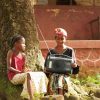
When Girls Have Access to Technologies, A True Digital Revolution Will Be In Sight
This year’s International Day of the Girl theme, Digital Generation, Our Generation, celebrates the potential of digital technologies while calling for the inclusion of all girls in accessing technology. The digital revolution will not be realized if girls without access to digital solutions are left behind. For years, advocates of technology for development have been repeating the mantra that technology is not a panacea. Yet in racing to connect, catch up, and create greater access, we ignore at our own peril the inconsistent or non-existent household- and community-level access girls have to technologies. While digital solutions are available and evolving all the time, they should be accompanied by hybrid methods which include new ways to use analog technologies, so that existing local resources are reimagined and redistributed in ways that support more girls learning.
Mounting Scramble for Coronavirus Vaccines in Zimbabwe
More than a month ago, she lost her parents, brother, and wife, to the coronavirus. Then her fiancé battled COVID-19, but 27-year-old Melinda Gavi said she had not contracted the disease.
Build Forward Fairer in the Wake of the COVID-19 Pandemic
Cities have been epicentres of the COVID-19 pandemic since 2020. City authorities have been the frontlines responders—from running testing stations, to managing food distribution, to disposing of corpses. Yet they are often under-resourced, and their critical role in policy implementation is often overlooked.
The CDC Turns Its Back on Migrants and Science
Last month, asylum-seeking families at the U.S.-Mexico border appeared to have won a victory, however temporary, in their last-ditch bid for safety in the United States. It was also a victory for evidence-based public health policy.
Where on Earth is a Water-Secure World?
It is not uncommon for a water-centric research, policy or development organization or network to declare its long-term vision of the “water-secure world”. It reads nicely and feels great.
New Education Cannot Wait Annual Results Report Highlights Multiplying Education Challenges for Children & Adolescents Living in Emergencies & Protracted Crises amid Covid-19
On this World Teachers’ Day, Education Cannot Wait (ECW), the United Nations global fund for education in emergencies and protracted crises, announced it has reached more than 4.6 million children and adolescents (48% of whom are girls) with quality education in more than 30 of the worst humanitarian crises around the world.
Afghan Women – The Emerging Narrative and Why it is Wrong
The USA and its allies have repeatedly stated that promoting women’s rights was one of the key reasons they were in Afghanistan. The US military top brass, in a letter to marines stated that they were in Afghanistan “for the liberty of young Afghan girls, women, boys, and men who want the same individual freedoms we enjoy as Americans”.
Education Cannot Wait Annual Results Reveals the Devastating Impact of COVID-19 on Learning for Children in Emergencies and Protracted Crises
The COVID-19 pandemic has changed the face of education globally, but for children in emergencies and protracted crises, its blow has been particularly devastating.
Multilateral Financial Institutions Can Catalyze Public Development Banks (PDB) to Deliver SDGs
There is broad consensus that realizing the Sustainable Development Goals (SDGs) and the Paris Agreement on climate change require a transformative agenda for agriculture and food systems. In this context, the importance of mobilizing more investments and aligning them to sustainable development and inclusive rural transformation objectives, is widely acknowledged.
Making Online Health News Reliable, Accessible
Telemedicine and health-related information have experienced a massive uptake since the COVID-19 pandemic began last year. While online health services are seen as a panacea for many ills, disinformation and fake news reports have tarnished their credibility.
Digital Equity for All Ages
The growing number and share of older persons in Asia and the Pacific represent success stories of declining fertility and increasing longevity; the result of advances in social and economic development. This demographic transition is taking place against the backdrop of the accelerating Fourth Industrial Revolution. But COVID-19, with its epicentre now in Asia and the Pacific, has exacerbated the suffering of older persons in vulnerable situations and demonstrated the fragility of this progress.
Zero Hunger Campaign in Vietnam Targets Remote Areas and Cities
Amidst the verdant hills and remote corners of Vietnam’s rural regions, the growth that has transformed the economy in this part of Southeast Asia in recent decades can be hard to see. Undernourishment among children still results in stunting – even in cities too where overweight/obesity is also on the rise.
The Plight of Haiti
I assume channel surfing and internet browsing contribute to a decrease in people’s attention span. I am not familiar with any scientific proof, though while working as a teacher I found that some students may be exhausted when five minutes of a lesson has passed and begin fingering on their smartphones. They might also complain if a text is longer than half a page, while finding it almost impossible to read a book.
Leprosy has a Cure, so has Prejudice, says Miss Universe Brazil
A new dawn has come, and it was through the work of Yohei Sasakawa, the WHO Goodwill Ambassador for Leprosy Elimination, that those affected by leprosy now had a voice to speak for themselves.
Delivering On the Promise of Health For All Must Include Gender Equality and SRHR
Gender-responsive universal health coverage (UHC) has the proven potential to transform the health and lives of billions of people, particularly girls and women, in all their intersecting identities. At tomorrow’s kick-off to the 2023 UN High-Level Meeting (HLM) on UHC, Member States and stakeholders will review progress made on the 2019 HLM’s commitments and set a roadmap to achieve UHC by 2030. We, as the co-convening organizations of the Alliance for Gender Equality and UHC, call on Member States to safeguard gender equality and sexual and reproductive health and rights (SRHR) as part of UHC implementation, especially in light of the gendered impacts of the COVID-19 pandemic.
Young Migrant Workers Bear Brunt of COVID-19 Pandemic
Most families in the Republic of Tajikistan were affected when economic migrants were caught up in the COVID-19 pandemic abroad, Dr Vazirov Jamshed, research consultant for Asian Forum of Parliamentarians on Population and Development (AFPPD), told a webinar on the impact of the pandemic on youth.
Seizing the Post-Pandemic Opportunity to Transform Food Systems
The global food system needs a massive overhaul – this was clear before the Covid pandemic and it is even more true today. Feeding the world in a sustainable and healthy way is entirely possible but it is also inextricably linked to tackling the climate crisis by reaching net zero emissions, and to halting the dizzying decline in bio-diversity which is currently threatening the survival of one million plant and animal species.
Biden Disappoints, Must Do More, Not Less
US President Biden’s earlier support for a vaccine patent waiver raised hopes for his summit last week. However, it proved disappointing, not only for efforts to end the pandemic, but also for US leadership in these challenging times.« Previous Page — Next Page »


