Languages
Saturday, August 22, 2026



News and Views from the Global South
Health

Stopping Marine Plastic Pollution: A Key IUCN Congress Goal
Documented images of albatross chicks and marine turtles dying slow deaths from eating plastic bags and other waste are being seared into our consciences. And yet our mass pollution of Earth’s seas and oceans, fuelled by single-use plastics and throw-away consumerism, just gets worse.
Water: A Matter of Survival in the World of Pandemics
The COVID-19 pandemic has undeniably amplified the existing vulnerabilities of billions of people worldwide. Marginalized communities in developing countries were excluded from social protection and support.
COVID-19 Pandemic Exacerbates Domestic Workers’ Plight in Bangladesh
Rani Akter, a mother of five, usually works as a domestic helper in Dhaka’s Zikatola area. When the coronavirus pandemic broke out in Bangladesh last March, her employers asked her not to come to their homes for fear of infection. “I lost my work in three houses one after the other, which became a nightmare for me. My rich employers did not allow me in their homes as they thought that I might carry the invisible virus,” Akter told IPS.
New COVID-19 testing equipment deployed in Tonga
Last week, the Tonga Laboratory Services completed the installation of a 4 module GeneXpert testing equipment used for diagnosis of COVID-19 infection and to increase SARS-coV-2 testing capacity.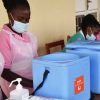
“We Need to Act Now” — as Sub-Saharan Africa Faces Third Wave of Covid-19
Sub-Saharan Africa is in the grips of a third wave of COVID-19 infections that threatens to be even more brutal than the two that came before.
Does a New ‘Gold Standard’ Really Protect Miners?
Many products these days come with the promise that workers and communities all along their supply line are protected from abuse under a particular standard or code of conduct. Since the United Nations adopted the Guiding Principles for Business and Human Rights a decade ago, a plethora of such certification systems have emerged, including for mining and connected industries ranging from cars to jewelry and electronics.
Acceleration Rights Plan for Gender Equality Mooted at Equality Forum
As the global gathering for gender equality, the Generation Equality Forum, kicks off in Paris on June 30, 2020, IPS conducted an exclusive interview with Katja Iversen.
Universal Civil Registration and Vital Statistics Are Critical for Truth, Trust and COVID Recovery in Asia and the Pacific
With health systems at a breaking point, hospitals at capacity and desperate family members searching for oxygen for loved ones, the devastating second wave of COVID-19 that has swept across South Asia has felt ¬surreal. Official figures have indicated record-breaking daily coronavirus cases and deaths, not only in South Asia, but across the entire Asia-Pacific region during the latest surge. As devastating as it has been, the truth is we may never know how many people have died during the pandemic.
To Build Back Better from the Pandemic, We Must Overhaul the Way We Deal with Development Finance
Over the past 18 months, the impacts of the coronavirus pandemic have transformed our lives and prompted a period of deep reflection as a global community. In some sense, we are only now starting to understand our vulnerabilities, and in particular, how deeply exposed and interconnected we are as people, communities and as countries.
Southeast Asia and Food Price Inflation: Double Whammy
In 2020, Southeast Asian countries were already facing varied challenges that affected the region’s food supplies and prices. The onset of the Covid-19 pandemic later in the year exacerbated the region’s food insecurity and poverty. Southeast Asian countries need to take a hard look at food security, even as the double challenges — climate change and the Covid-19 pandemic — continue to fester.
Global Herd Immunity Remains Out of Reach Because of Inequitable Vaccine Distribution – 99% of People in Poor Countries Are Unvaccinated
In the race between infection and injection, injection has lost. Public health experts estimate that approximately 70% of the world’s 7.9 billion people must be fully vaccinated to end the COVID-19 pandemic. As of June 21, 2021, 10.04% of the global population had been fully vaccinated, nearly all of them in rich countries.
COVID-19 as Instigator of Bigotry, Chauvinism and Megalomania
By the end of April 2019, a government campaign to vaccinate more than 40 million children under five against polio in Pakistan was suspended after a series of attacks on health workers and police. On 23 April, a police officer protecting polio workers was gunned down in Bannu, the same day a polio worker was in Lahore seriously wounded by a father “protecting his child from vaccination”, these incidents were followed by the murder of another police and a health worker under his protection. Health workers were also seriously wounded in the districts of Sindh, Balochistan and Punjab. Afghanistan and Pakistan are the only countries where polio remains, in all other nations of the world vaccination campaigns have eliminated the disease. In April this year, three female polio vaccine providers were killed in Afghanistan.
A Time for Systemic Solutions in Latin America & the Caribbean
The first wave of COVID-19 never ended in Latin America and the Caribbean (LAC). Since the region became a hotspot for the pandemic in June 2020, successive waves have continued to build upon the first.
130 Countries Promise to Protect and Invest in Health Care Workers
One hundred and thirty countries have signed a statement recognising the efforts of health care workers, first responders and essential workers during the COVID-19 pandemic – "one of the greatest global challenges in the history of the United Nations".
Digital Media on the Frontline: Supporting the Ones who Support the Rest
For Dr Farzana Khan, a frontline worker and a second-generation immigrant from Pakistan living in California, social media helped her connect and realign herself during the COVID-19 pandemic.
Boldly Finance Recovery to Build Forward Better
COVID-19 has become a “developing country pandemic”, retreating from the North’s mass vaccination. With developing countries heavily handicapped, the International Monetary Fund (IMF) warns of a “dangerous [new] divergence”.
Education Cannot Wait for Refugee Children in Crisis, says Yasmine Sherif
With financing, the number of out-of-school refugees could be reduced to zero, Yasmine Sherif, Director of Education Cannot Wait (ECW) says, as the world commemorates World Refugee Day.
For People with Disabilities, COVID-19 Lays Bare the Weaknesses in Social Safety Nets
People with disabilities were particularly hard hit by the social and economic impacts of efforts to control COVID-19.
Apocalypse Now? Christian Fundamentalists and COVID-19

Central Sahel: Ground Zero in Tackling Climate Change Through Education
The climate crisis is amplifying the effects of instability and violence in the world’s poorest countries. Nowhere is this more visible than in Africa’s Central Sahel region, where increasing temperature, floods, droughts and other climate change-induced disasters are triggering conflicts, displacement, and pushing girls and boys into the shadows.
Developing Country Health Professionals Sidelined in Canadian Healthcare
In Canada, we are fortunate to have many talented newcomers eager to contribute to the country, including thousands of doctors from Africa, Asia and the Middle East who meet Canadian standards but are blocked from becoming practicing physicians. These doctors are Canadian citizens and permanent residents with recognized training and experience.« Previous Page — Next Page »


