Languages
Wednesday, November 11, 2026



News and Views from the Global South
Health

Human Rights and Compassion Must Guide Enforcement of COVID-19 Mitigation
Covid-19 infections continue to rise, bringing normal life to a virtualstandstill and causing countries to shut themselves off from the rest of the world.
Pandemic Crisis May Trigger Societal Restructuring
The Chinese word for crisis consists of two characters - “weiji”. Wei means danger and ji means opportunity. Every crisis is pregnant with danger and risks but also with opportunities – for some to make money, for others to learn valuable lessons, and for society to reorient or restructure its priorities, institutions and even the system.
Latin America Has Weak Defences Against the Pandemic
Health systems in Latin America, already falling short in their capacity to serve the population, especially the poor, are in a weak position and face serious risks when it comes to addressing the COVID-19 pandemic.
Coronavirus: Country Comparisons are Pointless Unless We Account for These Biases in Testing
Suppose we wanted to estimate how many car owners there are in the UK and how many of those own a Ford Fiesta, but we only have data on those people who visited Ford car showrooms in the last year. If 10% of the showroom visitors owned a Fiesta, then, because of the bias in the sample, this would certainly overestimate the proportion of Ford Fiesta owners in the country.
U.N. Releases Report on Socio-economic Effects of Coronavirus
As the number of coronavirus cases continues to grow, concerns are simultaneously growing about the current and long-term effects this will have on certain demographics -- specifically, women, the youth, migrant workers, and many employees around the world.
The Fierce Urgency of Now – ECW Allocates $15M in Emergency Funds
The Education Cannot Wait Global Fund (ECW) allocates a total of US$15 million in an initial series of emergency grants for the rapid delivery of holistic education services to protect and support vulnerable children and youth hit by the COVID-19 pandemic in 16 countries/emergency contexts. These girls and boys are already impacted by armed conflicts, forced displacement, natural disasters and protracted crises. An additional series of grants to support the response in other crisis-affected countries will be released shortly and reach partners in-country in the coming days.
What More than COVID-19 to Jolt G20 into Collective Action?
My recent study on “The G20@10: Time to shift gears” 1 shows that, during the past decade, the main joint, collective action of the G20 has been to issue communiqués and other types of statements.
COVID-19 requires gender-equal responses to save economies
Globally, women are more vulnerable to economic shocks wrought by crises such as the coronavirus pandemic. Why are women so at risk? Firstly, women are more likely to lose their jobs than men. In many countries, women's participation in the labour market is often in the form of temporary employment.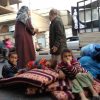
The Gaza Strip and COVID-19: Preparing for the Worst
The coronavirus is now present in Gaza, the populous Palestinian enclave blockaded by air, land and sea since 2007. An epidemic would be calamitous. Hamas should tighten public health measures; Israel should loosen restrictions so that medical supplies can enter and afflicted Palestinians can
Snapshot of Life under Lockdown in Bangladesh
 The Coronavirus pandemic is changing how we live our daily lives. The scale of the COVID-19 and its impact on our lives is unprecedented. When humanity gets past this, the world will be a very different place than the one we have known.

Coronavirus Proves Need for Free Healthcare for All– Now
The multi-layered crisis of the Coronavirus epidemic has been a dramatic shock to everyone. But, to communities affected by HIV and AIDS, the crisis has not only brought a further shock to already vulnerable people, it has brought other reactions too – a troubling sense of déjà vu, and a passionate, empathetic, fierce solidarity with all those affected by Coronavirus.
Surviving Domestic Violence in times of Covid19
“I come from Baglung District, a part of Dhawalagiri Zone in Nepal. My house overlooks the river. Do you know, our district is known for the suspension bridges?”, her eyes glimmer for a fraction of a second and then she breathes a heavy sigh! Her right hand is still wrapped in a scarf, while with the other she pats her 17-month-old. “If I ever get a chance I will take you to my village, we have a lot of medicinal plants.” She pauses while tears roll down as she continues our Facetime session. “I was 16 when I had my first child and I was 17 when my arm was broken by my mother-in-law.”
Dangers and Lessons of Present Multiple Crises
The Covid-19 pandemic, erupting in the background of lethargic global economy, could turn out to be the singular biggest crisis in a century. First reported in Wuhan, China, the corona virus has reached almost all countries. It has infected close to 1 million persons and caused over 40,000 deaths at time of writing; and the figures keep climbing. It is a health catastrophe which if not checked in its track would be the most serious since the Spanish Flu of 1918 that killed over 50 million people.
Chinese Academic Defends Country’s Role amid Covid-19 Crisis
Global crises need global solutions yet some adjustments will have to be made if the world has to adopt a multilateral approach toward tackling the Corona pandemic, a senior academic said on Tuesday, March 31.
The Economic Impact of COVID-19 on Developing Countries
What is likely to be the impact of the COVID-19 pandemic on developing economies? It is difficult to make predictions, because much will depend on the spread of the disease, especially in Africa, Latin America, Asia and the Middle East, and the measures various Governments will take in the coming weeks and months.
Education Cannot Wait Interviews Henrietta H. Fore, Unicef Executive Director
Henrietta H. Fore became UNICEF’s seventh Executive Director on 1 January 2018. She has worked to champion economic development, education, health, humanitarian assistance and disaster relief in a public service, private sector and non-profit leadership career that spans more than four decades.
The Need for Empathy in the Time of Coronavirus
The experience and interpretation of the Coronavirus pandemic oscillates between the personal and the general spheres. The official discourse and measures taken by authorities have a direct impact on our lives, change our daily existence and foster worries for the future. A dark cloud of uncertainty hovers above us. What do decision makers know? What can they do? What can we do? Many of us are secluded in our own homes, others in wards or hospitals, or even alone and far away from the ones they love:
COVID-19 and Education in Emergencies
Armed conflicts, forced displacement, climate change induced disasters and protracted crises have disrupted the education of 75 million children and youth globally. And that number is growing in an unprecedented way with the spread of COVID-19. Education has been hit particularly hard by the COVID-19 pandemic with 1.53 billion learners out of school and 184 country-wide school closures, impacting 87.6% of the world’s total enrolled learners. Drop-out rates across the globe are likely to rise as a result of this massive disruption to education access.
Life in the Time of COVID-19: Quo Vadis Homo Sapiens?
The writing is on the wall for all to see from far and wide – there is nowhere to hide from this invisible enemy, a new coronavirus, maybe with the exception of self-isolation, quarantined at home and even then, we are not 100% safe.
West First Policies Expose Myths
As the epicentre of the COVID-19 pandemic shifts from China to the developed West, all too many rich countries are acting selfishly, invoking the ‘national interest’, by banning exports of vital medical supplies.
Life in the Times of Corona: Lockdown & Livelihood in the Lurch
The worldwide spread of novel coronavirus disease (COVID-19) is severely affecting the global economy and as per the recent updates almost one-third to half of the global population are now under some form of a lockdown.« Previous Page — Next Page »





 Bangladesh: Sarid, born one month early, receives specialized newborn care and grows stronger every day. Credit: UNICEF/UNI944397/Mojumder
Since the onset of the 2000s, global life expectancy has seen an overall rise, attributed to significant technological and scientific innovations in healthcare. Due to an increased understanding of different conditions as well as a rise in cooperation among healthcare experts around the world, there have been major strides made in ensuring that as few people die from chronic illnesses as possible. Despite the belief that healthcare is a fundamental human right, people from low- or middle-class backgrounds, marginalized groups, and underdeveloped countries have far more limited access to basic healthcare services.
The COVID-19 pandemic showed how marginalized communities are disproportionately affected by health crises, proving that we have much work to do in ensuring that no one dies of terminal conditions. While the global response to the coronavirus saw significant strides in immunization and vaccine development, the global outbreak of mpox in 2022 and its upsurge in parts of Africa in 2024 must remind us to remain vigilant.
Other major disease outbreaks in recent years have been linked to the destruction of infrastructure during warfare. Notably, in 2024, the Gaza Strip witnessed a return of the poliovirus since its eradication in the region 25 years ago. Israel’s blockade on Gaza has resulted in the collapse of the region’s sewage plants and desalination plants, and also destroyed healthcare capacities. The UN stated that this lack of clean water and sanitation would lead to an outbreak of cholera and other deadly infectious diseases. The 2026 OCHA Humanitarian Situation Report confirmed that the over two years of conflict in Gaza has produced a catastrophic health emergency, with millions remaining dependent on relief aid amid tight restrictions and no functioning public health system.
IPS is committed to providing full and comprehensive coverage on healthcare challenges around the world. IPS seeks to address the multifaceted causes of such challenges, including unprecedented pandemics, conflict-driven disease outbreaks, as well as socioeconomic barriers to equal healthcare access. IPS is also dedicated to reporting on innovations in the healthcare industry.

The Week with IPS

NEXT STOP - SDGs
Tracking global progress towards a sustainable world
Tracking global progress towards a sustainable world
