Languages
Wednesday, November 11, 2026



News and Views from the Global South
Health

The Pacific Community launches the Pacific Healthy Recipe Contest
The Pacific Community (SPC) is calling for contestants to join the Pacific Healthy Recipe Contest and showcase their cooking skills and creativity to promote healthy eating and prevention of non-communicable diseases (NCDs).
Pulses for a Sustainable Future
Reducing poverty and inequalities, eliminating hunger and all forms of malnutrition and achieve food security for all – these are some of the most important objectives of the Sustainable Development Goals. Still, the rate of poverty and inequalities is increasing and over 820 million people are going hungry. In addition, 2 billion people in the world are food insecure with great risk of malnutrition and poor health. This alarming situation is further aggravated by current trends such as the rate of population growth, impacts of climate change, loss of biodiversity, soil degradation and many others. Transition to more sustainable food systems can provide adequate solutions to all these challenges. Pulses could play an important role in this transition, having nutritional and health benefits, low environmental footprint, and positive socio-economic impacts as well. What is required to promote and support the production and consumption of more pulses? This question is particularly relevant now, since 10 February is the World Pulses Day.
Do I Need Permission to Breathe? – A Migrant Woman’s Story
“I soiled my pants, I could feel the wetness seeping into my waistband, my eyes started to become blurry. Only the sound of the blaring television assured me that I was still alive. I tried to stop thinking and make my mind go completely blank. Over the years I have adapted and now I can make my mind go numb. But the only nagging question ringing on my mind during the last 45 seconds was: will this stain the carpet? Should I clean myself first or should I clean the carpet first? Which one is safer? Did he notice the stain?
UNFPA Highlights Need to Address Sexual and Reproductive Health of Women in Crisis Areas
The United Nations Population Fund (UNFPA) is appealing for $683million in their mission to address sexual and reproductive health services for women and girls in conflict areas in the world.
UN Health Agency Predicts 80 Percent Rise in Cancer Burden Among Poorest Countries
Low- and middle-income countries could see an 80 per cent rise in cancer over the next 20 years if treatment and prevention services are not stepped up, according to the latest World Cancer Report.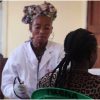
Women & Girls Up Front — the Humanitarian Response in Democratic Republic of Congo
Eleven-year-old “Anne” went to a health facility with her mother in the conflict-affected province of Ituri, in northeastern Democratic Republic of the Congo. At first, she could barely tell her story.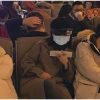
A Bigger Impact in a Smaller World: The China Situation
We are now living in a hyper communicative world where news does travel faster than lightning. Boundaries, borders, geographical and time differences have become next to obsolete in today’s speed driven world. At any point in time people, news and local occurrences can influence internationally without much local isolation. Along with the advantages of technology, communications and connections world is also facing new challenges that are proportionally evolving with advancement. One region affected today is affecting the global economy and population in frenzy of minutes, hours and days.
Digital Civil Registration Can Reduce the Number of ‘Invisible’ People and Bring Kenya Closer to the SDGs
A recent opinion piece in the New York Times titled, “Kenya’s New Digital IDs May Exclude Millions of Minorities” raises an issue that the UN is passionate about: that the pursuit of sustainable development should leave no one behind.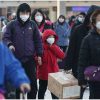
UN Staffers Rattled by Deadly Coronavirus Pandemic
With over 37,500 staffers in its global Secretariat payroll, the United Nations has gone high alert as the deadly coronavirus continues to take a heavy toll worldwide.
WHO Declares Coronavirus a Public Health Emergency, Highlights Need to Support Countries ‘Weaker Health Systems’
Weeks into widespread panic about the “Coronavirus” that has so far killed at least 170 people in China, the World Health Organisation (WHO) on Thursday declared it a public health emergency. As of Friday, the disease had spread to all the regions in Mainland China, with more than 7,500 cases in the country alone, according to the BBC.
Our Message at Davos: Water & Sanitation Are a Critical Line of Defence Against Climate Change
There was only one topic on everyone’s lips at Davos this year – climate change. The headlines focused on the cold war between Greta Thunberg and Donald Trump, but there was much greater consensus among those gathered for the annual meeting of the World Economic Forum (WEF).
Coronavirus Spread Now a Global Emergency Declares World Health Organization
The rise in new coronavirus cases outside China, now constitutes a global health emergency, the World Health Organization’s Emergency Committee declared on Thursday, calling on all countries to take urgent measures to contain the respiratory disease.
Kenya Leapfrogging on 4 SDGS- Building Bridges Between Silicon Savannah and Silicon Valley
One year ago, the UN began implementing reforms meant to make it more effective in delivering on sustainable development. Now, with the start of 2020, the global body has declared this as the "decade of action" to turn the ambitious Sustainable Development Goals (SDGs) into a living reality for all humanity. But what does this look like, on the ground?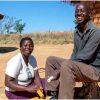
Biofortified Crops Improve Farmers’ Livelihoods in Zimbabwe
Steven Seremwe, who is 57 years old, was retrenched from his job as an administrator at Lake Shore Missions in 2012. He decided to focus on farming, and he started growing various crops—white maize, sugar beans, and sweet potatoes, among others—for consumption and sale.
Am I Abused or Am I a Failure to Adjust? – A Migrant’s Story
Every year hundreds of immigrants leave their homes and trail to a land of dream and hope where they aspire to find peace, happiness and sometimes a little bit of safety compared to what they leave behind.
Blue Innovation in the Commonwealth
With 95 per cent of the ocean still unexplored by humans, we are only just beginning to understand its profound influence on life on earth, including its effect on global climate and ecosystems.
Leprosy Re-emerges as a Global Health Challenge
Fifteen years ago, Sattamma – a daily labourer in the Rangareddy district of southern India’s Telangana state – was abandoned by her husband after she was diagnosed with Hansen’s Disease.
Why the Coronavirus Should Worry Us All
The coronavirus outbreak -- which began in Wuhan, China, and causes a pneumonia-like illness -- is raging across Asia, infecting close to 300 people and killing four. It was initially known to be transmitted from animals to human, and was just confirmed to be transmitted from human to human.
Ending Bullying and Humiliation over Menstruation as Girls and Boys in Conservative Eswatini are Educated about Reproductive Health
When 14-year-old Nomcebo Mkhaliphi first noticed the blood discharged from her vagina, she was shocked. Confused, she turned to her older sisters for advice. “My sisters told me that they were experiencing the same every month and that they used fabric, toilet paper and newspapers as sanitary wear,” recalls the now 45-year-old Mkhaliphi. She had to follow suit and use these materials because she had no money to buy sanitary pads.
School Lunch Programmes for Progress
If well planned, coordinated and implemented, a government funded school feeding programme for all primary school children can be progressively transformative. Such a programme, involving government departments and agencies working together, can benefit schoolchildren, their families, farmers and public health, now and in the future.
Women Activists Escalate Demand for “Bodily Autonomy” as 19 Nations Dissent
The United States and 18 other UN member states have come under fire for denying a woman’s legitimate right to “bodily autonomy”—the right to self-governance over one’s own body without coercion or external pressure.« Previous Page — Next Page »





 Bangladesh: Sarid, born one month early, receives specialized newborn care and grows stronger every day. Credit: UNICEF/UNI944397/Mojumder
Since the onset of the 2000s, global life expectancy has seen an overall rise, attributed to significant technological and scientific innovations in healthcare. Due to an increased understanding of different conditions as well as a rise in cooperation among healthcare experts around the world, there have been major strides made in ensuring that as few people die from chronic illnesses as possible. Despite the belief that healthcare is a fundamental human right, people from low- or middle-class backgrounds, marginalized groups, and underdeveloped countries have far more limited access to basic healthcare services.
The COVID-19 pandemic showed how marginalized communities are disproportionately affected by health crises, proving that we have much work to do in ensuring that no one dies of terminal conditions. While the global response to the coronavirus saw significant strides in immunization and vaccine development, the global outbreak of mpox in 2022 and its upsurge in parts of Africa in 2024 must remind us to remain vigilant.
Other major disease outbreaks in recent years have been linked to the destruction of infrastructure during warfare. Notably, in 2024, the Gaza Strip witnessed a return of the poliovirus since its eradication in the region 25 years ago. Israel’s blockade on Gaza has resulted in the collapse of the region’s sewage plants and desalination plants, and also destroyed healthcare capacities. The UN stated that this lack of clean water and sanitation would lead to an outbreak of cholera and other deadly infectious diseases. The 2026 OCHA Humanitarian Situation Report confirmed that the over two years of conflict in Gaza has produced a catastrophic health emergency, with millions remaining dependent on relief aid amid tight restrictions and no functioning public health system.
IPS is committed to providing full and comprehensive coverage on healthcare challenges around the world. IPS seeks to address the multifaceted causes of such challenges, including unprecedented pandemics, conflict-driven disease outbreaks, as well as socioeconomic barriers to equal healthcare access. IPS is also dedicated to reporting on innovations in the healthcare industry.

The Week with IPS

NEXT STOP - SDGs
Tracking global progress towards a sustainable world
Tracking global progress towards a sustainable world
