Languages
Wednesday, November 11, 2026



News and Views from the Global South
Health

Rural Poverty, Employment and Disability
About 15% of the world's population lives with some form of disability, of whom 2-4% experience significant difficulties in functioning. Disability is part of the human condition, and almost everyone will be temporarily or permanently impaired at some point in life, and those who survive into old age will experience increasing difficulties in functioning. Here the focus is on empirical validation of whether disabilities are associated with economic hardships through loss of employment and consequently impoverishment in rural India. The motivation stems from continuing neglect of health in the budgetary allocations –including the allocations for 2020-21.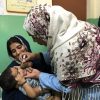
Why Pakistan Isn’t Taking that Final Step towards Polio Eradication
Dr. Rana Muhammad Safdar, the coordinator for Pakistan’s National Emergency Operations Centre for Polio Eradication, has sleepless nights thinking about what needs to be done for his country to eradicate polio.
Is Our Academic System Ready for a New Coronavirus Normal?
Institutions of higher education have a responsibility to lead by example and to provide current, high-quality information to the people and communities that support them. This responsibility is no clearer than during a public health and information crisis like the one presented by this novel coronavirus.
News Agencies Must Paint a Complete Picture of Coronavirus
Recently, New York Governor Andrew Cuomo said, “We have an epidemic caused by Coronavirus, but we have a pandemic caused by fear “.
Coronavirus: Ten Reasons Why You Ought Not to Panic
Regardless of whether we classify the new coronavirus as a pandemic, it is a serious issue. In less than two months, it has spread over several continents. Pandemic means sustained and continuous transmission of the disease, simultaneously in more than three different geographical regions. Pandemic does not refer to the lethality of a virus but to its transmissibility and geographical extension.
On 8th March – and All the Other Days: Each for Equal
Development efforts over the past two decades have seen millions of people freed from poverty and hunger, and inequalities reduced worldwide. This is an undoubted achievement, but is no reason for complacency. The fact is that inequality between men and women, between boys and girls, remains not only a social justice concern, but one of the impediments on development in countries across Africa and beyond. Addressing such inequalities is a duty for all of us, and one which is at the heart of the theme of this year’s International Women’s Day on 8th March: Each for Equal.
Target Men to Reach Our HIV Goals
Women are the face of HIV in Africa, yet four of every 10 persons living with HIV in East and Southern Africa are men. Despite higher rates of HIV infection among women, more men living with HIV are dying.
Coronavirus Exposes Global Economic Vulnerability
As the outbreak of the novel coronavirus COVID-19 threatens a global pandemic, major stock markets around the world have suffered their worst performance since the 2008 financial crush.
The Pacific Community launches the Pacific Healthy Recipe Contest
 The Pacific Community (SPC) is calling for contestants to join the Pacific Healthy Recipe Contest and showcase their cooking skills and creativity to promote healthy eating and prevention of non-communicable diseases (NCDs).
What’s Needed for Real Changes for Women in Lebanese Politics?
Women were at the forefront of Lebanon’s 2019 ‘October Revolution’. Beyond the iconic images of their participation, it seems that by women linking equity in politics to the broader issues of mismanagement of corruption paid off - although activists say there is a long road ahead.
Coronavirus Claims its First UN Casualty
The deadly coronavirus COVID-19, which is spreading across China, Japan, South Korea, Iran, Italy-- along with new cases in Asia, Western Europe and the Middle East-- has claimed one of its first casualties at the United Nations.
Mexico’s Battle with Obesity
Paradoxically, when the number of people suffering from undernourishment or hunger has risen in the world, so, too, have those afflicted by overweight and obesity. Latin America’s second largest economy, Mexico, for instance, is currently battling one of the world’s largest epidemics of obesity and its success is bound to be emulated by countries of the South. The numbers involved are staggering. The director-general of the National Institute of Public Health, Dr Juan Rivera told the Financial Times that “seventy five percent of adults and 35 percent of children and adolescents are overweight or obese… The State has a duty to protect public health.”
Q&A: Misinformation in the Time of an Uncontainable Virus
Just a month since the World Health Organization declared the Coronavirus a public health emergency, it is now taking steps to contain misinformation being spread about the disease. Globally, there have been more than 82,000 cases of Coronavirus, which has claimed 2,800 lives -- the majority being in China, where the disease has been traced to.
The Italian Pyramid: Scientific Observatory at the Top of the World
 Hello! Are you Italian?
No, I’m from Nepal.
Oops.
Kaji Bista is the staff manager of the Ev-K2-CNR’s innovative Pyramid International Laboratory/Observatory (known as the Italian Pyramid) at 5,050 m a.s.l. located in Lobouche.

Child Death Grief a Public Health Threat
Grief over the loss of a child poses a threat to public health in Sub-Saharan Africa, as nearly two-thirds of mothers in some countries suffer the death of at least one child, a study has found.
Let’s Prevent Post-partum Depression and Provide Care to Those in Need
Recently, Nigerian feminist author Ukamaka Olisakwe spoke about her post-partum depression after giving birth in the city of Aba, southeast Nigeria. This follows her 2019 Longreads essay, in which she narrated painful details of her experience.
U.S. President’s Global Gag Rule is Having Negative Impact on the Health of Malawians: Report
A report released last week has detailed the complex ways in which President Donald Trump’s ‘Global Gag Rule’ (GGR), that blocks U.S. global health assistance to foreign non-governmental facilities providing abortion or abortion-related services, is affecting the population in Malawi, a country already hard hit with numerous climate change disasters.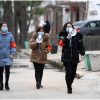
Coronavirus Epidemic Has Implications for Life Expectancy
As efforts to contain the Coronavirus epidemic enter a critical stage, it is important to remember that the costs cannot be measured purely in economic terms, as the measures taken will have implications for life expectancy across the entire nation.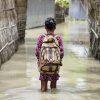
Tackling Climate Change and Preserving the Water Body: A Bangladeshi Perspective
For any riverine country, the state of the water body around big cities and conditions of major rivers hold a leadership position in the overall climate effects and how the water body is protected and preserved impacts the entire economy and living standards of that country. Bangladesh is renowned for the geomorphic features that include massive rivers flowing throughout the country. Within the border of Bangladesh lie the bottom reaches of the Himalayan Range water sources that flow into the Bay of Bengal totaling the number of rivers by a count of 700. The length of river bodies is about 24,140 km. There are predominantly four major river systems: the Brahmaputra-Jamuna, the Ganges-Padma, the Surma-Meghna, and the Chittagong Region river system. The Brahmaputra is the 22nd longest (2,850 km) and the Ganges is the 30th longest (2,510 km) river in the world. (1) The river system works as a backbone for agriculture, communication, drinking water source, energy source, fishing and as the principal arteries of commercial transportation in Bangladesh. During the annual monsoon period between June and October, the rivers flow about 140,000 cubic meters per second and during the dry period, the numbers come down to 7000 cubic meters per second.
Female Genital Mutilation: Not just an Emotional and Health Impact on Women but a $1.4 Billion Dollar Cost to Communities
When society doesn't act to prevent Female Genital Mutilation (FGM) it has a massive economic cost -- over $1 billion -- on communities globally. And while the practice is starting to become less common over time, experts say a large number of women and girls still remain affected.
The Pacific Community launches the Pacific Healthy Recipe Contest
The Pacific Community (SPC) is calling for contestants to join the Pacific Healthy Recipe Contest and showcase their cooking skills and creativity to promote healthy eating and prevention of non-communicable diseases (NCDs).« Previous Page — Next Page »





 Bangladesh: Sarid, born one month early, receives specialized newborn care and grows stronger every day. Credit: UNICEF/UNI944397/Mojumder
Since the onset of the 2000s, global life expectancy has seen an overall rise, attributed to significant technological and scientific innovations in healthcare. Due to an increased understanding of different conditions as well as a rise in cooperation among healthcare experts around the world, there have been major strides made in ensuring that as few people die from chronic illnesses as possible. Despite the belief that healthcare is a fundamental human right, people from low- or middle-class backgrounds, marginalized groups, and underdeveloped countries have far more limited access to basic healthcare services.
The COVID-19 pandemic showed how marginalized communities are disproportionately affected by health crises, proving that we have much work to do in ensuring that no one dies of terminal conditions. While the global response to the coronavirus saw significant strides in immunization and vaccine development, the global outbreak of mpox in 2022 and its upsurge in parts of Africa in 2024 must remind us to remain vigilant.
Other major disease outbreaks in recent years have been linked to the destruction of infrastructure during warfare. Notably, in 2024, the Gaza Strip witnessed a return of the poliovirus since its eradication in the region 25 years ago. Israel’s blockade on Gaza has resulted in the collapse of the region’s sewage plants and desalination plants, and also destroyed healthcare capacities. The UN stated that this lack of clean water and sanitation would lead to an outbreak of cholera and other deadly infectious diseases. The 2026 OCHA Humanitarian Situation Report confirmed that the over two years of conflict in Gaza has produced a catastrophic health emergency, with millions remaining dependent on relief aid amid tight restrictions and no functioning public health system.
IPS is committed to providing full and comprehensive coverage on healthcare challenges around the world. IPS seeks to address the multifaceted causes of such challenges, including unprecedented pandemics, conflict-driven disease outbreaks, as well as socioeconomic barriers to equal healthcare access. IPS is also dedicated to reporting on innovations in the healthcare industry.

The Week with IPS

NEXT STOP - SDGs
Tracking global progress towards a sustainable world
Tracking global progress towards a sustainable world
