Languages
Wednesday, November 11, 2026



News and Views from the Global South
Health

Air Pollution: A Problem We Can Solve in Our Lifetime
Over the past few years, worsening air quality in India—and in north India specifically—has awakened policy makers and civil society to take urgent action.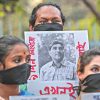
One more nail in the coffin of free press
A barrage of fireworks light up the smoggy skies of Dhaka and I feel as if I'm in the opening scenes of a dystopian film.
In Light of the Global Pandemic, Focus Attention on the People
SARS-CoV-2 or COVID19, now declared a global pandemic by the World Health Organisation, has begun to wreak havoc in large parts of the world, with other parts waiting in anticipation. We are in a real struggle, which needs total mobilisation; a struggle that needs to put life before profit. We will only win this struggle – as China has already done – if our people are united and disciplined, if governments earn our respect by their actions, and if we act in solidarity across the globe.
Fighting Coronavirus: It’s Time to Invest in Universal Public Health
Austerity policies pushed by international financial institutions have weakened public health systems, despite current financial support packages, condemning many people to die.
The UN and International Community united in fighting COVID-19 in Kenya
The Government of Kenya, United Nations and International Community convened today at the UN Complex in Nairobi to combine their forces in their fight against the COVID-19 pandemic in Kenya.
Lessons from Nigeria in Responding to Coronavirus
Coronavirus is now a pandemic and the World Health Organization considers Europe as its new epicenter. Italy, Spain and France are on lockdown and several nations are banning travelers from countries where cases are on the rise.
Harassment of Journalists Jeopardises Keeping Public Safe amid Coronavirus Pandemic
Growing intimidation and repression of journalists reporting on the coronavirus is threatening public health in some countries, press freedom monitors have warned.
Never Give up on Women’s Rights – Edna Ismail
For Dr Edna Adan Ismail maternal health and midwifery is deeply personal. In an interview with Women Deliver Young Leader Musu Bakoto Sawo, Ismail recalls her mother’s devasting experiences which impacted on her own life’s choices.
Plagues and People – The Coronavirus in a Historical Perspective
The human factor is intimately involved in the origin, spread, and mitigation of the Coronavirus and we cannot afford to ignore that our future existence depends on compassion and cooperation. Response matters!
State Intervention Necessary to Overcome Covid-19 Threats
It is now clear that most East Asian government responses to novel coronavirus or Covid-19 outbreaks have been effective. In Hong Kong, Japan, Singapore and Taiwan, the number infected have remained relatively low despite their proximity and vulnerability, while containment in China and South Korea has been impressive.
Coronavirus & Water Pandemics: Doing the Math
As the COVID-19 coronavirus pandemic spreads, guidance on how wash your hands and other measures intensifies. These recommendations are important, but they are hardly of value to the 40% of humanity lacking access to even the most basic hand washing requirements — soap and water 1.
COVID-19 in Africa: Fewer Cases So Far, and More Preparation Needed
The novel coronavirus disease (COVID-19) outbreak, recently declared a pandemic by the World Health Organisation, has taken the world by surprise. The good news is that tremendous scientific and technological advances have permitted scientists to understand a lot about this virus in a short amount of time.
Use Stimulus Packages for Longer Term Progress
The coronavirus pandemic seems to have finally forced governments around the world to ditch their obsession (at least for the moment) with delivering budget surplus. As stock markets tumble, stimulus measures, worth billions of dollars, are announced to boost investor confidence and consumer spending to keep economies running.
Why Nigeria Knows Better How to Fight Corona Than the US
The coronavirus disease, otherwise known as COVID-19, was first reported in Wuhan, China on the last day of December 2019. When it began to spread rapidly, the World Health Organisation (WHO) declared it a public health emergency of international concern on 30 January 2020.
Gender “Could be Coronavirus Key”
Analysing how coronavirus impacts genders differently could be key in fighting the disease, say public health experts.Life is Sweet
First of all, I wish everyone reading this good health. Second of all, I wish for everyone to get informed - I mean properly informed from the many reliable sources out there. These areextraordinary times and every one of us needs to find a way to getthrough them the best way we can for ourselves, our families andour communities.
Why Rich Countries must Protect Developing Nations from Coronavirus Pandemic
Governments in wealthy, first world countries must not ignore the plight of poorer nations battling the coronavirus or the disease will not be brought under control, global development experts have said.
Global Economic Consequences of COVID-19
The panic resulting from the events starting with the deaths in Wuhan keeps spreading globally faster than the spreading of the virus itself. Quite apart from the immediate health dangers, now a new economic danger looms large globally. We are facing the prospects of a deep and lasting global recession regardless of the health policy and economic policy measures taken by China, the US and other countries unless there is timely global cooperation and coordination. What will be the global economic impact of COVID-19 if swift and effective action is not taken globally? Is there a way to find out through some kind of rigorous model-based economic analysis?
Fight, Not Flight, Must Be the Strategy for Flattening the COVID-19 Curve
The number of coronavirus cases in Kenya has jumped to three after the government confirmed two more cases. President Uhuru Kenyatta has announced a raft of proactive measures to prevent the spread of the virus.
Rural Poverty and Disability in Ethiopia
With about 109 million people, Ethiopia is the second most populous nation in Africa after Nigeria, and the fastest growing economy in the region. However, it is also one of the poorest, with a per capita income of $790.
How will COVID-19 Affect Economies of Latin America & the Caribbean?
History shows that in Latin America and the Caribbean, volatility is the norm and not the exception and that the development trajectories of their countries are not linear.« Previous Page — Next Page »





 Bangladesh: Sarid, born one month early, receives specialized newborn care and grows stronger every day. Credit: UNICEF/UNI944397/Mojumder
Since the onset of the 2000s, global life expectancy has seen an overall rise, attributed to significant technological and scientific innovations in healthcare. Due to an increased understanding of different conditions as well as a rise in cooperation among healthcare experts around the world, there have been major strides made in ensuring that as few people die from chronic illnesses as possible. Despite the belief that healthcare is a fundamental human right, people from low- or middle-class backgrounds, marginalized groups, and underdeveloped countries have far more limited access to basic healthcare services.
The COVID-19 pandemic showed how marginalized communities are disproportionately affected by health crises, proving that we have much work to do in ensuring that no one dies of terminal conditions. While the global response to the coronavirus saw significant strides in immunization and vaccine development, the global outbreak of mpox in 2022 and its upsurge in parts of Africa in 2024 must remind us to remain vigilant.
Other major disease outbreaks in recent years have been linked to the destruction of infrastructure during warfare. Notably, in 2024, the Gaza Strip witnessed a return of the poliovirus since its eradication in the region 25 years ago. Israel’s blockade on Gaza has resulted in the collapse of the region’s sewage plants and desalination plants, and also destroyed healthcare capacities. The UN stated that this lack of clean water and sanitation would lead to an outbreak of cholera and other deadly infectious diseases. The 2026 OCHA Humanitarian Situation Report confirmed that the over two years of conflict in Gaza has produced a catastrophic health emergency, with millions remaining dependent on relief aid amid tight restrictions and no functioning public health system.
IPS is committed to providing full and comprehensive coverage on healthcare challenges around the world. IPS seeks to address the multifaceted causes of such challenges, including unprecedented pandemics, conflict-driven disease outbreaks, as well as socioeconomic barriers to equal healthcare access. IPS is also dedicated to reporting on innovations in the healthcare industry.

The Week with IPS

NEXT STOP - SDGs
Tracking global progress towards a sustainable world
Tracking global progress towards a sustainable world
