Languages
Wednesday, November 11, 2026



News and Views from the Global South
Humanitarian Emergencies
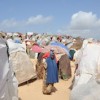
SOMALIA: Armed Militia Grab the Famine Business
Armed groups are withholding aid and preventing Somali famine refugees from leaving camps to ensure the continued supply of food by aid agencies that they are presently selling on the open market.
SOMALIA: Food Aid Stolen From Famine Victims
Masses of food meant for famine victims in Somalia are being stolen, an investigation has revealed.Watchdogs Blast Ethnic Cleansing in South Kordofan
On Jun. 19, Angelo al-Sir, a subsistence farmer from a small village east of Kadugli, capital of the oil-rich South Kordofan state in Northern Sudan, saw his pregnant wife, two of his 10 children, his nephew and another relative killed in an airstrike in broad daylight.
HAITI: Patchy Healthcare Adds to Miseries of Women and Girls
"I just gave birth on the ground...I had no drugs for pain during delivery," one Haitian mother tells Human Rights Watch (HRW) in a report released Tuesday that says a year and a half after the country's devastating earthquake, women and girls are still facing gaps in access to available healthcare services necessary to stop preventable maternal and infant deaths.
Haiti’s Earthquake Victims: ‘Abandoned Like Stray Dogs’
Eighty thousand tiny houses dot the countryside near this coastal city, located just west of the epicentre of the Jan. 12, 2010 earthquake that killed some 200,000 and displaced over one million.OP-ED: Expanding Deserts, Falling Water Tables and Toxins Driving People from Homes
People do not normally leave their homes, their families, and their communities unless they have no other option. Yet as environmental stresses mount, we can expect to see a growing number of environmental refugees. Rising seas and increasingly devastating storms grab headlines, but expanding deserts, falling water tables, and toxic waste and radiation are also forcing people from their homes.LIBYA: No ‘Mission Accomplished’ Claimed in Washington Yet
While the apparent end of Muammar Gaddafi’s 42-year reign over Libya was greeted with considerable satisfaction here Monday, no one was prepared to declare "mission accomplished", particularly given the looming questions around what happens next.Evidence Mounts of War Crimes Unfolding in Sudan
Witnesses reported that attacks continue on civilian populations in Sudan, even as the United Nations calls for a thorough investigation into violations of international law carried out in South Kordofan state in June.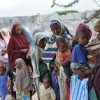
SOMALIA: Massive School Dropouts As Famine Continues
Jamaal Abdi, an eight-year-old boy at the Badbaado camp on the outskirts of Mogadishu, would like to have an education. He has his own dreams for the future.
SOMALIA: City in Need of More Aid
The shelling and gunshots, once a common sound in Mogadishu, no longer ring out in the city's streets. The surprise withdrawal on Aug. 6 of the Islamist extremist group Al Shabaab from their stronghold in Mogadishu has meant that people now move about the city, for the first time in two years, without fear of constant attack.
Q&A: Climate-Driven Migrants Raise Thorny Legal Issues
As the effects of accelerating climate change ripple outward, pushing millions from their land and homes, experts warn that international human rights and refugee law needs to catch up to the reality on the ground if migrants are to be given adequate protection and support.ICRC Warns of Human Toll of Attacks on Medical Workers
A new report by the International Committee of the Red Cross (ICRC) describes a pattern of attacks on medical staff that the group says is undermining the safe delivery of medical assistance and health care across the globe.CLIMATE CHANGE: “Last Straw” Pushes Millions from Their Homes
With political will to dramatically cut the world's greenhouse gas emissions failing to materialise, a multi-pronged approach is needed to protect the millions of people who are being displaced as a result of environmental factors driven largely by climate change, experts say.SUDAN: Congressional Hearings Paint Picture of Crisis and Atrocities
Witnesses' chilling depictions of a new Sudanese genocide at an emergency congressional hearing Thursday quelled any remnants of doubt that a humanitarian crisis is unfolding in the Nuba mountain region of South Kordofan.SOMALIA: U.S. Greenlights Aid to Shabaab-Controlled Areas
The Barack Obama administration promised Tuesday that the U.S. would not prosecute relief agencies for delivering aid to parts of Somalia controlled by the Islamist insurgent group al- Shabaab, despite concerns that unrestricted aid in the failed state would be diverted to the wrong hands.
Famine Relief in Somalia Stymied by Access
While an estimated 12.4 million people linger on the brink of starvation in the Great Horn of Africa, U.S. officials and world relief agencies said Monday that even in a "best case scenario" the crisis will worsen as the areas in most desperate need remain cut off from access to relief.
SOMALIA: “I Carried Him a Whole Day While He Was Dead, Thinking He Was Alive”
As the first of food aid from the United Nations World Food Programme was airlifted into Mogadishu on Wednesday, it came too late for Qadija Ali's two- year-old son Farah.
EAST AFRICA: ‘It’s Not a Heartless Mother Leaving a Child Behind, Just One Who Wants to Survive’
On the road between the Kenyan and Somali border lie the dead bodies of children who have succumbed to the famine and the hardships of making the journey from their drought-stricken villages to Kenya.
Haiti’s Reconstruction Still an Uphill Battle
As Haiti struggles to recover from the deadly January 2010 earthquake that killed over 200,000 people and forced nearly 1.5 million into camps, international funding is failing to keep pace with the generous pledges made last year, and in- fighting in Haiti's new government is hindering the disbursement of aid.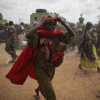
EAST AFRICA: Massive Aid Needed to Stave off Disaster
International donors have given more than one billion dollars to ease the famine in Somalia and elsewhere in the Horn of Africa, but U.N. officials say another billion will be needed to prevent the situation from deteriorating in other areas.
HORN OF AFRICA: Poor Attention to Forecasts to Blame for Famine in Somalia
The world had an opportunity to save thousands of lives that are being lost in parts of Somalia due to the famine, if only the donor community had paid attention to the early warning systems that predicted it eight months ago.« Previous Page — Next Page »





 MONUSCO Peacekeepers and FARDC Soldiers Patrol Fataki Area. Credit: UN Photo/Jorkim Jotham Pituwa
Conflict, human rights violations, natural disasters, and famine have been at the forefront of concerns for humanitarian organizations. The escalation of humanitarian crises has led to over 239 million people in need of humanitarian assistance at the start of 2026, as estimated by OCHA’s Global Humanitarian Overview. The 2025 humanitarian appeal received only $12 billion, the lowest funding in over a decade, which has left 24 million fewer people reached in comparison to 2024. Conflict has remained the primary driver of crisis.
Humanitarian emergencies massively impact progress towards the Sustainable Development Goals (SDGs), adversely affecting economic development, inequality, education, planetary well-being, and poverty. Millions of people are faced with reduced access to essential services, including shelter, food, healthcare, and access to clean drinking water. UN Organizations such as UNHCR and the United Nations Children’s Fund (UNICEF) are committed to providing direct relief to affected communities when state governments cannot.
The United Nations 2024 Summit of the Future discussed measures that will be taken to reduce global inequality and promote peacekeeping efforts around the world. The recent UN Climate Change Conference (COP30) in Belém, Brazil, agreed to mobilize $1.3 trillion annually for climate action by 2035, operationalize the loss and damage fund, and triple adaptation finance. However, a fossil fuel transition commitment was not secured, despite climate change and the greenhouse effect being major contributors to humanitarian crises worldwide.
Countries across the world have also rallied to end humanitarian crises, as witnessed in conflicts such as Palestine and Ukraine. IPS is committed to providing relevant and in-depth reports of humanitarian emergencies around the world and their implications.

The Week with IPS

NEXT STOP - SDGs
Tracking global progress towards a sustainable world
Tracking global progress towards a sustainable world

