Languages
Tuesday, May 5, 2026



News and Views from the Global South
Humanitarian Emergencies

At the UN, Climate Change & Security Must Be Tackled Together
Could the next wars be triggered by climate change? Until recently, the question might have seemed like science fiction, but now it is very real. Ethiopia and Egypt are locked in an upward spiral of tensions over the Nile, as a combination of dams and shifting weather patterns pose existential risks to both countries.
Papua New Guinea Battles COVID-19 and Health Workers’ Vaccine Scepticism
Papua New Guinea (PNG), like many other Pacific Island countries, successfully held COVID-19 at bay last year, aided by early shutting of national borders. However, by March this year, the pandemic was surging in the most populous Pacific Island nation, and by July, it had reported 17,282 cases of the virus and 175 fatalities.
“If Only the Fighting Would Stop “ A Sudanese Woman’s Wish
With her bare hands, Roda clears debris and forages scraps from her wrecked teashop after attackers scorched Gumuruk, a town in the Greater Jonglei region where conflict frequently disrupts daily life and stifles progress.
Rich Country Hypocrisy Exposed by Vaccine Inequities
‘No one is protected from the global pandemic until everyone is’ has become a popular mantra. But vaccine apartheid worldwide, due to rich countries’ policies, has made COVID-19 a developing country pandemic, delaying its end and global economic recovery.
Combating COVID-19 and Ensuring No One is Left Behind
If the world wants to beat back the COVID-19 pandemic and ensure no one is left behind in the recovery, two issues thrown into sharp relief by the pandemic need attention: digitalization and regional cooperation.
Reflections on South Sudan’s Ten Years of Independence
The declaration of independence of South Sudan was a great historic moment that gave hope to South Sudanese on July 9, 2011. It brought a sense of satisfaction, indicating achievement of a life-time dream for which millions of our people across generations paid the ultimate price.
Nothing About Us, Without Us, Asian Youth Tell Parliamentarians
Youth advocates from Asian countries called for an overhaul of a system that excluded young people from participation in policymaking. During an interaction with parliamentarians from 23 countries, youth representatives considered an enabling political framework to be the most crucial reform required to remove inequities.
Bridging the Gap and Crossing the Bridge
It may be a challenge, but it is also an absolute necessity: bridging the gap between international law and reality and quickly crossing the bridge to reach all crisis-affected children and youth left furthest behind. Inclusive and equitable quality education is the right of every girl and boy and the objective of Sustainable Development Goal 4.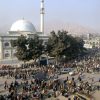
Another Impending Cataclysm in Afghanistan
The Biden administration made a decision to withdraw US troops from Afghanistan based on the Trump-Taliban agreement. Their last combat soldier may have already left. There is nothing to argue about!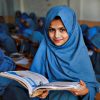
Investing in Education as Driver for All Our Futures
Never before have so many children been out of school. 1.6 billion children and young people – more than 90% of students worldwide – have been impacted by school closures during the pandemic. Hundreds of millions of those children have gone without any learning at all, deprived of all the benefits that being in school provides.
Developing Country Solidarity Needed to Overcome Pandemic
As rich countries have delayed contagion containment, including mass vaccination, in developing countries, much weaker fiscal efforts in the South have worsened the growing world pandemic apartheid.
Flaws in Asia’s Pearl
For well over a century Ceylon, now Sri Lanka, has been known to the world as the ‘Pearl of the Indian Ocean’ for its multifaceted attractions. That is until blurb writers ruined it all with hyperbolic epithets that obscured the country’s magnetic charms, which attracted visitors from around the globe.US report on human trafficking: Bangladesh remains on Tier-2
The Bangladesh government does not fully meet the minimum standards for elimination of trafficking but is making significant efforts to do so and has demonstrated overall increasing efforts compared to the previous reporting period, considering the impact of Covid-19 pandemic on its anti-trafficking capacity and therefore remained on Tier 2, according to a US Department of State report.
New COVID-19 testing equipment deployed in Tonga
Last week, the Tonga Laboratory Services completed the installation of a 4 module GeneXpert testing equipment used for diagnosis of COVID-19 infection and to increase SARS-coV-2 testing capacity.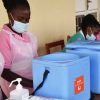
“We Need to Act Now” — as Sub-Saharan Africa Faces Third Wave of Covid-19
Sub-Saharan Africa is in the grips of a third wave of COVID-19 infections that threatens to be even more brutal than the two that came before.
Acceleration Rights Plan for Gender Equality Mooted at Equality Forum
As the global gathering for gender equality, the Generation Equality Forum, kicks off in Paris on June 30, 2020, IPS conducted an exclusive interview with Katja Iversen.
Universal Civil Registration and Vital Statistics Are Critical for Truth, Trust and COVID Recovery in Asia and the Pacific
With health systems at a breaking point, hospitals at capacity and desperate family members searching for oxygen for loved ones, the devastating second wave of COVID-19 that has swept across South Asia has felt ¬surreal. Official figures have indicated record-breaking daily coronavirus cases and deaths, not only in South Asia, but across the entire Asia-Pacific region during the latest surge. As devastating as it has been, the truth is we may never know how many people have died during the pandemic.
To Build Back Better from the Pandemic, We Must Overhaul the Way We Deal with Development Finance
Over the past 18 months, the impacts of the coronavirus pandemic have transformed our lives and prompted a period of deep reflection as a global community. In some sense, we are only now starting to understand our vulnerabilities, and in particular, how deeply exposed and interconnected we are as people, communities and as countries.
“The Creation of a Palestinian State Is Inescapable”
Every Israeli will sooner than later realize that the creation of a Palestinian state is the only way by which Israel can protect its democracy, independence, national security and national Jewish identity. Denying Palestinian statehood defies Israel’s existence as we know it.
Southeast Asia and Food Price Inflation: Double Whammy
In 2020, Southeast Asian countries were already facing varied challenges that affected the region’s food supplies and prices. The onset of the Covid-19 pandemic later in the year exacerbated the region’s food insecurity and poverty. Southeast Asian countries need to take a hard look at food security, even as the double challenges — climate change and the Covid-19 pandemic — continue to fester.
COVID-19 as Instigator of Bigotry, Chauvinism and Megalomania
By the end of April 2019, a government campaign to vaccinate more than 40 million children under five against polio in Pakistan was suspended after a series of attacks on health workers and police. On 23 April, a police officer protecting polio workers was gunned down in Bannu, the same day a polio worker was in Lahore seriously wounded by a father “protecting his child from vaccination”, these incidents were followed by the murder of another police and a health worker under his protection. Health workers were also seriously wounded in the districts of Sindh, Balochistan and Punjab. Afghanistan and Pakistan are the only countries where polio remains, in all other nations of the world vaccination campaigns have eliminated the disease. In April this year, three female polio vaccine providers were killed in Afghanistan.« Previous Page — Next Page »