Languages
Monday, October 26, 2026



News and Views from the Global South
Inequality

Forced Migration Grows, Justice Withers, Say Activists at World Social Forum
As involuntary migration rises around the world, partly in response to the impacts of climate change, justice for those leaving their homes and families to earn a living is largely missing, said activists meeting at the World Social Forum (WSF) in Kathmandu on Sunday.
Inequality Also Afflicts Clean Energy in Latin America
The specter of blackouts hovers over the Mexican city of La Paz, the capital of the state of Baja California Sur in Mexico's far northwestern corner, as summer approaches, due to increased electricity demand from air conditioning and insufficient capacity in the local grid.
World Social Forum Insists: Another World is Possible!
These are the worst of times, but they can become the best of times, said speaker Dr. Walden Bello, seeking to inspire thousands of progressives who gathered for the World Social Forum (WSF) in Kathmandu on Thursday with the planet under clouds of armed conflict and assaults on democracy.
World Social Forum Seeks to Reemerge as an Influential Gathering of Diversity
The World Social Forum (WSF) is today "more necessary than ever," according to Oded Grajew, promoter and co-founder of the global civil society meeting - a festival of diversity that has not yet succeeded in fomenting or designing the "other possible world" that it predicted when it was created and adopted that motto.
Moimuna Nursing Institute Ushers Hope for Vulnerable Rural Girls in Bangladesh
After passing her secondary school certificate (SCC) in 2019, Sweety Akter went door-to-door to collect money to enroll in a college, but she wasn't successful. Born to an extremely poor family in Fultala village under Baliadangi upazila in Thakurgaon district, Akter saw her dream of studying fading as she was unable to enroll in a college because of a lack of funding, despite her good results at school.
How Soil Microbes Could save the World
The 500 per cent increase in global agricultural productivity over the past 60 years has largely been made possible by the scientific advances of the “Green Revolution” – from the ability to breed higher yielding varieties to improvements in farm inputs, especially fertiliser.
The Spectre of Migration: A conversation with Hammoud Gallego
Karl Marx’s Manifesto of the Communist Party begins with the now worn-out phrase: “A spectre is haunting Europe – the spectre of communism. All the powers of old Europe have entered into a holy alliance to exorcise this spectre”. Nowadays the word “communism” could easily be substituted by “migration”. All over Europe, politicians claim that Europe is being destroyed by migrants. In country after country, ghosts of yesterday are awakened. Parliaments include xenophobic politicians who might be considered as inheritors of demagogs who once dragged Europeans into hate and bloodbaths.
Poverty and Inequality Mark Rural Life in Latin America
Rural life in Latin America and the Caribbean continues to be marked by poverty and inequality compared to the towns and cities where the vast majority of the population lives. A new focus on rural life in the region could help reveal and address the challenges and neglect faced by people in the countryside.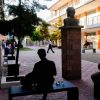
Higher Education in Central America: Poor Quality and Unaffordable for the Poor
Decades of civil wars and a lack of long-term public education policies, among other problems, have made higher education in Central America precarious and costly in general. In this region, made up of Belize, Costa Rica, El Salvador, Guatemala, Honduras, Nicaragua, and Panama, home to some 50 million inhabitants, the quality of education offered by public and private universities is poor, while costs are high even for those who can afford them.
Beyond the Farm: How Empowering Women Farmers Drives Change in Jordan and Beyond
Dr. Zeinab Al-Momany, a prominent social entrepreneur, sheds light on the journey of empowering women farmers in Jordan and the Arab world, where women often work long hours for low pay and lack labour recognition.
Zimbabweans Gambling for a Living Amid Escalating Hardships
Twenty years after completing high school in Zimbabwe, 38-year-old Tinago Mukono still has not found employment, and in order to survive, he has switched to betting, turning it into a form of employment. Every day throughout the week, Mukono leaves his home to join many others like him in betting clubs strewn across Harare, the Zimbabwean capital, with the hope of making it.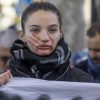
The Global Femicide Epidemic
‘Per Giulia e per tutte’ (‘For Giulia and for all’) echoed through the streets of Italy in mid-November 2023. Thousands of women, activists and supporters gathered to protest and show solidarity with the 22-year-old student Giulia Cecchettin, who was killed by her ex-boyfriend on the night of 11 November 2023.
The Impact of Climate Migration on Developing Nations
As the world is still gearing up to welcome 2024, let us find a moment to reflect on some of the key trends of the past year and pursue now to embrace the path towards hope and promise for everyone, everywhere.
AI Will Transform the Global Economy: Let’s Make Sure It Benefits Humanity
We are on the brink of a technological revolution that could jumpstart productivity, boost global growth and raise incomes around the world. Yet it could also replace jobs and deepen inequality.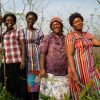
The World’s Richest Men Leave Women Far Behind—Amid Rising Economic Inequalities
The world’s rich are getting progressively richer while the world’s poor continue to be increasingly poorer. In a new report released January 15, Oxfam says the wealth of the world’s five richest men has doubled since 2020 –even as five billion people were made poorer in a “decade of division.”
Homeless Families Now a Growing Issue in Zimbabwe
It is do or die on the streets of Zimbabwe as homeless families battle for survival solely depending on begging. Such is the life of 69-year-old Gladys Mugabe, who lives with her disabled son in Harare Gardens, a well-known recreational park in the Zimbabwean capital, Harare. Over the decades, Zimbabwe’s economy has underperformed. It started in 2000 with the departure of white commercial farmers, and the country has experienced subsequent periods of hyperinflation, which the International Monetary Fund estimated reached 172% in July last year.
Europe’s Shift to the Far Right and its Impact on Immigration
The recent elections in the Netherlands signals the increasing power of the far right in Europe. The populist party of Geert Wilders, the Party for Freedom, won a decisive, albeit unexpected, victory taking 37 seats out the 150 seat in parliament. Wilders will likely be the head of the next Government. His policies include stopping all immigration into the Netherlands, holding a referendum on leaving the EU, and banning mosques and the Quran.
Global Civil Society Launches Manifesto for Ethical AI
We, a global coalition of over 50 civil society and human rights organizations from over 30 countries have co-developed the "Civil Society Manifesto for Ethical AI", a groundbreaking initiative aiming to steer AI policies towards safeguarding rights and deconolonising AI discourse. We question, and we are not the only ones: whose voices, ideas and values matter in AI ?
Salvadoran Rural Communities Face Climate Injustice
For decades, poor fishing and farming communities in southern El Salvador have paid the price for the electricity generated by one of the country's five dams, as constant and sometimes extreme rains cause the reservoir to release water that ends up flooding the low-lying area where the families live.
Hurricane Otis and the Indifference Toward the Children of Acapulco
Acapulco is a paradise. A port of golden sunsets, toasted sand, and deep blue sea. Its dream beaches captivated the hearts of Elvis Presley and Elizabeth Taylor. US President John F. Kennedy chose its shores to spend his honeymoon with Jackie Kennedy. Its luxury hotels and the untamed sea made it the most famous tourist destination in Mexico.
Can Creativity Change the World?
It all fits into an off-road vehicle that can reach even the most remote parts of Southern Africa to bring cinema where the essentials are lacking, where there's no electricity to power a projector, and where perhaps no one has ever sat in front of a screen to watch a movie. With just the sun and a solar panel, a theater can be set up in areas where people struggle to access food and water and make a decent living. But what it truly requires is the courage to not view creativity as a luxury. Sydelle and Rowand, the founders of Sunshine Cinema, a network of mobile movie theaters, are not just entertaining people; they are crossing a bridge.« Previous Page — Next Page »





This page includes independent IPS news coverage supported by the Norwegian Ministry of Foreign Affairs, to put the issue of inequality higher up the news agenda during the run-up to the 2015 MDG deadline and the process to forge a new development consensus
