Languages
Wednesday, September 30, 2026



News and Views from the Global South
Inequality

The UN’s Own Relevance Is at Stake at This Year’s General Assembly
This September, world leaders and public policy advocates from around the world will descend on New York for the UN General Assembly. Alongside conversations on peace and security, global development and climate change, progress – or the lack of it – on the Sustainable Development Goals (SDGs) is expected to take centre-stage. A major SDG Summit will be held on 18 and 19 September. The UN hopes that it will serve as a ‘rallying cry to recharge momentum for world leaders to come together to reflect on where we stand and resolve to do more’. But are the world’s leaders in a mood to uphold the UN’s purpose, and can the UN’s leadership rise to the occasion by resolutely addressing destructive behaviours?
Hunger in East Africa Is a True Testament to Climate Injustice
From 2017, Shamso Isac has helplessly witnessed the demise of all her sources of income. Failed rain seasons and dried-up water sources meant a lack of pasture, which led to the death of her livestock. Widespread hunger exacerbated by rising food costs forced her to relocate to Burlhedi internally displaced persons camp in Baidoa in the Southwest state of Somalia. She recalls walking for weeks seeking a place she could get food for her family. When her child asks for something to eat or drink, she has nothing to offer; all she can do is cry, overwhelmed by the utter hopelessness she feels.
NDB Spotlight: The Lesotho Highlands Water Project – Who Benefits?
The Role of the New Development Bank in Monitoring Project Impacts on Communities The 15th BRICS Summit held in Johannesburg, South Africa this month has once again put the spotlight on the Lesotho Highlands Water Project (LHWP) as a shining example of multilateralism and the New Development Bank’s (NDB)commitment to financing sustainable development projects within BRICS countries and other developing countries. During the 2023 BRICS Summit, the New Development Bank and the Trans-Caledon Tunnel Authority (TCTA) signed a 3.2 billion Rands loan agreement for the implementation of Phase Two of the Lesotho Highlands Water Project (LHWP) in Lesotho. This funding complements contributions by other financiers, notably the African Development Bank (AfDB) and the Development Bank of Southern Africa (DBSA).
Vaccine Equality Is as Vital for Livestock as for People
El Castellar - For 33-year-old mother-of-seven and poultry farmer Helena Kindole in Chanya village in Tanzania, one of the main barriers to growing her chicken business is a lack of access to health services. But not for herself or her family – for her animals.
#AfghanGirlsVoices Campaign to Elevate Voices of Young Afghan Girls on Global Stage
Two years ago, the then 19-year-old Somaya Faruqi and the Afghan Robotic Team travelled from Herat City to Kabul, the heart of Afghanistan—the Taliban had taken over Herat city, cutting off electricity and internet. The all-girls team’s great passion for science, technology, engineering, and math (STEM) had driven them to Kabul to rehearse for a competition.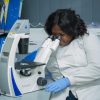
Time to Ensure Equity in Global Research Vocabulary
A recent publication in the journal PLOS Medicine reviewed the relationship between COVID-19 and mental health in eight low- and middle-income countries, collectively referred to as LMICs. As important as this publication is, we are appalled by the widespread use of the term “low- and middle-income countries” utilized in this article, and indeed in the majority of the global health literature and discourse.
Stubborn and Persistent: The Gender Pay Gap Refuses to Budge
Last week, there was uproar in Kenya when a report about one of the largest banks, Equity Bank, revealed a 52 percent gender pay gap between their female and male employees working in similar positions. This difference is neither okay nor acceptable. However, documenting the gap is laudable because that is the first step in trying to fix it.
How Nigeria’s Legal System is Failing to Safeguard Widows’ Rights
In February this year, Chichi Okonkwo not only lost her husband but was stripped of everything they owned together. Her husband was severely injured in a car accident about a month earlier. Despite being rushed to a hospital in Enugu, where they resided, he succumbed to his injuries weeks later. To compound her grief, Okonkwo’s late husband's male siblings forcibly entered her home in the city a few hours after his passing, confiscating her husband’s land documents, car, money, clothes, and marriage certificate.
Water Stress, a Daily Problem in the Agro-Exporting South of Peru
Living without water in a desert area is part of the daily life of Ortensia Tserem, a member of the indigenous Wampis people from the Amazon rainforest of northeastern Peru, who came three years ago to the outskirts of the coastal city of Ica with the dream of better economic opportunities for her family.
Improving Healthcare for All
In 2015, almost all heads of government in the world committed to the United Nations’ Sustainable Development Goals (SDGs), including universal health coverage (UHC). This was consistent with the World Health Organization’s commitment to Health for All.
Women Recyclers in Bolivia Build Hope, Demand Recognition
They haul many kilos of recyclable materials on their backs but receive little in return. These Bolivian women who help clean up the environment from dawn to dusk are fighting for recognition of their work and social and labor rights.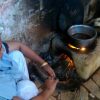
Invisible Women in Energy: Millions of Household Biomass Producers
An estimated 2.4 billion people currently lack access to clean cooking fuels, with the majority relying on biomass (firewood, charcoal, dung) to meet household cooking needs. This is only a slight decrease from 2017, when 2.5 billion people lacked access to clean cooking fuels.
Grey Market Charcoal East Africa — Why Prohibitionist Interventions Are Failing
At Kampala’s Nakawa market, Lovisa Nabisubi scoops charcoal from a bag and packs it into tins ready for customers. Her bare hands, feet, and clothes are stained black from hours of dealing in this popular household fuel which some equate to “black gold” not just in Uganda but in most of East Africa.
Vaccination Is the Best Bet Against Drug-Resistant Superbugs — Experts
The first thing you notice about eight-month-old Manahil Zeeshan is how tiny she looks on the adult-size hospital bed at the government-run Sindh Institute of Child Health and Neonatology (SICHN) in Korangi, a neighbourhood in Karachi.
Greener Pastures Not So Green for Zimbabweans in the Diaspora
They have high-paying jobs, a high standard of living, and almost everything they need, but for Zimbabweans abroad, all that glitters is not gold. Twenty-eight-year-old Gift Gonye, based in Germany, is one such Zimbabwean, and he is apparently not satisfied with his life abroad.
Women in Peru’s Poor Urban Areas Combat the Crisis at the Cost of Their Wellbeing
At five in the morning, when fog covers the streets and the cold pinches hard, Mercedes Marcahuachi is already on her feet ready to go to work in Pachacútec, the most populated area of the municipality of Ventanilla, in the province of Callao, known for being home to Peru's largest seaport.
Tuberculosis: A Disease of the Poor Begs For Rich Funding
The United Nations General Assembly is convening a high-level meeting on Tuberculosis (TB) to get a political commitment for increased funding for programmes and research to end an old disease that today kills more people than AIDS and COVID.
Inequitable Distribution of COVID Vaccines Tied to Power and Money
 The reasons that led to inequitable distribution of COVID vaccines during the pandemic have been inherent in the global pharmaceutical supply chain for decades and contributed to serious adverse consequences for global south countries, as was evident with HIV and Ebola. Further, those issues will likely contribute to inequities with regard to vital medicines in the future. This story by IPS Correspondent and IWMF Fellow Jewel Fraser highlights that the inequity issue is definitely not due just to the pandemic but an ongoing one.

Women’s Savings in Zimbabwe Struggle Under Weight of Unstable Currency
For years, self-employed and unemployed women in Zimbabwe formed neighbourhood "clubs" where they pooled money together for everything from buying bulk groceries to be shared at the end of the year to meeting funeral expenses.
Pesticide Exposure Drives Environmental Injustice: Latino Farmworkers and People Living Near Farming Communities At High Risk of Developing Parkinson’s
The US agricultural industry has been one of the key sectors driving our country's continuous demographic and economic growth. Unfortunately, farmworkers are one of the least protected professional groups, with minority and migrant agricultural laborers suffering disproportionately higher health risks due to deeply-entrenched discriminatory policies and practices.
Healthy Homes – A Right of Rural Families in Peru
Adopting a “healthy housing” approach is improving the living conditions of rural Peruvian women like Martina Santa Cruz, a 34-year-old farmer who lives with her husband and two children in the village of Sacllo, 2,959 meters above sea level in the Andes highlands municipality of Calca.« Previous Page — Next Page »


This page includes independent IPS news coverage supported by the Norwegian Ministry of Foreign Affairs, to put the issue of inequality higher up the news agenda during the run-up to the 2015 MDG deadline and the process to forge a new development consensus
