Languages
Tuesday, November 10, 2026



News and Views from the Global South
Development & Aid

Environmental Accountability, Justice & Reconstruction in Russian War on Ukraine
Next month (February 24) will mark one year since Russia began its full-scale war on Ukraine. This large-scale land invasion has had repercussions across the geopolitical, humanitarian, financial, and even food and energy domains. It has also had devastating ecological impacts.
“I Was Blind, But Now I See” – Celebrating Malawi’s Progress on World NTD Day
“I was blind, but now I see.” This is what Vainesi, from Salima District in Central Malawi, said after surgery to treat trachoma. A mother of three, Vainesi had been unable to work or provide for her family once the disease began to affect her eyesight.
ASEAN Parliamentarians Cannot Escape ‘Lawfare’ or Violations of their Human Rights
Parliamentarians worldwide face increasing human rights violations and a greater risk of reprisal simply for exercising their mandate or expressing their ideas and opinions.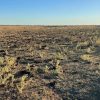
Long, Costly Drought Drives Climate Crisis Home in Argentina
Martín Rapetti, a fourth generation farmer in the province of Corrientes in northeastern Argentina, has already lost more than 30 cows due to lack of food and water, as a result of the long drought that is plaguing a large part of the country. “There is no grass; the animals have to sink their teeth into the dry earth,” he says with resignation.
The Value of Insects: Why We Must Act Now to Protect Them
Recently, the United States Department of Agriculture granted a conditional license for the first-ever honeybee vaccine. This is an exciting step that will protect bees from American foulbrood disease and ultimately help to stop the alarming decline in their numbers.
Destruction of Ukraine’s Healthcare Facilities Violates International Humanitarian Law – Report
While recent reports highlight the growing list of human rights abuses and war crimes committed by Russian troops in Ukraine, new research has laid bare the massive scale of arguably Russia’s most systematic and deadly campaign of rights violations in the country – the targeting and almost complete destruction of healthcare facilities.
Erdogan’s Desperate Bid to Become the New Atatürk
As Turkey approaches its centennial anniversary this October, President Erdogan is stopping short of nothing to win the election in June to fulfill his life-time dream of presiding over the celebration. The Turkish people should deny him this historic honor because of the reign of terror to which he has mercilessly subjected his countrymen.
The Year of Debt Distress and Damaging Development Trade-Off
As the year 2022 drew to an end, the United Nations Conference on Trade and Development (UNCTAD) warned, “Developing countries face ‘impossible trade-off’ on debt”, that spiralling debt in low and middle-income countries (LMICs) has compromised their chances of sustainable development.
As the Climate Crisis Bites, Soil Needs Doctors Too
In a wiser world, the term ‘treating someone like dirt’ would be a good thing. After all, 15 of the 18 nutrients essential to plants are supplied by soils and around 95% of the food we eat comes directly or indirectly from them, according to the United Nations Food and Agriculture Organization (FAO). So dirt is actually a precious resource that deserves to be treated with respect, care and perhaps even a little love.
Cabo Verde Hoists the Blue Flag
On 20 January, the world’s best sailors arrived in Mindelo, Cabo Verde, completing the initial leg of the 2023 edition of The Ocean Race. Coinciding with this stop was the launch of Cabo Verde’s first blue bond at the Ocean Summit, an event jointly organized by The Ocean Race and the Government of Cabo Verde on the sidelines of the grueling round-the-world race. United Nations Secretary-General Antonio Guterres was in attendance as this year’s keynote speaker.
Solar Energy Useless Without Good Batteries in Brazil’s Amazon Jungle
“Our electric power is of bad quality, it ruins electrical appliances,” complained Jesus Mota, 63. “In other places it works well, not here. Just because we are indigenous,” protested his wife, Adélia Augusto da Silva, of the same age.
How (Much) Are You Today?
Gone are those times when catastrophes were measured in terms of human suffering. Now, with an exception: Ukrainians victims of the Russian invasion, everything is calculated in just money.
New Business Technology Transfer Provides Benefits for African Pharmaceutical Industry
A few months after German biotechnology company BioNTech announced the establishment of the first-ever local vaccine manufacturing in Rwanda, experts believe the successful implementation of such initiatives across the continent will require countries to acquire know-how while encouraging potential industrial partners in the pharmaceutical industry.
Digital Politics: “Disconnected Citizens Are Kept Away from Opportunities”
In 2022, Saudi Arabia “quietly” sentenced Salma al-Shehab to 34 years in prison over her Twitter activity, marking the longest Saudi sentence ever for a peaceful activist. Fast forward and award-winning Ugandan author Kakwenza Rukirabashaija was charged with two counts of "offensive communication" after making unflattering remarks about the president and his son on Twitter. The message is clear: your well-crafted 280 characters can land you in jail.
On International Day of Education, We Must Prioritize Girls in Humanitarian Crisis
“Is it a sin to be a girl? We don’t want to be at home and illiterate. We want to go to school, study and be intelligent.” In just a few words, this plea for education from a young Afghan girl has captured the world’s attention. Her heartbreaking question shows how the Taliban’s recent ban on girls attending secondary school and university – effectively ending education opportunities for all Afghan girls and women – is not only violating their fundamental human right to education but shattering countless hopes and dreams in an instant. [related_articles]
Delivering On Our Promise of Universal Education
As we mark the International Day of Education, world leaders must make good on their promise of providing quality education for all by 2030. Education is our investment in peace where there is war, our investment in equality where there is injustice, our investment in prosperity where there is poverty.
Pope, Sasakawa in Global Appeal for a Leprosy Free World
In the four years preceding the COVID-19 pandemic, the spread of leprosy or Hansen’s disease, seemed to be losing steam. Between 2016 and early 2020, new case numbers remained more or less constant.
Unstoppable Gas Leaks in Mexico
A dark mole dots the brown earth, among the green scrub at this spot in southeastern Mexico. A repetitive “glug, glug,” a noise sounding like a thirsty animal, and an intense stench lead to this site, hidden in the undergrowth, where a broken pipe has created a pool of dense oil.
Africa Wants IMF Special Drawing Rights Re-Allocated to Finance Its Development
African countries, many reeling under high debt and experiencing economic recession, could benefit from the reallocation of Special Drawing Rights (SDR), financial instruments of the International Monetary Fund (IMF).
Malaysia’s TVET Ecosystem in Need of All-of-Society Engagement
Technical and Vocational Education and Training (TVET) in Malaysia originated from the colonial and early post-colonial governments’ need for trained and skilled manpower to run state agencies and projects.
The People of Africa Need Relief: the Biden Administration can Provide it
United States Treasury Secretary Janet Yellen is traveling to South Africa, Zambia, and Senegal this week in the hopes of strengthening U.S.-Africa relations at a time of waning U.S. influence on the continent — the first in a series of Biden administration trips announced at last month’s U.S.-Africa Leaders Summit.« Previous Page — Next Page »





 2026 High-level Political Forum on Sustainable Development. Credit: UN Photo/Eskinder Debebe
In 2015, the United Nations and its Member States adopted the Sustainable Development Goals (SDGs) in an effort to make the world a more sustainable and peaceful place for future generations. Progress on the 17 SDGs has been uneven, and inequality persists across the globe. 10 years after adoption, the 2025 UN SDGs Report revealed that only 35% of the SDG targets are on track, with more than half moving too slowly, and 18% moving backwards from the 2015 baseline. Poverty remains one of the world’s most pressing issues, with hunger, violence, and inequality impeding the opportunities for all people to achieve success. In September 2024, the United Nations Summit of the Future introduced a new goal: to eradicate global poverty by 2030, ensure universal rights to basic services, and increase the overall standard of living in terms of industrialization, economic well-being, citizen health, and literacy. Furthermore, recent shifts in United States foreign aid policy – notably, major budget cuts to USAID and the termination of thousands of development programmes– have severely threatened vital lifelines of financial aid to impoverished communities around the world. Additionally, the United States’ withdrawal from the Paris Climate Agreement has undercut international efforts at sustainable development. With the upcoming 2030 deadline, the UN Secretary-General has called for urgent multilateralism across six priority areas: food systems, energy, digital connectivity, education, jobs and social protection, and climate and biodiversity. IPS sheds light on marginalized communities that struggle on a daily basis to survive and have their stories heard and respected.
Updated by Yilan Batista and Shuli Wong August 2026

The Week with IPS

NEXT STOP - SDGs
Tracking global progress towards a sustainable world
Tracking global progress towards a sustainable world
