Languages
Wednesday, November 11, 2026



News and Views from the Global South
Development & Aid
Intersecting Crises are Impeding the UN’s Sustainable Development Goals, Threatening Peace & Security
This week marks the mid-way point to the 2030 Agenda on Sustainable Development and with it the release of the UN’s Sustainable Development Goals Report 2022.
A World of 8 Billion, Yes, But Only a Few Are Seen as Human Beings
Far-right Brazilian president, Jair Messias Bolsonaro, was quoted a year ago or so as saying to a small group of indogenous people that they “now look a bit more like humans.”
Myths Fuel Xenophobic Sentiment in South Africa
Around the world, from Syria to Libya, from Bangladesh to Ukraine, millions have become refugees in foreign lands due to war, famine, or political and economic instability in their countries.
UN Predicts 68 Percent of World’s Population will be Living in Urban Areas by 2050
When we think of urbanization we often end up referring to the increasing number of megalopolises that are sprawling around the world. Yet less thoughts are given on the fact that the future patterns of urbanization will be centered on secondary cities or semi urban spaces, now becoming extensions of these gigantic cities.
Differently-Abled Farmers Integrate Digital Technology, Aim To Set Example For Others
Hidden in Pathumthaini province just outside of Bangkok, 0.24 hectares of land adjacent to Seangsan temple has been turned into an urban vegetable farm managed by members of the Association of the Physically handicapped of Pathumthani.
Tap Into Indigenous Knowledge To Preserve Our Forests
A few years ago, I found myself in the Baka indigenous sacred forest in Assok, in Cameroon in the course of my work in supporting them to preserve their forest against land grabbers. We were building a forest hut using only leaves and the knowledge of our indigenous partners.
Recovering Edible Food from Waste Provides Environmental and Social Solutions in Argentina
For 30 years, Tomasa Chávez visited the Central Market of Buenos Aires and rummaged through the tons of fruits and vegetables that the stallholders discarded, in search of food. Today she continues to do so, but there is a difference: since 2021 she has been one of the workers hired to recover food as part of a formal program launched by the Central Market.
Sri Lankan Beggar’s Opera
When Ceylon- now Sri Lanka- gained independence from Britain in 1948 after almost 450 years of colonial rule under three western powers, it was one Asia’s most stable and prosperous democracies.
The Rape of the Indian Ocean
The Story of the Yellow Fin Tuna
Over the last past several decades marine fish stocks worldwide have been under intense threat. There have been many high sounding declarations and agreements to reduce catch effort, to use more environmentally friendly fishing gear, to prevent illegal fishing and to impose “closed seasons” to allow stocks to recover.

Rights Groups Question ‘Pregnancy Register’ for Polish Women
Women’s rights groups fear a new legal provision in Poland requiring doctors to collect records on all pregnancies could create what they have described as a ‘pregnancy register’ to monitor whether women are having abortions.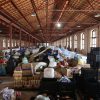
Mobilizing Against Hunger in Brazil, Where It Affects 33.1 Million People
A campaign against hunger, a problem that affects 15.5 percent of the Brazilian population, seeks to mobilize society once again in search of urgent solutions, inspired by a mass movement that took off in the country in 1993.
Animals are Core to Pandemic Prevention – We Must Strengthen Their Defences
The ongoing discussions at the World Health Organization (WHO) around a new, landmark ‘pandemic prevention treaty’ shows that the world is starting to act on the lessons it learned from the COVID-19 pandemic.
Weaponizing Free Trade Agreements
Long seen as means to seek advantage on the pretext of providing mutual benefit, free trade agreements (FTAs) may increasingly be used as economic weapons in the emerging new Cold War. Pivot to Asia, containing China In November 2009, President Obama observed, “in an inter-connected world, power does not need to be a zero-sum game… the United States does not seek to contain China”.
Why We Need a Digital Safe Space for LGBTQ Youth – Thoughts from Asian Teens
Recently, I watched a documentary titled Why We Can’t See Disabled People [in Korea].
Androids in Human Populations
It is time for countries, especially those with slow growing and ageing human populations, to welcome androids, i.e., humanoid robots with human-like appearance and behavior, including speech, sight, hearing, mobility, and artificial intelligence.
EU’s Exclusionary Migration Policies Place People on the Move toward Europe at Greater Risk
A mass attempt on June 24, 2022, of about 2000 African migrants to scale the border fence between Morocco and the Spanish enclave of Melilla left at least 37 people dead.
New World Records: More Weapons than Ever. And a Hunger Crisis Like No Other
While the North Atlantic Treaty Organisation (NATO) Summit ended in Madrid on 30 June with net commitments to double spending on weapons and to increase by eight-fold the number of troops in Europe, the total of hungry people worldwide now marks an unprecedented record.
The Digital Divide, a Pending Issue in Chile’s Educational System
A Chilean government plan seeks to ensure connectivity in remote areas, in a first step to address a deep digital divide among the country's inhabitants that includes a lack of access to technology and digital education deficits, exposed by the COVID-19 pandemic.
World Leaders Must Look at the Big Picture to Solve Food Crisis
From the worst drought in four decades threatening famine across the Horn of Africa to extreme heat in South Asia, the war in Ukraine and the unequal pace of pandemic recovery, global food systems are under extraordinary pressure.
Addressing the Global Biodiversity Crisis Requires Understanding and Prioritizing the Many Values of Nature
Nature has many values. A forest can be a cool and quiet place to retreat to when you need relaxation on a hot summer day. It is a habitat for many species. Trees also sequester and store carbon, reducing future impacts of climate change. But of course, the trees also have a monetary value if they are felled and turned into furniture or put to other uses. These are just four examples of the many values of nature, which are vital parts of our cultures, identities, economies and ways of life.
Mexico Makes Risky Bet on Liquefied Gas in New Global Scenario
Liquefied gas does not occupy a prominent position in Mexico's energy mix, but the government wants to change that scenario, to take advantage of the crisis unleashed by Russia's invasion of Ukraine and the need for new sources of the fuel due to the sanctions against Russia.« Previous Page — Next Page »





 2026 High-level Political Forum on Sustainable Development. Credit: UN Photo/Eskinder Debebe
In 2015, the United Nations and its Member States adopted the Sustainable Development Goals (SDGs) in an effort to make the world a more sustainable and peaceful place for future generations. Progress on the 17 SDGs has been uneven, and inequality persists across the globe. 10 years after adoption, the 2025 UN SDGs Report revealed that only 35% of the SDG targets are on track, with more than half moving too slowly, and 18% moving backwards from the 2015 baseline. Poverty remains one of the world’s most pressing issues, with hunger, violence, and inequality impeding the opportunities for all people to achieve success. In September 2024, the United Nations Summit of the Future introduced a new goal: to eradicate global poverty by 2030, ensure universal rights to basic services, and increase the overall standard of living in terms of industrialization, economic well-being, citizen health, and literacy. Furthermore, recent shifts in United States foreign aid policy – notably, major budget cuts to USAID and the termination of thousands of development programmes– have severely threatened vital lifelines of financial aid to impoverished communities around the world. Additionally, the United States’ withdrawal from the Paris Climate Agreement has undercut international efforts at sustainable development. With the upcoming 2030 deadline, the UN Secretary-General has called for urgent multilateralism across six priority areas: food systems, energy, digital connectivity, education, jobs and social protection, and climate and biodiversity. IPS sheds light on marginalized communities that struggle on a daily basis to survive and have their stories heard and respected.
Updated by Yilan Batista and Shuli Wong August 2026

The Week with IPS

NEXT STOP - SDGs
Tracking global progress towards a sustainable world
Tracking global progress towards a sustainable world
