Languages
Friday, November 13, 2026



News and Views from the Global South
Development & Aid

State-Owned Companies Are Key to Climate Success in Developing Countries, but Are Often Overlooked in the International Dialogue
Later this month, government officials and climate stakeholders will once again converge on New York City (this time virtually) for Climate Week and the United Nations meetings. And while there will be much discussion about the important role that actors such as private businesses, civil society and cities will need to play in the climate change effort, there will once again be relatively little discussion about one key cohort: government-owned companies.
Syria’s Children Remain at Immense Threat of Rape and Recruitment by Army: Report
Children in Syria are facing the brutal brunt of the ongoing civil war in the country, now rendered further paralysed owing to the COVID-19 pandemic and United States sanctions. At the Sept. 15 launch of the report investigating human rights violations in Syria by the Commission of Inquiry on Syria, experts warned that in addition to the already ongoing conflict, “newer forms of violence” was on the rise.
Fight Fire with Trade: How Europe Can Help Save the Amazon
The EU is thinking about agreeing to a €4 billion trade deal with Brazil, Argentina, Uruguay and Paraguay (known as the Mercosur bloc). In our new academic research, myself and 21 international co-authors looked at the details of this deal so you don’t have to. What we found wasn’t pretty.
UNESCO launches the “Li Beirut” initiative to support education, putting culture and heritage at the heart of reconstruction efforts
The Director-General of UNESCO, Audrey Azoulay, on Thursday 27 August launched an international fund raising appeal, Li Beirut (For Beirut in Arabic), to support the rehabilitation of schools, historic heritage buildings, museums, galleries and the creative economy, all of which suffered extensive damage in the deadly explosions that shook the Lebanese capital on 4 August.
COVID-19 Worsens Mozambique’s Hunger
Like many Mozambicans in the agricultural sector, 39-year-old Fatima Matavele, a commercial farmer in the district of Chokwe, some 213 kilometres north of the capital, Maputo, has had a tough year. Although the last few years have been hard, 2020 has proven to be the most difficult of all.
Myths of Soft Budget Constraints
In recent decades, many contemporary macroeconomic and financial problems have been blamed on ‘soft budget constraints’ (SBCs), with the term becoming quite popular in the economics lexicon, financial media and political discourse.
Maritime Security in Asia-Pacific Region Under Threat
Maritime security in Asia Pacific is often viewed through a traditional security lens, where the main responsibility falls on maritime law enforcement agencies to protect maritime borders and territorial sovereignty.Rebbilib Episode 2
Come to the table, with a willingness to share and be vulnerable: This video is the second in a 3 part series hearing directly from Monitoring Evaluation and Learning practitioners within the Pacific region and their experience of using Pacific approaches in their work. In this video we hear from Associate Professor Cresantia Frances Koya – Vaka’uta who works with the University of the South Pacific, the regionally owned provider of tertiary education in the Pacific region and an international centre of excellence for teaching, research consulting and training on all aspects of Pacific culture, environment and human resource development needs.
INTERVIEW: the top diplomat shepherding the General Assembly through its 75th year
The Turkish diplomat elected to be the president of the 75th session of the UN General Assembly, Volkan Bozkir, is taking on the role as the Organization grapples with an unprecedented pandemic, and questions surrounding the future direction it should take.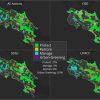
Mapping Nature to Create a Global Biodiversity Framework
The year 2020 was considered a “Super Year” for biodiversity. A string of interconnected events offered a unique opportunity to build a global coalition and international policy framework that recognized the central role of nature to all life on Earth.
Statement by UN Deputy Secretary-general Amina J. Mohammed at ECW High-level Steering Group
As a friend and strong advocate of Education Cannot Wait, I welcome this opportunity to convey my support for ECW’s critical work and my solidarity with the millions of children and youth who are still being deprived of the opportunity to obtain a quality education because they are caught up in conflict, crisis or disaster.
The Debt the Government Does Not Want to Recognize
The national occupation and employment survey prepared by INEGI, with figures updated to July 2020, shows an improvement that has occurred in the last two months. However, the employment situation, compared with the data existing before the pandemic still shows serious problems:
Q&A: Land Restoration can Help Restore Post-COVID-19 Economy
Investing in sustainable land management and land restoration will help build economies post-COVID-19 and help poor people increase their incomes as the destruction of global food chains by the pandemic provides a chance for ensuring diversity in production through ensuring the inclusion of local producers.
No ‘Business as Usual’ for Children Post-COVID-19, say Laureates & Leaders
Addressing delegates at the end of the virtual 3rd Fair Share for Children Summit, 2014 Nobel Peace Laureate Kailash Satyarthi told global citizens that “business as usual” in dealing with COVID-19 is not going to be tolerated. “We’re not going to accept the miseries of child labour and trafficking to continue to be normal,” he said.
A Marathon, Not a Sprint: Peru Needs Fiscal Reforms to Quell High COVID-19 Death Rate
“It’s a major paradox, no?” asks Hugo Ñopo, a researcher at the Peruvian think tank Group for the Analysis of Development (GRADE). Since the beginning of the pandemic, Peru has presented itself as an example for the region: it quickly implemented drastic prevention measures, followed scientific recommendations and prepared an economic support plan for the most vulnerable segments of the population.
A New Social Contract Needed for Children on the Move
Forced to flee wars and disasters, sometimes without family, and struggling to survive in the worst of circumstances, children on the move have long led very precarious lives. Be they refugees, internally displaced or asylum seekers, vulnerable and marginalised, they lose years of childhood. They are exposed to the worst forms of abuse, such as commercial exploitation and violence. Today, their situation is dire as they remain at the very bottom of the list to receive emergency measures to protect them from the impacts of COVID-19.
Save 70 million Lives Through #FairShare of COVID-19 Response Fund, Youth Urge Governments
Young people have added their voice in calling on world leaders to allocate at least 20 percent of the COVID-19 stimulus package to the marginalised children and youth.Rebbilib Episode 1
It is important to understand the needs of the Vanua, the culture, tradition and its’ protocols: This video is the first in a 3 part series hearing directly from Monitoring Evaluation and Learning practitioners within the Pacific region and their experience of using Pacific approaches in their work. In this video we hear from Mr. Eroni Wavu, the MEL Officer with the Ministry of i-Taukei Affairs in Fiji who are responsible for developing, implementing and monitoring government programs focussed on the governance and wellbeing of the iTaukei people.
Preserving Food Security in Africa’s Urban Areas
In Torit State, southern South Sudan, Margaret Itto is one of the farmers in Africa’s youngest country who have invested heavily in agriculture. But she is not able to access the lucrative market for her produce in the capital Juba simply because of poor roads.
Getting the Basics Right – India’s National Education Policy 2020
The National Education Policy 2020 (NEP) lays out a compelling, ambitious agenda for education reform in India. Yet, as others have noted, without concerted action the NEP’s promise will remain unfulfilled.
Hold Corporates Accountable for Using Child Labour, Nobel Laureates Urge World Leaders
The COVID-19 pandemic should give governments across the world an opportunity to hold corporates accountable against child labour. Kailash Satyarthi, the 2014 Nobel Peace Laureate, made this submission at the virtual 3rd Fair Share for Children Summit.
« Previous Page — Next Page »


 2026 High-level Political Forum on Sustainable Development. Credit: UN Photo/Eskinder Debebe
In 2015, the United Nations and its Member States adopted the Sustainable Development Goals (SDGs) in an effort to make the world a more sustainable and peaceful place for future generations. Progress on the 17 SDGs has been uneven, and inequality persists across the globe. 10 years after adoption, the 2025 UN SDGs Report revealed that only 35% of the SDG targets are on track, with more than half moving too slowly, and 18% moving backwards from the 2015 baseline. Poverty remains one of the world’s most pressing issues, with hunger, violence, and inequality impeding the opportunities for all people to achieve success. In September 2024, the United Nations Summit of the Future introduced a new goal: to eradicate global poverty by 2030, ensure universal rights to basic services, and increase the overall standard of living in terms of industrialization, economic well-being, citizen health, and literacy. Furthermore, recent shifts in United States foreign aid policy – notably, major budget cuts to USAID and the termination of thousands of development programmes– have severely threatened vital lifelines of financial aid to impoverished communities around the world. Additionally, the United States’ withdrawal from the Paris Climate Agreement has undercut international efforts at sustainable development. With the upcoming 2030 deadline, the UN Secretary-General has called for urgent multilateralism across six priority areas: food systems, energy, digital connectivity, education, jobs and social protection, and climate and biodiversity. IPS sheds light on marginalized communities that struggle on a daily basis to survive and have their stories heard and respected.
Updated by Yilan Batista and Shuli Wong August 2026

The Week with IPS

NEXT STOP - SDGs
Tracking global progress towards a sustainable world
Tracking global progress towards a sustainable world
