Languages
Friday, November 13, 2026



News and Views from the Global South
Development & Aid

Africa at the Crossroads: Time to Abandon Failing Green Revolution
As COVID-19 threatens farming communities across Africa already struggling with climate change, the continent is at a crossroads. Will its people and their governments continue trying to replicate industrial farming models promoted by developed countries? Or will they move boldly into the uncertain future, embracing ecological agriculture?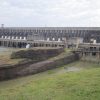
Looking for Jobs in Latin America – Can the Energy Transition Help?
Can the “energy transition” in Latin America help address the risks caused by greenhouse gases (GHG) on the climate, and the economic depression caused by the pandemic?
Fighting India’s Bonded Labour During the COVID-19 Pandemic – Part 1
One of the worst fallouts of the COVID-19 pandemic has been the closure of industries in India, which caused thousands of migrant labourers to return home to villages in Uttar Pradesh, Bihar and Bengal. In a region where the poorest have always been subjected to bonded labour, child labour and slave trafficking, it has meant revisiting the past.
‘Populist’ Macroeconomic Policy
‘Ethno-populism’ has emerged and spread in recent decades in response to the mixed consequences of neoliberal globalization. It appropriates nationalist rhetoric for narrow ethnic, religious, cultural or other communal ends, typically with a chauvinist, jingoist rejection of selected Others as politically expedient.
Central Sahel – Shaping peace together with women and young people Statement for International Peace Day
The countries of Central Sahel—Burkina Faso, Mali, and Niger—face an unprecedented crisis, marked by violent extremism, forced displacement, and rising insecurity. The sharp increase in armed attacks on communities, health centres, schools and other public institutions and infrastructure has disrupted livelihoods and access to social services. The impact on affected people is devastating.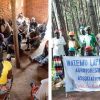
Agriculture for Development
Special Issue on the contributions of non-governmental organisations and civil society to agricultural and rural development - Involving local communities in setting the agricultural development agenda - Ten years of opportunities to improve the lives of family farmers - BRAC’s contributions to agricultural development - Updated data sets for more efficient investment strategies for family farms - Can food production keep up with population increase in Malawi? - Northern civil society in agriculture in the South: a failure? - A systems approach to unlock the potential of African agriculture - Promoting biodiversity and livelihoods through community forest restoration - Introducing the new Chair of TAA - Alternative livelihoods in an opium-based agricultural economy - News from NGO institutional members Source: 'Agriculture for Development' journal

SDGs: It’s Not Just About Collecting Data, it’s What You Do With it
The unprecedented challenges posed by COVID-19 have reminded us that we are an interconnected global community. While this crisis rightly has dominated our attention, we must not lose sight of progress on the broader aims of the Sustainable Development Goals and the Paris Climate Agreement.
Nono the Carbon Footprint Bear—Part of Peru’s Ambitious Work on Climate Action
On the eve of its bicentennial, Peru is addressing climate change with the needed sense of urgency and ambition. Our inclusive, ‘whole society’ approach aims to awaken new opportunities that are within reach of all of our citizens. Like COVID-19, climate change is a landmark which will have a clearly established before and after period. Without a doubt, it is paving a path towards sustainable development that will improve the well-being of all Peruvians.
‘Waste is only Waste when you Waste it’ – Could Ecobricks be the Solution to Uganda’s Housing and Pollution Problem?
About 40 kilometres out of Uganda’s capital, Kampala, in the Mpigi area, you can find an entire village hill with houses that have plastic bottles walls and car tyre rooftops.
Peace is the North Star During and the Post COVID-19 Pandemic
Amid various global conflicts in the 1980s and 1990s, the International Day of Peace (IDOP) was established to commemorate the strengthening of the ideals of peace globally. Today, peace is not just the absence of conflict, but a key prerequisite for development. It is in recognition of the crucial linkages between peace, respect for human rights and sustainable development that more than 36 indicators for peace were included across the Sustainable Development Goals (SDGs).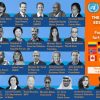
Global Leaders Focus on Education in Emergencies & Protracted Crises at ECW’s Global High-level #UNGA75 Event: ‘the Future of Education Is Here for Those Left Furthest Behind’
Education Cannot Wait (ECW) brought together an impressive, diverse line-up of world leaders, policymakers, youth, teachers, celebrities and global advocates to rally around the cause of education in emergencies and protracted crises during the 75th Session of the United Nations General Assembly under the inspiring theme “The Future of Education is Here for Those Left Furthest Behind.”
Helping Make Education a Reality for the 75 million Children in Conflict Zones
Aryan is a 15-year-old girl from Afghanistan who lives with her family in a shelter in an undisclosed country in Europe. She doesn’t go to school. But she is hugely creative. And it shows in how she occupies her time during the day — writing poetry and making bracelets and earrings that she hopes to sell online one day.
After 75 Years, UN Claims 50:50 Gender Parity, But Falls Short of its Ultimate Goals
When the United Nations was dominated by men, holding some of the highest positions in the staff hierarchy, women staffers were overwhelmingly administrative secretaries seen pounding on their Remington typewriters seated outside their bosses’ enclosed offices.
Education Cannot Wait Mobilizes an Additional US$23.6 Million to Increase Support for Vulnerable Children and Youth – Already Affected by Armed Conflict, Forced Displacement and Protracted Crises – Now Doubly Hit by COVID-19 Pandemic
World leaders today committed to expand education in emergency aid for children and youth impacted by the COVID-19 pandemic – girls and boys already suffering the brunt of armed conflict, forced displacement, climate-change induced disasters and protracted crises – with a focus on the most marginalized, including girls, refugees and children with disabilities.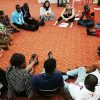
The Culture of Peace: Change our World for the Better in the Age of COVID 19
Last year, we paid tribute to the 20th Anniversary of the 1999 Declaration of the Program of Action on a Culture of Peace. Today, we need to ask ourselves if we had genuinely carried out our moral responsibilities to transition from a culture of hatred and violence to a culture of tolerance and peace.
A World Without Hunger Is Also About Protecting Food
Concern about food loss and waste has become an increasingly important focus of attention when discussing ways to eliminate hunger which, according to the latest FAO report, already exceeds 690 million people.
COVID-19 – Possible Human Rights Crisis in Asia as Disparities Expected to Widen
The negative impact of the coronavirus pandemic is likely to be felt long after the COVID-19 health risk is resolved, a high-level meeting under the auspices of the Asian Population and Development Association (APDA), heard.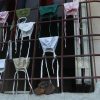
Accessibility of Vaccines & Commitment to Ceasefire – Priority Focuses for 75th UNGA
Key focuses of the upcoming 75th session of the United Nations General Assembly (UNGA) High Level Week will be the accessibility of vaccines and a renewed plea for a global ceasefire. “I will make a strong appeal to the international community to mobilise all efforts for the global ceasefire to become a reality by the end of the year,” U.N. Secretary-General António Guterres said on Wednesday.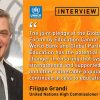
Interview with the UN High Commissioner for Refugees, Filippo Grandi
Education Cannot Wait: As the UN agency mandated by the UN General Assembly to provide international protection and seek solutions for refugees, could you please elaborate on the overall importance of education for refugee children as a component of protection and solutions?
Leveraging Research for Solution-driven Policymaking in the Era of COVID-19
The United Nations has tasked the Canadian Institutes of Health Research Institute of Population and Public Health (CIHR-IPPH) to lead the research roadmap to identify priorities that will support an equitable global socio-economic recovery from COVID-19 within the broader framework of the Sustainable Development Goals (SDGs). As the world grapples with the impacts of COVID-19, identifying the research agenda and partnering with academic institutions and think tanks have become more essential than ever before.
Impact of COVID-19 on Women and Children
The impacts of crises are never gender-neutral and COVID-19 is no exception. The pandemic has resulted in increased rates of violence against women and has exacerbated challenges in accessing justice. Women are losing their livelihoods faster than men.« Previous Page — Next Page »


 2026 High-level Political Forum on Sustainable Development. Credit: UN Photo/Eskinder Debebe
In 2015, the United Nations and its Member States adopted the Sustainable Development Goals (SDGs) in an effort to make the world a more sustainable and peaceful place for future generations. Progress on the 17 SDGs has been uneven, and inequality persists across the globe. 10 years after adoption, the 2025 UN SDGs Report revealed that only 35% of the SDG targets are on track, with more than half moving too slowly, and 18% moving backwards from the 2015 baseline. Poverty remains one of the world’s most pressing issues, with hunger, violence, and inequality impeding the opportunities for all people to achieve success. In September 2024, the United Nations Summit of the Future introduced a new goal: to eradicate global poverty by 2030, ensure universal rights to basic services, and increase the overall standard of living in terms of industrialization, economic well-being, citizen health, and literacy. Furthermore, recent shifts in United States foreign aid policy – notably, major budget cuts to USAID and the termination of thousands of development programmes– have severely threatened vital lifelines of financial aid to impoverished communities around the world. Additionally, the United States’ withdrawal from the Paris Climate Agreement has undercut international efforts at sustainable development. With the upcoming 2030 deadline, the UN Secretary-General has called for urgent multilateralism across six priority areas: food systems, energy, digital connectivity, education, jobs and social protection, and climate and biodiversity. IPS sheds light on marginalized communities that struggle on a daily basis to survive and have their stories heard and respected.
Updated by Yilan Batista and Shuli Wong August 2026

The Week with IPS

NEXT STOP - SDGs
Tracking global progress towards a sustainable world
Tracking global progress towards a sustainable world
