Languages
Friday, November 20, 2026



News and Views from the Global South
Development & Aid
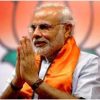
Modi Cruises with Ease as Prime Minister of India for a Second Term
The boy who sold tea at railway platforms for a living has become the Prime Minister of world’s largest democracy for the second time. Narendra Dhamodaradas Modi, incumbent Prime Minister and leader of the BJP secured a second chance to be the Prime Minister at Indian elections which took place recently. The election was perhaps the largest held in any part of the world with 39 days of polling and involving as many as 900 million voters.
Pakistani and Afghan Refugees Seek Safe Haven in Sri Lanka
Thirteen-year-old Bariea, a Pakistani asylum seeker in Sri Lanka, is taking shelter at a mosque in the city of Negombo, where an uneasy mix of high anxiety and extreme boredom hover over the room.
We Can’t Halt Extinctions Unless We Protect Water
Global biodiversity loss has reached critical levels. One million species of plants and animals are now estimated to be at risk of extinction. The window for action is closing, and the world needs to urgently take note.
The New Face of Activism: Youth
Rather than waiting for adults to act, more young girls and boys are standing up and speaking out on the world’s pressing issues.
Water Research & Education Needs to Flow Towards Developing World
Post-secondary education relevant to the global water crisis is concentrated in wealthy countries rather than the poorer, developing places where it is needed most.
A Call for Concrete Changes to Achieve a More Gender Equal World
On the eve of the Women Deliver conference in Vancouver June 3-6, Princess Sarah Zeid of Jordan interviewed Dr. Olfat Mahmoud, a Palestinian refugee and women’s rights advocate.
Asia-Pacific Region Viewed as Engine of the World Economy
Since this Commission first met in 1947, our countries have travelled a long journey. Our economies are expected to become larger than the rest of the world combined, measured by purchasing power parity. It is often said the Asia-Pacific region is the engine of the world economy.
Finance’s New Avatar
Over recent decades, the scope, size, concentration, power and even the purpose and role of finance have changed so significantly that a new term, financialization, was coined to name this phenomenon. Financialization refers to a process that has not only transformed finance itself, but also, the real economy and society. The transformation goes beyond the quantitative to involve qualitative change as finance becomes dominant, instead of serving the needs of the real economy.
Zimbabwe’s Resettled Farmers Hawking Cigarettes to Survive
For subsistence farmer Rogers Hove—who proudly brandishes a worn out letter for his five hectare piece of land he obtained from government following the chaotic land seizures from white commercial farmers over two decades ago—what matters most to him, “is to see my piece of land in my possession”.
Realistic & Fair Immigration: A Policy to Unite Denmark
Immigration policy has divided the people of Denmark for many years. There are few other areas where the fronts are drawn so divisively and where arguments become attacks. Maybe this is understandable? Immigration policy plays an important part when it comes to defining the country we want to be. There are deeply held emotions at stake. And more and more people are experiencing for themselves what happens when integration fails.
Within a Parallel Universe – Monsters of the Dark Web
Human existence includes dreams, thoughts, ideas, music, stories, religion, and other immaterial ”things”. They constitute an important part of our habitat, i.e. the dwelling place of any living organism, consisting of both organic and inorganic surroundings. I learned this when I many years ago found myself among the undulating heights of Cordillera Central, which rise diagonally across the island of Hispaniola, shared by Haiti and the Dominican Republic.
The Time is Now: End Sexual and Gender-Based Violence
It’s time to end sexual and gender-based violence once and for all, participants of a two-day conference said.
Modernity Triumphs over Feudalism in India
“We worked for the poor and they voted us back to power,” was the explanation that Prime Minister Narendra Modi made to newly-elected legislators on Saturday, May 25, on the spectacular win scored by his nationalist Bharatiya Janata Party (BJP) in India’s just concluded general elections.
The World Made Promises to Women and Girls, We Must Fulfil Them
In 1994 the International Conference and Population and Development (ICPD) was hosted in Cairo by the Government of Egypt. Twenty-five years later, Kenya is ready to convene the ICPD “Nairobi Summit” in November 2019.
Report Reveals Mounting Pressure on Zambia’s Environmental Resources
There is a strong link between provision of basic social services and the use of natural resources in a country. Thus, with increased population comes additional pressure on natural resources. This is a key finding in the latest Zambia Environment Outlook (ZEO) Report 4, published by the Zambia Environmental Management Agency (ZEMA).
SENT FOR HOUSE WORK: MANY TRICKED INTO SEX WORK
Little-educated women from remote villages find themselves sold as sex-workers in the Middle East, because neither the government nor recruiting agencies can authenticate foreign employers seeking housemaids.
Class Analyst: Global Income Inequality
As a child growing up in Communist Yugoslavia, Branko Milanovic witnessed the protests of 1968, when students occupied the campus of the University of Belgrade and hoisted banners reading “Down with the Red bourgeoisie!”
The UN Has Failed Civilians
Despite the United Nations Security Council’s task of protecting civilians, millions around the world are still being displaced and killed with little to no accountability for perpetrators.
Women & Youth Remain Politically Underrepresented in Africa’s Most Populous Nation
Two months after the general elections in Nigeria, Africa’s most populous nation, things are back to normal. The incumbent President Muhammadu Buhari, a 76-year-old general and former military Head of State, clearly defeated his challengers.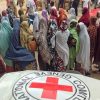
The Contribution of Humanitarian Action to Peace
The connection of humanitarian action to broader objectives like peace, development and human rights is understandably complex, but it is also an area in which some fresh thinking is important.
Executive Director of the Geneva Centre: Education constitutes an important building block to counter violent extremist narratives
Equal access to education can open vital spaces for inclusiveness, reconciliation and dialogue as well as address prevailing toxic narratives fuelling violent and extremist ideologies, said the Executive Director of the Geneva Centre for Human Rights Advancement and Global Dialogue Ambassador Idriss Jazairy at a conference organized by the World Council of Churches (WCC).« Previous Page — Next Page »


 2026 High-level Political Forum on Sustainable Development. Credit: UN Photo/Eskinder Debebe
In 2015, the United Nations and its Member States adopted the Sustainable Development Goals (SDGs) in an effort to make the world a more sustainable and peaceful place for future generations. Progress on the 17 SDGs has been uneven, and inequality persists across the globe. 10 years after adoption, the 2025 UN SDGs Report revealed that only 35% of the SDG targets are on track, with more than half moving too slowly, and 18% moving backwards from the 2015 baseline. Poverty remains one of the world’s most pressing issues, with hunger, violence, and inequality impeding the opportunities for all people to achieve success. In September 2024, the United Nations Summit of the Future introduced a new goal: to eradicate global poverty by 2030, ensure universal rights to basic services, and increase the overall standard of living in terms of industrialization, economic well-being, citizen health, and literacy. Furthermore, recent shifts in United States foreign aid policy – notably, major budget cuts to USAID and the termination of thousands of development programmes– have severely threatened vital lifelines of financial aid to impoverished communities around the world. Additionally, the United States’ withdrawal from the Paris Climate Agreement has undercut international efforts at sustainable development. With the upcoming 2030 deadline, the UN Secretary-General has called for urgent multilateralism across six priority areas: food systems, energy, digital connectivity, education, jobs and social protection, and climate and biodiversity. IPS sheds light on marginalized communities that struggle on a daily basis to survive and have their stories heard and respected.
Updated by Yilan Batista and Shuli Wong August 2026

The Week with IPS

NEXT STOP - SDGs
Tracking global progress towards a sustainable world
Tracking global progress towards a sustainable world
