Languages
Friday, November 20, 2026



News and Views from the Global South
Development & Aid

Internal Displacement “Deserves Visibility”
More people are displaced inside their own countries than ever before, and only higher figures can be expected without urgent long-term action, a new report found.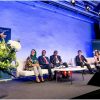
An Urgent Need to Advance Peace
Let us be blunt: the world is in crisis. Peace, human rights, our planetary ecosystem, and our systems of conflict management and global governance are under enormous strain.
As Fathers Die, Kashmir’s Children Become Breadwinners
Mubeen Ahmad was nine years old when his mother sold him into service to a mechanic for the petty sum of few thousand Indian rupees. His mother had found it hard to support the family after his father, a labourer, was killed during one of the anti-India protests in Jammu and Kashmir in 2008.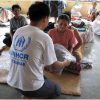
Aid Organisations Welcome New Development Chief
International aid organisations have reacted positively to the appointment of new UK International Secretary of State for Development, Rory Stewart.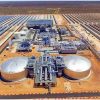
Is UAE Leading the Way for Concentrated Solar Power in GCC?
In April 2019, the International Renewable Energy Agency (IRENA) published a report on a “roadmap to 2050” in terms of renewable energy.
From Sanctioning Iran to War?
With the recent military moves announced uncharacteristically by the White House first, the world is witnessing with grim fascination what could turn out to be the early moves towards a war against Iran. How plausible is this scenario and what is likely to happen geopolitically if and when the US belligerence leads to an actual military confrontation with Iran?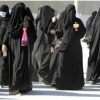
Campaign to Whitewash Saudi Arabia’s Image Does Little for Women in the Kingdom
Amid a high-profile public relations campaign to convince the world just how much the Kingdom of Saudi Arabia is modernising – highlighted in last year’s lifting of the ban on women driving – Saudi authorities continue their relentless persecution of women human rights defenders.
Leaving No One Behind: Young People’s Participation at UN
Walking down 44th street towards UNICEF House was a poignant moment for me: having sought out resources, gone through strenuous immigration processes and having had my assumptions unraveled with the realities of New York City (NYC). This was it.
Neoliberal Reforms Strengthening Monopoly Power and Abuses
Over the last four decades, growing concentration of market power in the hands of oligopolies, if not monopolies, has been greatly enabled by ostensibly neo-liberal reforms, worsening wealth concentration and gross inequalities in the world.
Loss of Biodiversity Puts Current and Future Generations at Risk
An alarming report about the massive loss of biodiversity around the world warns that future generations will be at risk if urgent action isn’t taken to protect the more than one million species of plants and animals threatened with extinction.
Building a More Energy-Efficient Neighbourhood in Dubai
Dubai is an Emirate in the United Arab Emirates (UAE) with a population of about 3 million. The discovery of oil in the 1960’s transformed Dubai from a sleepy port town to a global metropolis. The recent shift to address environmental sustainability in Dubai draws attention to energy issues in the city.
The Ethiopian City Lost in the Shadow of South Sudan’s War
 Right up against the border with South Sudan, the western Gambella region of Ethiopia has become a watchword for trouble and no-go areas as its neighbour’s troubles have spilled over. But now there may be reason for optimism on either side of the border.

The Burning of Notre Dame and the Spirit of Place
The catastrophic fire in Notre Dame produced a massive emotional reaction. In a Paris famous for its secularism tearful people knelt on the pavement, sang the Ave Maria and prayed to God to save their cathedral. Several stated that it was not only a church burning, but the soul of Paris passing away. What did they mean to say?
Sustainable Development Goals: One of the Greatest Fun Things in the World!?
This year’s annual “SDG Global Festival of Action” was held in Bonn, Germany, from May 2–4, 2019. The festival’s overall aim is to gather campaigners and multiple stakeholders from around the world at one place for interaction with each other; furthermore, it seeks to inspire them to scale up action in support of the 17 Sustainable Development Goals (SDGs) set forth in the 2030 Agenda adopted by the United Nations General Assembly.
Rural Education: Moving Past “Poor Solutions for Poor People”
Communities are treated as passive recipients, giving them no say in the functioning of their schools. Here's why this needs to change.
West Africa’s Fine Line Between Cultural Norms and Child Trafficking
On a bus in Cotonou, Benin’s commercial capital, four Nigerian girls aged between 15 and 16 sit closely together as they are about to embark on the last part of their journey to Mali, where they are told that their new husbands, whom they never have met, await them.
LGBTQI Rights in the Balkans: A Perpetual Struggle
Romanian Adrian Coman and his American-born partner Clai Hamilton had two major reasons to celebrate when they tied the knot last June.
Women, Peace and Security: Let’s Turn Words into Action
To be able to tackle a problem we must first recognize that it exists. When I first spoke at the United Nations Security Council in 2009, I was asked why the issue of sexual violence was even relevant to peace and security. At that time, it was not generally accepted that rape is in fact a weapon of war. Today, that statement is both widely accepted and central to the international community’s understanding of this crucial issue.
Want Social Change? Give Communities More Agency
No external force can bring about real change in society. Only the community itself can.
Sierra Leone’s Journalists Demand Justice for “Murdered” Colleague and Call for Law Reform
Ibrahim Samura, erstwhile editor and publisher of New Age, an independent Freetown newspaper, was beaten up with “heavy-duty metal chains and sticks” during Sierra Leone's presidential run-off election in March 2018—in front of the police and army. He died from his injuries three months later. But more than a year since the assault the perpetrators are yet to be brought to book.
Future of Our Planet Requires Deeper Cooperation, Long-term Thinking
For most of the 7 billion people on the planet, global institutions are remote, far removed from their day to day existence. Yet, our global institutions matter.« Previous Page — Next Page »


 2026 High-level Political Forum on Sustainable Development. Credit: UN Photo/Eskinder Debebe
In 2015, the United Nations and its Member States adopted the Sustainable Development Goals (SDGs) in an effort to make the world a more sustainable and peaceful place for future generations. Progress on the 17 SDGs has been uneven, and inequality persists across the globe. 10 years after adoption, the 2025 UN SDGs Report revealed that only 35% of the SDG targets are on track, with more than half moving too slowly, and 18% moving backwards from the 2015 baseline. Poverty remains one of the world’s most pressing issues, with hunger, violence, and inequality impeding the opportunities for all people to achieve success. In September 2024, the United Nations Summit of the Future introduced a new goal: to eradicate global poverty by 2030, ensure universal rights to basic services, and increase the overall standard of living in terms of industrialization, economic well-being, citizen health, and literacy. Furthermore, recent shifts in United States foreign aid policy – notably, major budget cuts to USAID and the termination of thousands of development programmes– have severely threatened vital lifelines of financial aid to impoverished communities around the world. Additionally, the United States’ withdrawal from the Paris Climate Agreement has undercut international efforts at sustainable development. With the upcoming 2030 deadline, the UN Secretary-General has called for urgent multilateralism across six priority areas: food systems, energy, digital connectivity, education, jobs and social protection, and climate and biodiversity. IPS sheds light on marginalized communities that struggle on a daily basis to survive and have their stories heard and respected.
Updated by Yilan Batista and Shuli Wong August 2026

The Week with IPS

NEXT STOP - SDGs
Tracking global progress towards a sustainable world
Tracking global progress towards a sustainable world
