Languages
Monday, November 23, 2026



News and Views from the Global South
Development & Aid

Opinion: Will African Leaders Fight for our Farmers?
Climate change is changing the world we know and love. Our land, homes and food are at risk. With nearly a billion people already living in poverty, it is also the single biggest threat to the fight against hunger.
ASEAN Agreement on Haze? As Clear as Smoke
A regional agreement on managing transboundary haze caused by fires raging in Indonesia’s forests and peatlands appears all but buried in the embers of frustration of its neighbouring countries.
Minorities Speak Out in Latin American Population Conference
“The countries of Latin America have not fully committed themselves to the international conventions and have not given indigenous peoples access. Nor have their contents been widely disseminated,” to help people demand compliance and enforcement, said Guatemalan activist Ángela Suc.Opinion: It’s gettin’ hot in here…so take back all your carbon
Africa is getting hot fast. Already battling against the impacts of climate change, temperatures in Africa will rise faster than any other continent. In fact, they are expected to exceed 2 C and may reach as high as 6 C greater than 20th century levels. These rapidly rising temperatures foreshadow increased drought, famine and disease. The most vulnerable populations – of which millions are smallholder farmers – need solutions, and they need them now.
Opinion: “Sanitation, Water & Hygiene For All” Cannot Wait for 2030
The new Sustainable Development Goals, agreed upon recently by the member states of the United Nations, are all interconnected, as has been reiterated time and again. However, it is in the new Goal 6 – “Ensure access to water and sanitation for all”—for which this interconnectedness is most apparent.
U.N. Upholds Human Rights, World Bank Dismisses Them
The United Nations has always remained one of the most vociferous and passionate advocates of human rights – exemplified in the creation in 2006 of a 47-member Human Rights Council in Geneva to uphold its mandate.
Analysis: India’s Challenge on the SDGs
India’s stance on sustainable development goals is evolving as there are differing voices on what should be done. Over the next 15 years, the global development agenda will be preoccupied with the ambitious challenge of achieving 17 SDGs and 169 targets. The SDGs follow the Millennium Development Goals which were conceptualized as a set of eight goals on diverse development dimensions including poverty alleviation, gender equality, health and environmental sustainability. The buzz in the development community is that as the relative success of MDGs is a result of China’s super-rapid growth, the relative success of the SDGs will be because of India.
Healthy Oceans Key to Fighting Hunger
Seafood offers a large amount of animal protein in diets around the world, and the livelihoods of 12 percent of the global population depend directly or indirectly on fisheries and aquaculture.Opinion: Five Key Takeaways from India’s New Climate Plan
Last week, India announced its new climate plan, also known as its Intended Nationally Determined Contribution, or INDC. As the world’s third-largest emitter and a country that’s highly vulnerable to the impacts of climate change, it is encouraging to witness India investing in actions to tackle climate change while addressing poverty, food security and access to healthcare and education.Rise in Large Scale Refugees Triggers New International Population Order
As the unprecedented flow of hundreds and thousands of migrants and refugees continues from war-ravaged countries to Europe, a new study warns that large-scale migration from poorer to rich nations will be a permanent feature of the global economy for decades.TPP is “Worst Trade Agreement” for Medicine Access, Says Doctors Without Borders
“The TPP [Trans-Pacific Partnership] will…go down in history as the worst trade agreement for access to medicines in developing countries,” said Doctors without Borders/Médecins Sans Frontières (MSF) in a statement following the signing of the TPP trade deal.
Analysis: Is the Miracle of Microfinance Illusory?
Mohammad Yunus, the founder of Grameen Bank in Bangladesh, transformed the lives of millions of poor women through unsecured micro loans or micro credit to self-help groups. Microcredit evolved into microfinance that also includes savings and basic forms of insurance and transfer mechanisms. Within a few years, microfinance became a global phenomenon. Although microfinance continues to grow, the enthusiasm for it shows signs of waning.
Shale Drives Uncertain New Geoeconomics of Oil
The emergence of fracking has modified the global market for fossil fuels. But the plunge in oil prices has diluted the effect, in a struggle that experts in the United States believe conventional producers could win in the next decade.
Women’s Alliance Plans to Counter Violent Extremism
When the Security Council recently hosted a meeting of world leaders to discuss the growing threats from violent extremism, Secretary-General Ban Ki-moon warned that any success in battling intolerance will be predicated on a “unified response.”
United Arab Emirates and Cuba Forge Closer Ties
Cuba and the United Arab Emirates agreed to strengthen diplomatic ties and bilateral cooperation during an official visit to this Caribbean island nation by the UAE minister of foreign affairs, Sheikh Abdullah bin Zayed Al Nahyan.
The Global South Will Make Its Contribution to Fighting Climate Change
Seen for years as passive actors in the fight against global warming, more than 100 countries of the Global South have submitted their national contributions to reducing greenhouse gas emissions and decarbonising their economies.
Q&A: ‘We Need to do Development Differently in the Post-2015 Era’
The Sustainable Development Goals (SDGs), adopted at a summit meeting of world leaders at the U.N. headquarters in New York on Sep. 25, reflect the five strategic domains the ACP Group is gearing to focus on, as it repositions itself as a more effective organisation in the global arena, says the 79-nation bloc’s head Dr Patrick Gomes.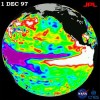
10 Million at Risk of Hunger Due to Climate Change and El Niño, Oxfam Warns
At least ten million of the poorest people face food insecurity in 2015 and 2016 due to extreme weather conditions and the onset of El Niño, Oxfam has reported.
Brazil’s Expanded Climate Targets Frustrate Environmentalists
Brazil’s greenhouse gas emissions reduction programme, hailed as bold, has nevertheless left environmentalists frustrated at its lack of ambition in key aspects.
The Spectre of Jobless Growth in India
India faces a serious challenge of dealing with joblessness despite statistically being the world’s fastest growing economy. The spread, depth and intensity of the problem, especially among the educated youth, is not reflected the latest unemployment number of 4.9 per cent in 2013-14. This estimate captures the chronically unemployed – those who sought or were available for work for the major part of the year – but it rarely figures in public discourse as the rate is relatively low and stable over time. Another reason is that the economy continues to generate employment opportunities even if they are largely casual or temporary in the informal sector.
Honduran Fishing Village Says Adios to Candles and Dirty Energy
A small fishing village on the Caribbean coast of Honduras has become an example to be followed in renewable energies, after replacing candles and dirty costly energy based on fossil fuels with hydropower from a mini-dam, while reforesting the river basin.« Previous Page — Next Page »


 2026 High-level Political Forum on Sustainable Development. Credit: UN Photo/Eskinder Debebe
In 2015, the United Nations and its Member States adopted the Sustainable Development Goals (SDGs) in an effort to make the world a more sustainable and peaceful place for future generations. Progress on the 17 SDGs has been uneven, and inequality persists across the globe. 10 years after adoption, the 2025 UN SDGs Report revealed that only 35% of the SDG targets are on track, with more than half moving too slowly, and 18% moving backwards from the 2015 baseline. Poverty remains one of the world’s most pressing issues, with hunger, violence, and inequality impeding the opportunities for all people to achieve success. In September 2024, the United Nations Summit of the Future introduced a new goal: to eradicate global poverty by 2030, ensure universal rights to basic services, and increase the overall standard of living in terms of industrialization, economic well-being, citizen health, and literacy. Furthermore, recent shifts in United States foreign aid policy – notably, major budget cuts to USAID and the termination of thousands of development programmes– have severely threatened vital lifelines of financial aid to impoverished communities around the world. Additionally, the United States’ withdrawal from the Paris Climate Agreement has undercut international efforts at sustainable development. With the upcoming 2030 deadline, the UN Secretary-General has called for urgent multilateralism across six priority areas: food systems, energy, digital connectivity, education, jobs and social protection, and climate and biodiversity. IPS sheds light on marginalized communities that struggle on a daily basis to survive and have their stories heard and respected.
Updated by Yilan Batista and Shuli Wong August 2026

The Week with IPS

NEXT STOP - SDGs
Tracking global progress towards a sustainable world
