Languages
Thursday, October 1, 2026



News and Views from the Global South
Population
Africa’s Free Trade Area Misses Nigeria
When Africa’s free trade area launches on 7 July, a key player will be missing. However, Victor Adetula, head of research at Nordic Africa Institute (NAI) in Sweden, predicts that Africa’s largest economy, Nigeria, will gradually open up and join the project.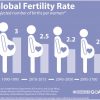
Zero Population Growth vs Population Control
Knowledge is power, but with the caveat that said knowledge is based in fact. Otherwise, it’s misinformation.
Chilean Schools Recycle Greywater to Combat Drought
Children from the neighboring municipalities of Ovalle and Río Hurtado in northern Chile are harvesting rain and recycling greywater in their schools to irrigate fruit trees and vegetable gardens, in an initiative aimed at combating the shortage of water in this semi-arid region.
Paraguay Moves Towards Sustainable Commodities
The statistics are alarming. By 2050, the world will require an estimated 60 percent growth in agricultural production to meet the food demand of a population of close to 9 billion people.
Unseen and Unsafe: Violence Against Women within Migrant Families
Refugee and migrant women often face inescapable violence in the home. And the potential for intimate forms of violence is exacerbated by humanitarian crises and job insecurity.
Kenya’s March Towards Demographic Dividend with Investments in Health Sector Partnering with The Netherlands
Demographic dividend is a term which is increasingly preoccupying discussions among development economists and the donor community in general in Kenya. The term refers to countries with the greatest demographic opportunity for development and those that are ushering in a period in which the working-age population has good health, quality education, decent employment and a lower proportion of young dependents. Smaller numbers of children per household generally lead to larger investments per child, more freedom for women to enter the formal workforce and more household savings for old age. When this happens, the national economic payoff can be substantial, and this is the demographic dividend.
Is there a Co-Relation Between Human Development & SDGs?
“People are the real wealth of nations,” began the first Human Development Report (HDR). That 1990 report marked a turning point in the global development debate.
India’s Criminal Justice System is Failing Victims of Sexual Violence
Early in 2018, India was shaken by the horrific details surrounding the abduction, gang rape, and murder of an 8-year-old girl in Kathua, a district in the north Indian state of Jammu and Kashmir.
Women’s Rights are Key in Slowing Down Population
The increase in world population by 2 billion in the next 30 years will present a serious global challenge especially if we do not find new paradigms of development thought and renewed global political leadership.
Partnering for Youth in Central Asia
Young people around the world are facing increasingly insurmountable, persistent barriers as they try to achieve their full potential and secure a prosperous future. However, Central Asia and the Asia-Pacific have already begun working to ensure that no one is left behind.
World’s Poorest Nations Weighed Down by Fastest Growing Populations
With a new report projecting a rise in population, specifically in Asia and Africa, the United Nations has warned that continued rapid population growth presents enormous challenges for sustainable development in the world’s 134 developing nations.
Low-Income Countries Pay Over 20 Times More for Generic Drugs
A recently-released report by the Washington-based Center for Global Development (CGD) shows that generic drugs, like omeprazole (used to treat heartburn), can cost 20-30 times more in low and middle-income countries than in high-income countries.
Patriotism versus Hope: Eritreans Wrestle with Leaving Home or Remaining
Most media narratives about Eritrea suggest an endless stream of young people fleeing the country, who couldn’t wait to escape. But the reality is far different and more nuanced—both when it comes to those who have left, and those who chose to remain.
Poor Outlook for HIV-positive Children in Pakistan
Over 785 people have been diagnosed with HIV in Larkana, Pakistan. 82% of those individuals are children, and only half are receiving the treatment they need.
SDGs, Currently Off-Track, Need Bold Decisive Action
It has been four years since governments agreed on the most ambitious set of international commitments to fight poverty and inequality to date. The Sustainable Development Goals (SDGs), otherwise known as the Global Goals, are ‘a universal call to action to end poverty, protect the planet and ensure that all people enjoy peace and prosperity.’ The goals ambitiously aim to “Leave No One Behind.”
Rising Population Trends Threaten UN’s Development Goals in Asia & Africa
The world’s developing nations, currently fighting an uphill battle in their attempts to implement the UN’s Sustainable Development Goals (SDGs), are facing another stark demographic reality: a rise in world population by 2.0 billion people in the next 30 years: from 7.7 billion to 9.7 billion in 2050.
Desertification ‘More Dangerous and More Insidious than Wars’
Businesses are being encouraged to follow the lead of the youth to halt desertification, reduce degradation, improve agricultural sustainability and restore damaged lands.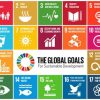
UN’s Development Goals Remain Largely Elusive
The United Nations, in a new report to be released next month, has warned “there is no escaping the fact that the global landscape for the implementation of the 17 Sustainable Development Goals (SDGs) has generally deteriorated since 2015, hindering the efforts of governments and other partners”
‘What it Takes to Feed 7.5 Billion People’
Events marking the 25th anniversary of the Convention to Combat Desertification (UNCCD) and the World Day to Combat Desertification opened here Monday, Jun. 17 with a call for urgent action to protect and restore degrading land.
The Forgotten Migrants of Central America
Rural and indigenous populations in countries like Guatemala and Honduras are increasingly on the move – either migrating internally or to neighbouring countries.
Championing Social Changes: A Tale of Two Women
This is the story of two women who are positively transforming social norms in their respective societies, as part of the global movement towards gender equality.« Previous Page — Next Page »


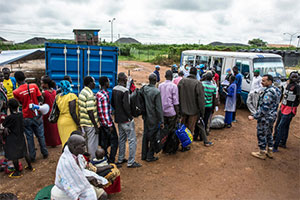 One Thousand Internally Displaced Persons (IDPs) Relocated from Tomping Camp in South Sudan. Credit: UN Photo/Isaac Billy
It took hundreds of thousands of years for the world’s human population to cross one billion in 1804. Approximately 200 years later, the population has multiplied sevenfold. In 2023, the global population crossed 8 billion, and is expected to reach 9 billion before 2050. With the planet more crowded than ever, it is essential to keep track of population trends, urbanization, migration, and reproduction across the world.
Life expectancy has seen significant strides in the past century, largely due to economic development and increased standards of living. On the contrary, trends in global fertility are shifting, with certain regions in Africa and Asia reporting higher rates, while parts of Europe and North America report stagnant or lower rates. This is in part due to differences in sexual and reproductive healthcare, as well as societal and economic conditions around the world. For example, child marriage is prevalent in certain societies, where childbearing is also considered a familial duty. Meanwhile, stagnating economies frequently experience lower marriage and childbearing rates.
The increase in migration and urban development around the world is also linked to global population trends. By 2050, it is expected that approximately 66 percent of all people will live in cities. Furthermore, global crises such as warfare and natural disasters also prompt transnational migration. Transnational migration is linked to a variety of socioeconomic issues in both host and receiving countries: migrants often leave developing countries with less access to educational and economic opportunities and arrive in developed countries where they are frequently the targets of ethnic, racial, and cultural discrimination, and economic exploitation. Recent crises in Europe and the United States demonstrate the importance of advocating for migrants worldwide. As migrants from the Global South are increasingly stripped of their legal and civic rights in unlawful deportations, or targeted in acts of identity-based violence, it is essential to keep track of population trends and protect the human rights of migrant populations. Climate-related disasters are now a major driver of displacement, with nearly half of all new internal displacements in 2025 being disaster-related.
IPS is devoted to covering issues surrounding population trends, migration, and reproduction through its compelling articles, which use both statistics and human stories to provide readers with robust and informative viewpoints.

The Week with IPS

NEXT STOP - SDGs
Tracking global progress towards a sustainable world
Tracking global progress towards a sustainable world
