Languages
Wednesday, October 14, 2026



News and Views from the Global South
Poverty & SDGs
What Future for a World of 8 Billion?
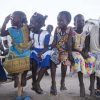
What does a young girl from Juba, in South Sudan, an 8-year-old boy living in the slums of Mumbai, in India, a young mother from the south of Lima, in Peru, and an 83-year-old man enjoying retirement in the suburbs of Stockholm, in Sweden, have in common?
India & China Continue to Lead –as World Population Projected to Reach 8.0 Billion
India and China, two Asian nuclear powers who are also longstanding rivals embroiled in the geo-politics of the Indian Ocean region, have remained two of the world’s most populous nations accounting for over a billion people each. But as the world’s population reaches the 8.0 billion mark, come November, India is projected to surpass China.
A World of 8 Billion, Yes, But (II): The Unseen, Untold Story of the 50%
While women and girls have been so far enjoying some of their due rights in Western high-income countries, the overwhelming majority of teenagers and adult women in the impoverished regions of the current world’s population of 8 billions continue to suffer all kinds of inequalities.
Migrant Workers from Mexico, Caught Up in Trafficking, Forced Labor and Exploitation
Eduardo Reyes, originally from Puebla in central Mexico, was offered a 40-hour workweek contract by his recruiter and his employer in the United States, but ended up performing hundreds of hours of unpaid work that was not authorized because his visa had expired, unbeknownst to him.
A World of 8 Billion, Yes, But Only a Few Are Seen as Human Beings
Far-right Brazilian president, Jair Messias Bolsonaro, was quoted a year ago or so as saying to a small group of indogenous people that they “now look a bit more like humans.”
Tap Into Indigenous Knowledge To Preserve Our Forests
A few years ago, I found myself in the Baka indigenous sacred forest in Assok, in Cameroon in the course of my work in supporting them to preserve their forest against land grabbers. We were building a forest hut using only leaves and the knowledge of our indigenous partners.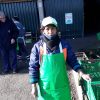
Recovering Edible Food from Waste Provides Environmental and Social Solutions in Argentina
For 30 years, Tomasa Chávez visited the Central Market of Buenos Aires and rummaged through the tons of fruits and vegetables that the stallholders discarded, in search of food. Today she continues to do so, but there is a difference: since 2021 she has been one of the workers hired to recover food as part of a formal program launched by the Central Market.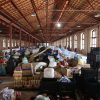
Mobilizing Against Hunger in Brazil, Where It Affects 33.1 Million People
A campaign against hunger, a problem that affects 15.5 percent of the Brazilian population, seeks to mobilize society once again in search of urgent solutions, inspired by a mass movement that took off in the country in 1993.
New World Records: More Weapons than Ever. And a Hunger Crisis Like No Other
While the North Atlantic Treaty Organisation (NATO) Summit ended in Madrid on 30 June with net commitments to double spending on weapons and to increase by eight-fold the number of troops in Europe, the total of hungry people worldwide now marks an unprecedented record.
The Digital Divide, a Pending Issue in Chile’s Educational System
A Chilean government plan seeks to ensure connectivity in remote areas, in a first step to address a deep digital divide among the country's inhabitants that includes a lack of access to technology and digital education deficits, exposed by the COVID-19 pandemic.
World Leaders Must Look at the Big Picture to Solve Food Crisis
From the worst drought in four decades threatening famine across the Horn of Africa to extreme heat in South Asia, the war in Ukraine and the unequal pace of pandemic recovery, global food systems are under extraordinary pressure.
Addressing the Global Biodiversity Crisis Requires Understanding and Prioritizing the Many Values of Nature
Nature has many values. A forest can be a cool and quiet place to retreat to when you need relaxation on a hot summer day. It is a habitat for many species. Trees also sequester and store carbon, reducing future impacts of climate change. But of course, the trees also have a monetary value if they are felled and turned into furniture or put to other uses. These are just four examples of the many values of nature, which are vital parts of our cultures, identities, economies and ways of life.
Digital Training in Pakistani Villages Yields Bumper Participation
Farmer Abdul Waheed, 32, has been using his cell phone for everything but work for the past seven years. But after a recent training session he has installed six farming apps and says the move has paid off.
Urgent Need to Enact Proposed Law to Secure Sexual and Reproductive Health in East Africa Countries
The Ministry of Health in Kenya recently reported that about 700 teenage girls got pregnant daily over a two-month period, in this year alone. What is more is that during this period, 98 adolescent girls between the ages of 10 and 19 contracted HIV every week in this time period
Healthy Planet Needs ‘Ocean Action’ from Asian and Pacific Countries
As the Second Global Ocean Conference opens today in Lisbon, governments in Asia and the Pacific must seize the opportunity to enhance cooperation and solidarity to address a host of challenges that endanger what is a lifeline for millions of people in the region.
Digital Tools Complement Organic Farming at Islamic School in Indonesia
It appears to be business as usual at the Al-Ittifaq pesantren, the local term for an Islamic boarding school. Yadi and Rezki, both 18, join the subuh, pre-dawn prayer, in the local mosque. After a session of religious meditation, along with other santris, or students, the two study science in a pre-dawn class for about 30 minutes.
Digital Technology Buoys Indonesian Catfish Farmers
For years Indramayu has been known as one of Indonesia’s rice centres. The district in West Java is the country’s number one rice producer, generating 1.3 million tonnes of husked rice in 2021, according to Indonesia’s Centre of Statistics (BPS). The country’s total rice production was 54 million tonnes.
Across Asia and the Pacific, Digitalization of Rural Communities is Leading the Way to a Better Future – But the Goal is to Leave No One Behind
It wasn’t that long ago that Internet connectivity faded the moment one left a populated area like a city or big town – “no service” was the take-away message back then. But thanks to 3G, 4G and now 5G mobile technology, coupled with widespread installation of cellular towers in rural areas region-wide, that little message shows up much less frequently.
A Frightening View: Inside the Eye of the ‘Hurricane of Hunger’
When I first met Dr. Roland Bunch, I have to be honest—he scared me. As one of the most well-respected leaders on agronomy and resilient land management, he offers extremely prescient predictions on how famines take root when soils fail—and also has an admirably clear-eyed view of what we need to do better.
Why Aren’t More Women Angry?
Why aren’t more women angry about their subordination, discrimination, and unequal treatment in the 21st century? Of course, some of the world’s women are angry, but they are comparatively few.
Stronger Healthcare Systems Critical for Africa’s Socioeconomic Transformation
Since the outbreak of the COVID-19 pandemic, healthcare systems globally have battled to deal with the repercussions unleashed by the disease. From the outset, Africa was considered particularly vulnerable due to several factors: limited healthcare provision in some areas, high prevalence of HIV and TB in a number of countries, and limited fiscal room to respond to the pandemic’s financial impacts.« Previous Page — Next Page »





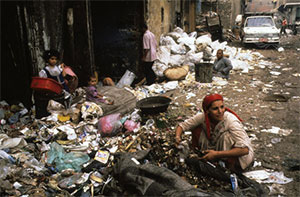 Romani people in Cairo, Egypt, forage through trash. Credit: UN Photo/Armineh Johannes
In 2015, the United Nations adopted the Sustainable Development Goals (SDGs) in an effort to promote “peace and prosperity for people and the planet.” To achieve that goal, it is essential to provide equal opportunities and access to basic services to all people. The 2025 UN SDG Report found that 35% of the 169 SDG targets are on track or making moderate progress, while 18% have reversed compared to the 2025 baseline. One in ten people still live in extreme poverty, one in eleven experience food insecurity, and over 1.1 billion people live in slums without access to clean water and sanitation. It is imperative to acknowledge the societal, technological, economic, and political issues that sustain poverty in countries around the world. Eradicating poverty will require significant frameworks in policy and governance on a national and international scale to ensure that all people will have equal access to basic services and economic opportunities by 2030. Furthermore, a dramatic reduction of United States foreign aid in 2025, including the termination of 83% of USAID programmes, threatens to erode years of fragile development gains.
Throughout the world, violent conflict and natural disasters also contribute to extreme poverty. The complete destruction of infrastructure and blockage of aid has significantly impoverished Palestine since October 7th. The destructive impact of Hurricane Maria in Puerto Rico left $91 billion in damage. An inadequate US government response also revealed significant and enduring questions within the issue of mitigating poverty: how do we rebuild infrastructure after its destruction? How do we restimulate economic development and bring in financial aid after disasters? Similar questions have been raised in the realm of regional cooperation, as devastating floods have wrecked hundreds of thousands of homes across multiple Southeast Asian nations in the past few years. Furthermore, the COVID-19 pandemic has greatly exacerbated the global poverty crisis, particularly in developing countries, setting back the United Nations goal of eradicating poverty by 2030.
IPS is committed to providing comprehensive features that focus on the persisting environmental, sociopolitical, and systemic issues that sustain poverty, and the steps taken worldwide towards poverty eradication.

The Week with IPS

NEXT STOP - SDGs
Tracking global progress towards a sustainable world
Tracking global progress towards a sustainable world

