Languages
Friday, August 14, 2026



News and Views from the Global South
Sustainable Development Goals
Biodiversity Masterplan: Negotiations on Crucial Science, Technology for Implementation Underway
The triple planetary crises of climate change, biodiversity loss, pollution, and waste are escalating. At the current pace, the world is on track to lose one quarter of all plant and animal species by 2030, with one species already dying out every 10 minutes. One million species face extinction. Human activity has already altered three-quarters of the land on Earth and two-thirds of the ocean.
South Africa will be President of G20 in 2025: Two much-needed Reforms it Should Drive
South Africa will play an important international role in 2025 as president of the G20. The G20 is a group of 19 countries as well as the African Union and the European Union. Between them they represent 85% of global economy, 75% of world trade and 67% of global population. The G20 defines itself as the premier multilateral forum for international economic cooperation.
Inclusivity, Impact, and Innovation Needed to Meet SDGs, UN Civil Society Conference Hears
The world is neither on track to meet the Sustainable Development Goals (SDGs) nor is it leveraging emerging opportunities to effectively address global concerns such as extreme hunger, poverty, conflict, and climate change. Global concerns have outpaced existing structures for international cooperation and coping.
The Bleak déjà vu in Darfur
As dawn breaks over Darfur, my return after two decades feels heavy. Many millions are suffering once again. Twenty years ago, I was part of the humanitarian effort to make a difference. That was in the early 2000s, when celebrities and world-famous journalists would make the trek in a well-intentioned effort to focus attention on the atrocities across Darfur.
Dissenting Voices at Nairobi Soil Health Forum Over Increased Fertilizer Use
As the Africa Fertilizer and Soil Health Summit convened in Nairobi to review the progress made in terms of increasing fertilizer use in line with the 2006 Abuja Declaration, experts, practitioners, activists, and even government officials pointed out that accelerated fertilizer use may not be the magic bullet for increased food production in Africa.
Beyond the Fields: Unraveling Zambia’s Drought Crisis and the Urgent Call for Climate-Health Solutions
For most families in Zambia, April is traditionally a month of plenty—it is typically the beginning of a harvest season for various food and cash crops. Both fresh and dried maize, groundnuts, pumpkins, and a whole variety of both traditional and exotic food crops are usually in full supply and readily available for consumption, supporting household food security and nutrition.
Amid Record Displaced Persons, Migrant Remittances Spike—New IOM Report
While there have been a record number of displaced people worldwide, according to a new report by the International Organization for Migration (IOM), migrant remittances are promoting human development.
How do Taxes Drive the Sustainable Development Goals?
Tax revenue remains the most sustainable source of income for governments and plays a crucial role in financing the Sustainable Development Goals (SDGs). It diminishes the need for international assistance and contributes to the repayment of burdensome debt, ultimately strengthening a country’s ability to withstand external shocks.
1.8 Million More Palestinians Doomed to Poverty if Gaza War Persists
Nearly seven months into the Gaza war, the UN warns that to rebuild and restore the buildings lost in this period, it would take several decades, and to revitalize Palestine’s economy, it would be a great undertaking. Meanwhile, the great losses in housing and public services and the economic stall only threaten to push even more Palestinians into poverty.
LDCs Need Concessional Grants, Not Loans, Say Experts
Olaide Bankole was born and raised in Nigeria, and he observed how climate change was evident in the country with temperature rises and rainfall variability and how drought, desertification, and sea level rises have been affecting its people. He is also aware of how rising sea levels threaten southern Nigerian cities like Lagos and coastal areas, increasing their vulnerability to flooding and waterborne diseases.
Media Freedom Declining Across Europe, With Implications for Rule of Law
A new report has warned media freedom in the EU is close to “breaking point” in many states amid rising authoritarianism across the continent.
We Should Aim to be at Peace with Nature, Says David Cooper of UN Convention on Biological Diversity
In a world faced with habitat loss and species extinction, climate change, and pollution, it’s crucial that countries develop their national action plans and create a society that lives in harmony with nature, says David Cooper, Acting Executive Secretary of the UN Convention on Biological Diversity (CBD), in an exclusive interview with IPS.
Drought and Unequal Water Rights Threaten Family Farms in Chile
Lack of water threatens the very existence of family farming in Chile, forcing farmers to adopt new techniques or to leave their land. The shortage is caused by a 15-year drought and exacerbated by the unequal distribution arising from the Water Code decreed in 1981 by the 1973-1990 dictatorship of General Augusto Pinochet, which turned water into a tradable commodity and gave its owners rights in perpetuity.
Transgender Health Rights Boosted by Hospitals’ ‘Separate Room’ Policy
Transgender people and civil society organizations have welcomed the decision of the chief minister in Khyber Pakhtunkhwa, Pakistan, to allocate separate rooms in hospitals for the transgender community so they can avail themselves of uninterrupted healthcare. “We demand that all provinces follow suit and announce facilities for more than 500,000 transgender people in the country,” Farzana Shah, president of the Khyber Pakhtunkhwa (KP) Transgender Association, told IPS.
Lao PDR Lawmakers Meet to Further ICPD25 Programme of Action
A recent workshop of lawmakers heard that targeted interventions would be necessary to meet the International Conference on Population and Development (ICPD), its Programme of Action (PoA), and Lao PDR's national commitments to ICPD25 at the Nairobi Summit 2019.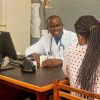
WHO Africa Advances African Science by Promoting Peer-Reviewed Research
The World Health Organization's African regional office and partners published over 25 peer-reviewed articles in scientific journals in 2023 as part of efforts to address the imbalance in global research and ensure that Africa was better represented in the production of health research academic literature, a new report shows.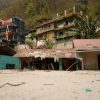
Climate Crisis in Mountains: Borderless Struggle for Frontline Communities
For the last three years, Sambhunath Guragain has been waking up every morning to a view he doesn't want to see: discarded agricultural land where he and his family used to grow food, including rice, but the flood in 2021 changed everything. “We don’t have any crops now, but we are farmers,” Guragain said in November 2021, while looking towards a quietly flowing Melamchi river. This was six months after the massive flash flood in Helambu-Melamchi in Sindhupalchowk district in Nepal. After three years, the situation hasn’t changed.
Niger’s Military Coup Triggers Child Marriages, Sex Work in Neighboring Countries
A group of young girls aged between 15 and 17 sit tight, following attentively a lesson being taught by a Mualim (Islamic teacher) in a makeshift madrassah (Qur’anic school) located in one of the impoverished townships of Benin’s economic capital, Cotonou. They arrived in Benin recently, fleeing poverty, hunger, climate change, and rising insecurity in their home country, Niger, in the aftermath of the military coup that toppled democratically-elected president Mohamed Bazoum.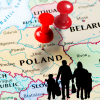
Conditions Worsen for Belarus Migrants Stuck in ‘Death Zone’ on EU Border
As the refugee crisis on the Belarus/EU borders approaches its fourth year, a crackdown on activism in Belarus is worsening the situation for migrants stuck in a “death zone” as they attempt to leave the country. Groups working with refugees say the repression of NGOs in Belarus has led to many organizations stopping their aid work for migrants, leaving them with limited or no humanitarian help.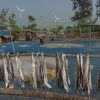
Small Island States Fostering Effective Energy Transition To Achieve a Blue Economy
Small Island Developing States (SIDS), a distinct group of 39 states and 18 associate members, are making efforts to promote the blue economy as they possess enormous potential for renewable energy relying on the sea. Experts predict that switching to renewables will help SIDS countries decarbonize power generation as an appropriate option for islands to cut their carbon dioxide (CO2) emissions, fulfill Paris Agreement pledges and contribute to the global fight against climate change.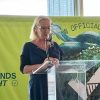
UN Live’s CEO Katja Iversen Talks About the Power of Popular Culture and ‘Sounds Right’
UN Live’s CEO, Katja Iversen, says the way to engage people in the environment is through popular culture—film, music, gaming, sports, food, and fashion. She is excited about the Sounds Right project, which puts the sounds of nature—bird songs, waves, wind, and rainfall—at the center of a campaign to support those involved in climate action.« Previous Page — Next Page »


The Week with IPS

NEXT STOP - SDGs
Tracking global progress towards a sustainable world
Tracking global progress towards a sustainable world
