Languages
Friday, August 14, 2026



News and Views from the Global South
Sustainable Development Goals

Maggot Farming Creates Entrepreneurs, Saves Farming Costs in Zimbabwe
Three years ago, 43-year-old Benard Munondo was an "ordinary" Zimbabwean teacher at a local primary school, but now he has turned maggots into gold. Thanks to maggot farming, Munondo, who has never owned a home nor driven a car, now has both. In 2020, a week’s training on maggot farming changed his world.
Plastic Soup, Plastic Islands: How Small Island Developing States can end Plastic Pollution
Scattered over the vast area of our oceans, Small Island Developing States (SIDS) are often pictured as blue, serene and beautiful paradises. However, we are risk losing the beauty of these islands, due to the triple threats of climate change, loss of biodiversity, and pollution, especially marine plastic debris.
UN, International Partners Coordinate Aid to Papua New Guinea Landslide Disaster
As the communities of Enga province in Papua New Guinea contend with the landslide that has devastated the residents of Yambani, the United Nations and its partners have been active on the ground addressing the immediate humanitarian needs, according to agencies.Papua New Guinea’s prime minister, James Marape, says “extraordinary rainfall” and weather pattern changes were responsible for multiple disasters in the Pacific Island nation this year, including the landslide last Friday.
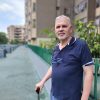
Explainer: Why Is It Important for Venezuela to Adopt Escazú Agreement in the Coming Year?
Venezuela is one of the few countries outside the Escazú Agreement, a treaty in Latin America and the Caribbean ratified by 16 member countries that guarantees access to environmental information, public participation in environmental decisions, and environmental justice.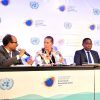
Uniting for Climate Action: UN, World Bank and UNDRR Leaders Push for Climate Finance, Justice and Nature-Based Solutions for SIDS
As leaders of Small Island Developing States (SIDS) meet for the 4th International Conference on SIDS in Antigua this week, top United Nations and World Bank officials are calling for urgent action to help SIDS tackle their unique challenges and plan for the next decade.
To Tackle Climate Crisis, the World Bank Must Stop Financing Industrial Livestock
Last week, the World Bank Group released a new report that highlights the urgent need to drastically reduce GHG emissions to address the climate crisis and calls on countries to act. However, while the World Bank’s acknowledgment of the damaging climate impacts of industrial agriculture is a crucial step forward, it’s simply not enough.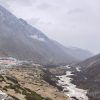
Explainer: Why GLOFs Are Growing Concern in the Himalaya
Phu Chhettar Sherpa, who worked as an icefall doctor (a Sherpa who fixes ropes for climbers) for seven years from 2015 to 2021 on Mt. Everest, vividly recalls his fear of possible flash floods after the huge earthquake in Nepal in 2015.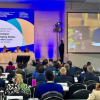
Small Island Nations Demand Urgent Global Action at SIDS4 Conference
“This year has been the hottest in history in practically every corner of the globe, foretelling severe impacts on our ecosystems and starkly underscoring the urgency of our predicament. We are gathered here not merely to reiterate our challenges, but to demand and enact solutions,” declared Antigua and Barbuda Prime Minister Gaston Brown at the opening of the Fourth International Conference on Small Island Developing States on May 27.
Explainer: Understanding Carbon Trading and its Rationale
Carbon trading has gained growing popularity on the African continent and is considered by many governments as a viable way to achieve their climate targets while building communities. IPS takes a look at what's behind the carbon market.
Countdown to Critical Conference for Small Island Developing States
Delegates from small island developing states (SIDS) worldwide are meeting in Antigua and Barbuda to strategize for the next decade.
International Court of Justice Orders Israel to Halt its Military Offensive in Rafah
The International Court of Justice (ICJ) ordered Israel to immediately halt its military offense in Rafah. "In conformity with obligations under the Genocide Convention, Israel must immediately halt its military offensive and any other action in the Rafah Governorate which may inflict on the Palestinian group in Gaza conditions of life that could bring about its physical destruction in whole or in part," the court said in it's revised order, which was passed by 13 votes to 2. South Africa approached the court on May 10, 2024 for a modification of provisional measures as prescribed by the court. The court also ordered that Israel must take effective measures to ensure the unimpeded access to the Gaza Strip of any commission of inquiry, fact-finding mission, or other investigative body mandated by competent organs of the United Nations to investigate allegations of genocide. Israel was also ordered to ensure that humanitarian aid should be “unhindered provision at scale by all concerned of urgently needed basic services and humanitarian assistance,” and that Israel should maintain open land crossing points, in particular the Rafah crossing. The full order can be read here. IPS UN Bureau Report
Lessons From Youth-Focused ‘Future Action Festival’ Ahead of UN Summit of the Future
The world has crossed the halfway point to the end of the Sustainable Development Goals (SDGs) era amid multiple, unprecedented, and significantly destructive global shocks. Two of the most pressing global challenges are the climate crisis and the threat of nuclear armament. Of serious concern is a severe lack of youth engagement on issues of critical global importance. Speaking to IPS during the 2024 UN Civil Society Conference, the outcome of which will inform high-level discussions when the UN hosts hundreds of world leaders, policymakers, experts, and advocates in September at the Summit of the Future in New York, Tadashi Nagai stressed the importance of coalition and movement building and youth engagement to escalate progress towards attainment of the SDGs.
International Community Urged to End Impunity for Violence Against Healthcare in Conflicts
Governments and international agencies must do more to end impunity for violence against healthcare, campaigners have urged, as a new report shows that attacks on healthcare during conflicts reached a new high last year.
Small Island Developing States can be Nature-Positive Leaders for the World
Small island developing states (SIDS) are scattered across the globe, dotting the Pacific Ocean, the Caribbean, the west and east coasts of Africa and the Indian Ocean.
Biodiversity Meet Suggests New Guidelines on Synthetic Biology Amid Persisting Questions
After a week-long discussion by delegates from 196 countries, the 26th meeting of the Subsidiary Body of Scientific, Technical, and Technological Advisors (SBSTTA) of UN Biodiversity has concluded with a set of recommendations on several issues, including living modified organisms (LMOs) and synthetic biology. All nations must consider the recommendations, discuss them, and possibly adopt them at the Biodiversity COP in October. However, many questions remain unanswered and unclear.
International Diplomat Erik Solheim on Politics, Climate Change, Much-Needed UN Reform and Trump
Erik Solheim, a senior internationally renowned politician and diplomat, has long been an advocate for combining development assistance with private investment and better taxation systems in recipient countries.
Rising Temperatures Drive Human-Wildlife Conflict in Zimbabwe
Rising temperatures are being blamed for an increase in human-wildlife conflicts in Zimbabwe as animals such as snakes leave their natural habitat earlier than usual.
More Diversified Trade Can Make Middle East & Central Asia More Resilient
Dislocations from the pandemic, geoeconomic fragmentation, and Russia’s war in Ukraine have shifted world trade dynamics. While this has created challenges, the redirection of trade has also generated new opportunities, particularly for the Caucasus and Central Asia.
Ocean Action on Global Agenda as Negotiations to Save Biodiversity Deepen
The oceans are as fascinating as they are mysterious. Home to the largest animals to ever live on Earth and billions of the tiniest, the top 100 meters of the open oceans host the majority of sea life, such as fish, turtles, and marine mammals. But there is another world far below the surface. In the belly of the ocean, there are seamounts—underwater mountains that rise 1,000 meters or more from the seafloor.
Educating the Mind Without Educating the Heart is No Education at All
The words above, by the ancient Greek philosopher Aristotle, serve as a reminder that we still have a long way to go to in educating ourselves. In doing so, we will naturally ensure that the young generation can access an inclusive quality education and use their knowledge to build a world of justice, equity, peace and security.
SBSTTA and SBI—Biodiversity Meetings Crucial for the Global South Begin
The 26th meeting of the Subsidiary Body of Scientific, Technical, and Technological Advisors (SBSTTA) of the United Nations Convention on Biological Diversity (UNCBD) started in Nairobi, Kenya, on Monday. Over 1,400 delegates, including 600 representing signatories or parties from over 150 countries, are present for the seven-day meeting at the headquarters of the United Nations Environment Programme (UNEP). A large number of members from Indigenous Peoples and other observer organizations, including women’s groups, are also attending the meetings.« Previous Page — Next Page »


The Week with IPS

NEXT STOP - SDGs
Tracking global progress towards a sustainable world
Tracking global progress towards a sustainable world
