Languages
Tuesday, October 6, 2026



News and Views from the Global South
Financial Crisis

RIGHTS: Recession Bringing Repression
The underside of the global economic recession is a worldwide repression of rights, Amnesty International secretary-general Irene Khan warned Thursday at the launch of the human rights group's 2009 report.CARIBBEAN: China Consolidates Influence as U.S. Frets
Since the year began, China has given the clearest signals yet that Latin America and the Caribbean will be its new commercial and strategic focus, as it doles out billions in soft loans and grant aid, and ties up sweet trade agreements with countries ranging Brazil to finance-starved Cuba.CARIBBEAN: Govts Seek “Clarity” from IMF, G20
When the G20 countries met in London earlier this year and agreed to pump more money into the coffers of major financial institutions like the International Monetary Fund (IMF), the news was largely greeted with enthusiasm by developing nations, particularly those in the 15-member Caribbean Community (CARICOM) region.
MIGRATION-BOLIVIA: Women’s Remittances Come at High Cost
The income earned by Bolivian women migrants in Spain, which enables them to support the families they left behind and build a nest egg, comes at a high price: low wages, long hours, no benefits and few or no days off.EGYPT: Financial Crunch Squeezes Suez
At the Suez Canal, one of Egypt's fiscal mainstays, the threat of Somali piracy pales in comparison with the potential knock-on effects of the global economic depression.ECONOMY-MEXICO: Crisis Drives Up Poverty Rate
Between 1994 and 1996, the poverty rate in Mexico climbed from 52 to 69 percent due to a deep but short-lived global economic recession that broke out in this country. Now this country is experiencing another depression, which originated in its northern neighbour, and that will last at least until 2010.CHINA-EU: Summit Redefines Diplomatic Boundaries
The global economic crisis has helped China and the European Union mend their recent rift over Tibet and human rights, but the two sides remain distrustful of each other’s intentions. Beijing complains that the EU’s crowded agenda makes it lose sight of the bigger picture in dealing with China. Brussels for its part, believes China is exploiting the EU’s divisions and treating the 27-state bloc with ‘diplomatic contempt’ on a range of issues from trade to the Dalai Lama.EUROPE: Trafficking Rises as Incomes Fall
The economic crisis sweeping Eastern Europe is leading to a sharp increase in people trafficking as people look to migrate for work amid rising unemployment and growing economic hardship, migration watchdogs and women's rights groups warn.
Q&A: Global Crisis Is an Opportunity for Economic Renewal
The global economic crisis may spell the end of the Washington Consensus and the structural adjustment programmes imposed on the South and lead to the emergence of new economic powers, the so-called ‘‘Next 11'', of which some will be in Africa.ECONOMY-US: Banks in Recovery as Home Foreclosures Hit Record
Just months after getting a massive handout from Uncle Sam to prevent the collapse of Wall Street, big banks say they are back on solid ground and ready to repay the money.POLITICS-INDIA: New Govt to Go Easy on Reforms
While the centrist Congress party may have decimated political opponents to the left and right in the just concluded elections here it is likely to go easy on deepening reforms begun five years ago.
TRADE-RUSSIA: ‘‘Africa Should Shake off Mineral Dependency’’
A group of Russian executives from industry, investment banks and commercial enterprises are seeking Russian government support for a five billion dollar investment in the Southern African Development Community (SADC) under the auspices of the Russia-South Africa Business Council.HEALTH-AFRICA: Global Financial Crisis Leads to HIV Budget Cuts
International donors and African governments are likely to cut health budgets due to the global financial crisis. Health experts fear that increasing unemployment and poverty will lead to less food security and quality of nutrition, which will in turn put more stress on already weak health systems.
WORLD-ECONOMY: IMF Using Global Crisis to "Re-Launch" Itself
The International Monetary Fund (IMF) is attempting to reinvent itself with the global financial crisis, in the process using the opportunity to promote policies that exacerbate the recession by shrinking rather than growing economies.EUROPE: Help the Economy, Hurt the Environment
The European Economic Recovery Plan devised by the European Commission last year to help deal with the financial crisis is likely to fast-track environmentally damaging projects in the new member states.AGRICULTURE-ARGENTINA: Yearning for the Days of Plenty
Argentina’s grain harvest, which grew steadily over the last five years, fell by 30 percent this growing season due to the worst drought in a century, a reduction in the area sown, and meagre investment in technology to improve yields.AFRICA: Global Crisis Hits Hard – ‘But Don’t Despair’
The financial crisis that has sent economies reeling the world over is beginning to adversely affect Africa, threatening to plunge many people back into poverty and thwarting efforts to meet the target of halving the share of the population living on less than one dollar a day by 2015.
Q&A: ‘Anti-Crisis Stimulus Packages Must Take Women into Account’
Progress has been made on gender issues in almost all countries, and everything possible must be done to keep the economic crisis from leading to a "backlash," warns Barbara Prammer, president of the Austrian parliament.SRI LANKA: Unions Strike Landmark Deal to Protect Migrant Workers
Trade unions from Bahrain, Jordan and Kuwait came together with their Sri Lankan counterparts here to strike an unprecedented agreement on the welfare of migrant workers.
Q&A: “Boosting Agriculture Is Not an Option But an Imperative”
New support from donors will enable the International Fund for Agricultural Development (IFAD) to help about 70 million poor smallholder farmers increase their productivity and incomes over the next five years, the Fund's new president Kanayo F. Nwanze told IPS.EUROPE: The Right Rises
Human rights activists have warned of a "proliferation" of far-right groups in central and eastern Europe amid an economic crisis fuelling support for extremist movements and political parties.« Previous Page — Next Page »





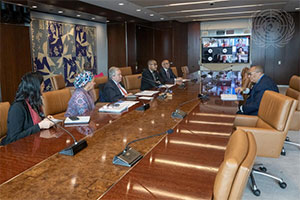 Secretary-General Meets with Members of Debt Expert Group. Credit: UN Photo/Eskinder Debeb
Financial crises are often defined by banking panics, recession, loss of market value, and deflation. Various financial crises at the turn of the 20th century, such as the Asian Crisis of 1997-1998 and the 2007-2008 Global Financial Crisis, have had immense impacts on the world economy. The COVID-19 pandemic also caused a financial crisis when mass lockdowns triggered staggering unemployment rates, a stagnation of economic growth, and led to the 2020 stock market crash. With the Russian invasion of Ukraine, the world has also witnessed a global energy crisis with shortages and increased prices in oil, gas, and electricity markets. According to UNCTAD’s World of Debt 2025, global public debt surpassed $100 trillion in 2024, with developing country debt growing twice as fast as developed economies since 2010. Burdens of debt servicing come with economic slowdowns and demands of austerity from lenders, with some economists arguing that this will lead to a new “lost decade” for the Global South. IPS brings you worldwide coverage of these financial developments and how we should manage these crises.

The Week with IPS

NEXT STOP - SDGs
Tracking global progress towards a sustainable world
Tracking global progress towards a sustainable world
