Languages
Monday, October 12, 2026



News and Views from the Global South
Green Economy

UN Blueprint that Could Urgently Solve Earth’s Triple Climate Emergencies
“Our war on nature has left the planet broken. This is senseless and suicidal. The consequences of our recklessness are already apparent in human suffering, towering economic losses and the accelerating erosion of life on Earth,” António Guterres Secretary-General of the United Nations said.
Pacific Islanders Turn to Local Economies to Drive Post-pandemic Recovery
While Pacific Island countries have, so far, been spared a catastrophic spread of COVID-19, their economies have been devastated by the effects of border closures, internal lockdowns and the demise of international tourism and trade. With the global pandemic far from over, Pacific Islanders are looking to their local and regional economies to drive resilience and recovery.
International Partnership Helps Mongolia Counter Climate Change
Climate warming is believed to have taken place at some of the fastest rates in the world in Mongolia, raising the country's average temperatures by 2.24°C between 1940 and 2015, with the last decade being the warmest of the past 76 years.
President Biden Refuses to Make our Climate Crisis Worse
I wasn’t going to stop for the school bus stuck in the mud outside of Fort McMurray, Alberta in the heart of the Canada’s tar sands industry but my kids insisted. It had been raining most of the week and the grassy field was soaked and slick. We stopped and got out and looked at the 12,000 kilogram bus uselessly spinning its wheels, digging deeper into the mud. Someone got the driver to stop, essentially saying you’re making a bad problem worse.
Jamaica Failing to Cope with Plastic Waste
For decades, every time it rains heavily in Jamaica, a daunting deluge of plastic bottles and bags, styrofoam and other garbage trundles its way down a network of countless gullies and streams. If they don’t get snagged somewhere, they end up in the Kingston Harbour or close to the beaches ringing the tourist-heavy North coast.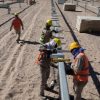
Advisors Propose New System To Regulate China’s Overseas Investments
A government-backed coalition of international advisors to the Belt and Road Initiative (BRI) has recommended that China apply more stringent environmental controls over its overseas investments. If adopted, this would be a major departure from China’s usual approach of deferring to host country rules, many of them inadequate, for regulating its overseas investments.
Renewable Energy Transition Key to Addressing Climate Change Challenge
2021 is going to be critical, not only for curbing the rapidly spreading COVID-19 pandemic, but also for meeting the climate challenge. But as Dr Fatih Birol, Executive Director of the International Energy Agency (IEA) was clear to point out, the climate challenge is essentially an energy challenge. And as large polluters continue to commit to targets of net zero emissions by 2050, the world could -- in theory -- potentially address the climate challenge.
Facing their Failure to meet 2020 Biodiversity Targets, World Leaders Pledge Action & Funds
French President Emmanuel Macron convened the 4th edition of the One Planet Summit for Biodiversity with a concession – that after a decade, the world has failed to take the action needed to stem global biodiversity loss. The Jan. 10 event, hosted virtually by France, the United Nations and the World Bank, focused on four areas for urgent action; protecting land and maritime species, promoting agroecology, mobilising finance for biodiversity and protecting tropical forests, species and human health.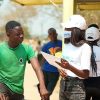
COVID-19 Pandemic Shapes the Future World People Want
The peoples of the world are unanimous - access to basic services such as universal healthcare must become a priority going forward. So too should global solidarity, helping those hardest hit by the COVID-19 pandemic and addressing the climate change emergency.
Five Years since the Paris Agreement: The Race to Net Zero Is On
In the wake of the worldwide COVID-19 pandemic, there are both challenges and opportunities in ensuring that COP26, a UN climate change summit, builds confidence in the Paris Agreement as an effective tool to avoid climate crisis.
GGGI selected as Technical Assistance Providers for Burkina Faso and Viet Nam by K-CEP
The Kigali Cooling Efficiency Program (K-CEP), a philanthropic collaboration, has selected the Global Green Growth Institute (GGGI) as technical assistance providers to improve access to and the efficiency of cooling in Burkina Faso and Viet Nam.
Keeping Climate Ambition Alive: Challenges Remain but Signs of Progress Abound
For those of us in the international climate action community, 2020 isn’t ending the way we expected when we rang in the new year. Even before 2020 dawned, countries were hard at work planning for their first updated Nationally Determined Contributions (NDCs), in line with the Paris Agreement’s five-year NDC revision cycle. NDCs are official statements, prepared by countries themselves, outlining the commitments they are making to reduce national emissions and adapt to climate change’s impacts. They are at the heart of putting the Paris Agreement into practice and pursuing action on a global scale.
It’s Time for Results as Sudan Enters Second Year of NDC Partnership
Earlier this year, when heavy rains caused massive flooding in Sudan, a three-month state of emergency was declared in September. The floods which began in July, were the worst the country experienced in the last three decades and affected some 830,000 people, including 125,000 refugees and internally displaced people.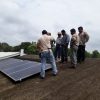
Green Recovery in Mexico – A Citizen’s Plea
The alarms warning against climate inaction have sounded for years. Almost a year into the hardest pandemic and maybe the worst economic recession my generation has seen, expert voices everywhere are claiming this to be the golden opportunity to do something to right our course and even find a silver lining in this unfortunate situation, by funding the economic recovery of COVID-19 with a green stimulus package.
Eswatini makes Progress on NDCs thanks to Crucial Partnership Support
Barry de Maine, the director of Green Cross Pharmacy, lost about $ 7,675 worth of stock when The Mall, the largest shopping centre in Mbabane, was flooded back in 2003. But when the flash floods hit again this year, he had already installed a flange to stop water from coming in. “This is the best I could do under the circumstances,” De Maine told IPS, adding: “Otherwise since we started experiencing floods at The Mall (17 years ago) nothing has been done.”
From Paraguay to Italy: Development at All Costs
I am speaking with Gladys and Raúl about civic space in Paraguay, when Raúl suddenly tells me about the fires. Thick smoke has reached the capital Asunción where he is based. In October, Paraguay became Dante’s Inferno.
Driving Climate Change from the Top in the Dominican Republic
When President Luis Abinader arrived at his inauguration in an electrically driven car as a symbolic gesture of his Government’s intentions to make sustainable development one of its main objectives – he signalled the start of addressing climate change commitments in the country.
NESFAS Partner Communities Celebrate World Food Day
World Food Day, a day dedicated to tackle world hunger, is annually celebrated on October 16, 2020 globally. To commemorate this day, the North East Slow Food and Agrobiodiversity Society (NESFAS) along with its partner organisations — Society for Urban and Rural Empowerment (SURE) and North East Network (NEN), Nagaland — hosted several programmes across 27 communities in Meghalaya and Nagaland. It may be mentioned here that all government SOPs and measures were followed during the events.
Forging Resilient Regional Supply Chains and Connectivity
Participation in global and regional supply chains has been one of the most reliable economic growth strategies, especially for developing countries in Asia and the Pacific. Smooth and efficient connectivity in both trade and transport has been indispensable to the region’s pursuit of the 2030 Agenda for Sustainable Development.
From Pledges to Policy and Practice: Moving Nature to the Heart of Decision-Making
This week, Heads of State and Government from 64 countries announced one of the strongest pledges yet to reverse the loss of biodiversity and nature’s contributions to people by 2030. Advancing from powerful pledges to concrete policy and action, however, means that nature must be moved to the heart of global, national and local decision-making. It’s time for nature to be reintegrated into everything we do.
Community Hydropower Dam Illuminates Life in Salvadoran Villages
Ermelinda Lobos's life has improved substantially since she and the rest of the people in her small village, hidden in the mountains of northeastern El Salvador, worked hard to build a mini hydroelectric plant and become self-sufficient in energy.« Previous Page — Next Page »





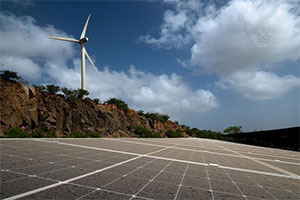 Renewable Energy in Cabo Verde. Credit: UN Photo/Mark Garten
A green economy is an economic model that aims to reduce environmental risks and build a sustainable future. Many of the UN SDGs seek to facilitate a green economy, such as ensuring access to affordable and reliable clean energy, building sustainable cities and communities, and implementing urgent action to combat climate change. Various key negotiations have strived to achieve a green economy, such as the Green New Deal and the Inflation Act of 2022. COP30, held in Belém, Brazil in 2025, agreed to mobilize $1.3 trillion annually for climate action and launched the Belém Mission to 1.5°C. However, the conference was not able to develop a fossil fuel reduction roadmap. Recent years have witnessed a sharp transformation in the geopolitical landscape of international sustainability cooperation. In March 2025, the United States stepped back from formal multilateral support for the SDGs, while China is on the rise as an international leader in renewable energy production. The actions of these global powers may shape shifting alliances on environmental governance. IPS is dedicated to sharing timely news on international developments in building a sustainable future.

The Week with IPS

NEXT STOP - SDGs
Tracking global progress towards a sustainable world
Tracking global progress towards a sustainable world
