Languages
Tuesday, October 6, 2026



News and Views from the Global South
Labour

Ending Child Marriage Needs a Culture of Accountability, Respect for the Rule of Law
Global leaders came together at the sidelines of this year’s UN General Assembly to commit to ending child marriage, calling on all world leaders to make concerted efforts to ensure accountability and enforce the laws that prohibit it.
The Rise of Androids Among Human Populations
Despite anxieties, concerns, and warnings, androids or humanoid robots that rely on generative artificial intelligence (GAI) and advanced robotics are increasingly being integrated into the modern lives of human populations. This integration raises serious challenges regarding humanity’s future in an era where androids are emerging rapidly.
Beware Independent Central Banks
US President Trump’s snide barbs against his appointee, US Federal Reserve Bank Chairman Jerome Powell, have revived support for central bank independence – long abused by powerful finance interests against growth and equity.
North Worsens Tropical Catastrophe
Greenhouse gas (GHG) emissions have risen over the last two centuries, with current and accumulated emissions per capita from rich nations greatly exceeding those of the Global South.
‘Angola produces large quantities of oil and diamonds, yet most people don’t see the benefits’
CIVICUS discusses recent protests in Angola with Florindo Chivucute, founder and executive director of Friends of Angola, a US-based civil society organisation established in 2014 that works to promote democracy, human rights and good governance in Angola.
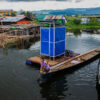
One in Four People Lack Access to Clean Drinking Water: UNICEF, WHO Warn of Deepening Disparities
Over the past decade, major strides have been made in expanding global access to water, sanitation, and hygiene (WASH) services, with billions of people around the world seeing improvements in overall health and well-being. Despite these gains, people largely from low-income countries and marginalized groups still lack access to clean water, leaving them vulnerable to disease and hindering social development and inclusion.
Togo’s Young Generation Challenges Six Decades of Dynastic Rule
In late June, thousands flooded the streets of Lomé, Togo’s capital, presenting the ruling dynasty with its biggest challenge in decades. The catalyst was constitutional manoeuvring by President Faure Gnassingbé to maintain his grip on power. In March 2024, his government pushed through constitutional amendments that transformed Togo from a presidential to a parliamentary system. This created a new position, the President of the Council of Ministers – effectively Togo’s chief executive – elected by parliament rather than by popular vote, and with no term limits. Gnassingbé assumed this new role in May, making it abundantly clear the changes were only about keeping him in power indefinitely.
The Right to Care: A Feminist Legal Victory That Could Change the Americas
On 7 August, the Inter-American Court of Human Rights delivered a groundbreaking decision that could transform women’s lives across the Americas. For the first time in international law, an international tribunal recognised care as an autonomous human right. Advisory Opinion 31/25, issued in response to a request from Argentina, elevates care – long invisible and relegated to the private sphere – to the level of a universal enforceable entitlement.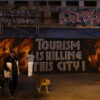
Overtourism: Civil Society Mobilising
It’s peak holiday season across Europe and North America, and people are hitting the beaches and crowding into city centres in ever-increasing numbers. They’re part of a huge industry: last year, travel and tourism’s share of the global economy stood at US$10.9 trillion, around 10 per cent of the world’s GDP.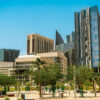
Green Jobs on the Rise in the Arab Region
In the Arab region, a thought-to-be oil oasis, green jobs constitute 29 percent of energy sector roles, and 23 percent of the oil and gas sector. These numbers signify a push towards sustainable business and practices, with the Arab region striving to get away from oil, in their advancement towards the completion of the SDGs on time for 2030.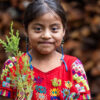
Bridging the Digital Divide: How AI Risks Marginalizing Indigenous Peoples
Although the advancement of artificial intelligence (AI) yields numerous opportunities for progress—such as improved efficiency, enhanced decision-making, and innovative tools for climate reform—it also poses new risks for Indigenous peoples. With AI rapidly transforming the world, it is imperative that there are ethical and equitable frameworks that prioritize inclusivity and work to narrow the gaps in the digital divide.
International Day of the World’s Indigenous Peoples 2025

Artificial Intelligence is changing how we live, learn, work - and who gets heard. It holds promise for humanity but, without safeguards, it risks becoming a new tool of domination.
Bullying Southeast Asia with Tariff Threats
US President Trump has successfully used tariff threats to achieve economic, political and even personal goals. These threats, reminiscent of colonialism, have secured submission and concessions.
Mining on the Rise as Clean Energy Demands Shifts Global Commodity Exports
Two-thirds of the developing world, or ninety-five out of 143 economies, are dependent on commodities for export value, making up 60 percent of their merchandise exports. For the least developed world, this number rises to 80 percent, leaving entire nation's revenue vulnerable to price swings, fiscal shocks, and evolving trade compositions. Hidden behind the numbers lies a deeper transformation, one disrupting fossil fuel trade, triggering a higher reliance on mineral exports, particularly on mining essential for green technologies.
From Haor to Brickfields
Nikli Upazila, located in the Kishoreganj district of Bangladesh, is part of the haor region, a vast wetland ecosystem characterized by bowl-shaped depressions. This unique geography subjects the area to significant climatic challenges, particularly recurrent flooding. The haor region, including Nikli, experiences a subtropical monsoon climate with distinct wet and dry seasons. During the monsoon season, heavy rainfall often leads to extensive flooding. Flash floods have become increasingly unpredictable and severe in recent years, causing substantial damage to agricultural lands and affecting the livelihoods of local communities. These people, trapped by water and driven by poverty, journey from the Haor to brickfields, where their lives become an endless cycle of hardship.
Global South calls for Strategic Energy Transition Amidst SDG Target Slowdowns
At the UN 2025 High Level Political Forum last week, global energy leaders warned that without urgent action in expanding access to clean energy, hundreds of millions will remain vulnerable, and the world will risk falling short of its 2030 SDG deadline.
Soaring Demand for Electric Vehicles, Lithium-Ion Batteries Creates Environmental Crisis in DRC
Electric vehicles contribute to an ongoing environmental and humanitarian crisis in the Democratic Republic of the Congo (DRC). Mining operations cause deforestation, pollution, food insecurity and exploitative labor practices.
From Ads to AI: How Big Tech Took Over Everything
“The power of AI carries immense responsibilities. Today, that power sits in the hands of a few,” said UN Secretary-General Antonio Guterres at the 2025 AI Action Summit, reflecting on a deepening reality as we inch closer to a world in complete digital domination. Today, seven of the world's top ten most valuable companies are digital giants, focusing primarily on the output of communication, digital manufacturing, artificial intelligence and digital commerce, which is paving the way for a fully digitized life for all.
Intersectional Feminist Leadership Needed to Realise Global Goals
In its 80-year history the UN has never once been led by a woman. As the international community convenes for the 2025 High-Level Political Forum (HLPF) to review progress on gender equality and other Sustainable Development Goals (SDGs), this remains a fundamental hypocrisy at the heart of global governance. How can an institution that has systematically excluded women from its highest office credibly champion gender justice worldwide?
‘International Demand for Coltan Is Linked to Violence in the DRC’
CIVICUS speaks with Claude Iguma, a mining governance expert with a PhD in Social Sciences, who is based in Bukavu, South Kivu province, eastern Democratic Republic of the Congo (DRC).

HLPF 2025: Civil Society Is Not A Service Provider – We Are The Frontline Of Transformation
As delegates gather in New York over the coming weeks for the 2025 High-Level Political Forum (HLPF), we see this moment as a test. A test of whether world leaders are serious about rescuing the Sustainable Development Goals (SDGs) - or content to let the promises of Agenda 2030 drift quietly into irrelevance.« Previous Page — Next Page »





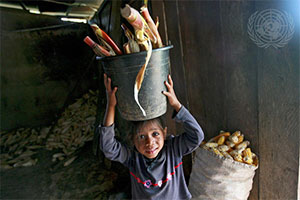 Timorese Girl with Fresh-Picked Corn. Credit: UN Photo/Martine Perret
A global common denominator is the need for a decent job. The economic realities of each country determine just how difficult it is to find one. Despite the labour movement's achievements, serious challenges persist: gender discrimination, child labour, worker migration, the digital divide and AI automation, evaporating pensions, unsafe workplaces, corporate pressure against union organising, negative impacts of trade agreements, and the precariousness of informal employment. The 2025 UN SDG Report identifies jobs and social protections as one of the six priority areas requiring urgent action, with progress either stalled or reversing in many developing nations.
In recent years, the fight to protect labour equality has taken on new dimensions with the rise of Environmental, Social and Governance standards. With the Social aspect aiming to promote equality and human rights, ESG principles have strengthened labour advocacy within corporate and governmental regulatory landscapes. In particular, ESG has become much more institutionalized in emerging economies such as Brazil and China. IPS follows the world’s workers as they confront these challenges - their setbacks and their successes.

The Week with IPS

NEXT STOP - SDGs
Tracking global progress towards a sustainable world
Tracking global progress towards a sustainable world
