Languages
Tuesday, November 17, 2026



News and Views from the Global South
Economy & Trade

Bangladeshi Migrant Female Domestic Workers Face Violence
Millions of Bangladeshi women are facing violence either as domestic housemaids or as migrant workers in Gulf countries. A few days ago, a video in social media, secretly filmed by a Bangladeshi housemaid employed in Saudi Arabia, caught everyone’s attention where she was helplessly crying and begging to be rescued from her abusive employer.
270 Million People are Migrants, Who Send Home a Staggering $689 Billion
The number of international migrants in 2019 is now estimated at 270 million and the top destination remains the United States, at nearly 51 million, the UN migration agency said on Wednesday.
IDB Modernises Crucial Social and Environmental Safeguards
The Inter-American Development Bank (IDB) is in the process of modernising the social and environmental safeguards that govern the financing of projects considered vital for the construction of sustainable infrastructure in the Latin American region.
Catalysing Change for Gender Equality
Great strides have been taken to empower women and girls in the Asia-Pacific region since the Fourth World Conference on Women in Beijing adopted an ambitious global agenda to achieve gender equality twenty-five years ago. Gender parity has been achieved in primary education. Maternal mortality has been halved. Today, the region’s governments are committed to overcoming the persistent challenges of discrimination, gender-based violence and women’s unequal access to resources and decision-making.
Social Protection Necessary to Quickly End Poverty, Hunger
Historically, most social security systems have developed in the formal sector of rich economies. However, most of the poor and hungry in the world live in rural areas, surviving in the informal economy.
When African Women are Financially Included, an Entire Continent Wins
When Rwandan-born, Senegalese-raised entrepreneur and businesswoman Kristine Ngiriye was 18 she had a brilliant idea that she wanted to translate into a business. But when she went to her local bank for a loan they told her to rather get married, because “ a woman must be married instead of venturing into business”, Ngiriye tells IPS.
First ladies panel seeks urgent policies to translate Africa’s demographic dividend into viable potential
“Investments in gender equality are critical to realizing demographic dividend, but we need to ensure that women have the tools to overcome the barriers they face,” First Lady of Rwanda, Jeannette Kagame told participants at a panel at the Global Gender Summit in Kigali on Monday.
More Austerity for Developing Countries: It’s Bad News, and It’s Avoidable
After years of austerity, a number of Eurozone countries are now considering expansionary fiscal policies. And in the UK, government spending is set to return to levels last seen in the 1970s. But austerity abounds elsewhere in the world, including in some of the poorest countries.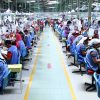
Global Clothing Brands Should Respond to the #MeToo Mandate
It has been two years since #MeToo went viral, and it’s about time the garment industry’s sexual harassment problem got the attention it deserves. Clothing and footwear brands can do much more to prevent and address gender-based violence in their supply chains, but first they need to confront how badly their inspection or “social auditing” programs fail women.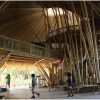
Green Steel
How Indonesian craftsmanship is undergoing a revival at the world’s first ‘bamboo university’. It’s fast-growing, flexible and strong. Standing underneath a bamboo canopy, it is easy to understand why people have been using this grass plant for years, in the construction of houses, bridges and scaffolding.The Organisation of Eastern Caribbean States (OECS) joins GGGI as its 34th Member and 1st Regional Integration Member
Today, the Organisation of Eastern Caribbean States (OECS) became the 34th Member of the Global Green Growth Institute (GGGI) after formally submitting its Instrument of Accession. The OECS is also the first regional integration organisation to become a member of GGGI.
Evo Morales: Hero or Villain?
To be president in a country like Bolivia might be like a precarious act performed by a tightrope-dancer between “the Devil and the deep blue sea”. After 23 years as Bolivia’s President, Evo Morales finally lost his foothold and ended up as political refugee in Mexico, adding his name to a long list of previous revolutionary exiles, like Augusto Sandino, Fidel Castro, and most prominently – Leon Trotsky. The last one was murdered, though the others came back, something Evo Morales has promised to do:
Winning the ‘No Food Loss’ Battle: The Case of Japan
Humankind since almost the time that there is recorded history has grappled with the question of ‘how many is too many?’ The response is expectedly complex as it varies across time and space. The pace of population growth was slow till about approximately 250 years or so. It is only since the middle of the eighteenth century that there has been a palpable acceleration in population growth.
Liberation, Not Liberalization, Responsible for China’s Economic Miracle
Any balanced assessment of the so-called Chinese economic miracle will recognize that it was extremely successful, not only during the reform period from 1979, but also since Liberation in 1949 despite the setbacks of the Great Leap Forward and the Cultural Revolution.
Bringing Silicon Valley to Kathmandu Valley
For those who think that Nepal is too underdeveloped to make full use of artificial intelligence (AI), think again. That is exactly what they used to say about computers and mobile phones in the 1990s.
The Ocean in Us: Ocean Action for Climate Ambition
In just under a month, countries around the world will gather for UNFCCC COP 25. The hashtag for this year’s “Blue COP” is yet another reminder to us all that it is “Time For Action”. We can no longer afford to wait as the effects of the climate crisis become ever more present. Vulnerable populations, whether from Small Island States, the rural heartland or the world’s megacities, are becoming ever more vulnerable, and the wellbeing of people and planet continues to face its most existential threat.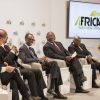
Africa is Better Placed Than Ever for Investment
 The Presidents Cyril Ramaphosa of South Africa, Paul Kagame of Rwanda, Nana Akufo-Addo of Ghana and Prime Minister Agostinho do Rosario of Mozambique engaged in a discussion titled, Invest in Africa's Space: Conversation with African Heads of State, moderated by Dr. Victor Oladokun, African Development Bank Group Director of External Relations and Communications, at the Africa Investment Forum, Johannesburg, 11 November 2019.
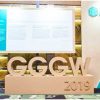
Summary Report on the event of GGGW2019
It has been a great experience for me to attend the Global Green Growth Week (GGGW) 2019 hosted by the Global Green Growth Institute (GGGI), a treaty-based international, inter-governmental organization dedicated to supporting and promoting strong, inclusive, and sustainable economic growth. Through this year’s event, I had the opportunity to learn more about green growth and listen to diverse opinions from policymakers, researchers, environmental experts, and representatives of the private sector from all over the world. Even though I had attended only two days of the one week event, I gained valuable knowledge from many interesting seminars and informative specialized sessions on topics regarding green growth and renewable energy,. I realized the importance of GGGI as a leading institute to implement a new development paradigm on a model of economic growth that is both environmentally sustainable and socially inclusive.
Los Angeles Joins a Global Movement to Protect Human Right to Water
On November 6, Los Angeles became the first major city in the United States to earn the designation of “Blue Community” – a bold move that will keep water protected from privatization.
Empower Young People to Sustain Our Planet, and Let Peace and Prosperity Thrive
Q: At ICPD25 we heard that women and girls are still waiting for the unmet promises to be met? DO you think this time around there is a commitment to ensure that these promises are met? The Nairobi Summit is about the Future of Humanity and Human Prosperity.
World’s Sewage Workers ‘Underpaid, Sidelined and Risking their Lives’
People who empty out sewage tanks and scrub down latrines doubtless perform a vital, thankless and even undesirable task. A new report, however, shows that doing such jobs could also cost workers their lives.« Previous Page — Next Page »


 UN Commission on International Trade Law Holds Colloquium on Harmonizing Law in Age of Digital Trade and Finance. Credit: UN Photo/Manuel Elías
Trade has historically been a geopolitical tool that can both be used to propel development as well as entrench inequalities. In various nations in East Asia and Latin America, increased trade, as often seen in export booms, has allowed them to achieve influential standings within the global economy. On the other hand, many low-income countries in Sub-Saharan Africa, Asia, and Latin America struggle to maintain a robust trade performance, and oftentimes are subjugated to exploitative trade dynamics through intense extraction of their natural resources. In recent decades, international trade has reached a new era as emerging economies across the world are rising in economic preeminence. Stable international trade is crucial to world peace as global interconnectedness facilitates reliable diplomacy. Nevertheless, significant challenges are on the rise. Notably, a major wave of United States tariff escalations in January 2025 lifted US import taxes to their highest level since the 1930s, changing market dynamics and forcing renegotiations with global trading partners.These articles are aimed at informing readers about the complexities of trade and its varying effects on development, with a special focus on the consequences of the global economic crisis, the potential of fair trade and the gender implications of trade policies.
Updated by Yilan Batista and Shuli Wong August 2026

The Week with IPS

NEXT STOP - SDGs
Tracking global progress towards a sustainable world
Tracking global progress towards a sustainable world
