Languages
Wednesday, November 18, 2026



News and Views from the Global South
Economy & Trade

Tobacco Industry Targets Women in Asia
International Women’s Day on 8 March recognized and celebrated the progress women are making globally. The day also acknowledged the risks, exploitation and suffering many continue to endure.
HER LOST LAND
(The Daily Star) - I do not usually write very easily. As someone working mostly with people with little or no literacy, my forte, as I would like to call it, is the oral tradition. I speak, I talk, I converse. I write today based on my perceptions from my work with rural women with whom I have lived and learnt from over the last four decades.The Geneva Centre co-organizes a UN Library Event on Leadership in Modern Multilateralism
(Geneva Centre) - Multilateralism must be people-driven. The current rise of populism around the world is inextricably linked to a feeling of being excluded and kept out of decision-making processes broadly shared by ordinary people. These were the main conclusions of a joint event between the Geneva Centre for Human Rights Advancement and Global Dialogue and the UNOG Library entitled Leadership in Modern Multilateralism. The debate was held on 12 March 2019 at the United Nations Office in Geneva in the Library Events Room at Palais Des Nations.
Multilateralism: A Testimony
For over 70 years, the UN system has been perceived as the guardian of peace and development in the world. However, multilateralism today is undeniably under strain. The effectiveness of global institutions and of global policymaking is questioned, and alliances are fraying.
Innovative Sustainable Business: A Three Trillion-Dollar Opportunity that UN Environment Wants People to Develop
In the East African region, communities around the continent’s largest water body, Lake Victoria, regard the water hyacinth as a great menace that clogs the lake and hampers their fishing activities. But in Lagos, Nigeria, some groups of women have learned how to convert the invasive weed into a resource, providing them with the raw material needed to make handicrafts.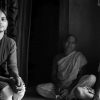
Women, Work, and Migration
Social barriers have historically been blamed for the lack of gender parity in the workplace. But there are other dimensions to this age-old discourse.
Promoting Privatization
Privatization has been central to the ‘neo-liberal’ counter-revolution from the 1970s against government economic interventions associated with Roosevelt and Keynes as well as post-colonial state-led economic development. Many developing countries were forced to accept privatization policies as a condition for credit or loan support from the World Bank and other international financial institutions, especially after the fiscal and debt crises of the early 1980s. Other countries voluntarily embraced privatization, often on the pretext of fiscal and debt constraints, in their efforts to mimic new Anglo-American criteria of economic progress.
The Crisis in Venezuela
My mission to Venezuela in November/December 2017 was the first by a UN rapporteur in 21 years. It was intended to open the door to the visit of other rapporteurs and to explore ways how to help the Venezuelan people overcome the protracted economic and institutional crisis.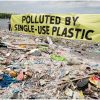
The Rising Trend of Zero Waste Lifestyles
Not too long ago, the term “zero waste” was just one of those boring policy directives or catchphrases thrown around by governments. But in the last few years, ‘going zero waste’ has taken on a new direction as a lifestyle trend of the insta-famous, who are helping to make zero waste a movement that anyone can get involved in.
Q&A: Inventor from a Small Fishing Village in Saint Lucia Provides Hope for Water Woes
Karlis Noel spends his days in his lab in the small, picturesque community of Laborie in St. Lucia. The former fisherman’s story might sound like an overnight success, but his present accolades in the field of engineering are the result of years of hard work and an unceasing drive to make life easier for communities in the throes of a water crisis.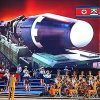
Birds of a Feather: Kim Jong-un and Donald J Trump
After his first meeting with Kim Jong-un Donald Trump declared: "And then we fell in love, okay? No, really – he wrote me beautiful letters, and they're great letters." Maybe it was a joke, maybe not. At least Trump indicated that he and Kim Jong-un were friends. In his book De Amicitia, written 44 BCE, Marcus Tullius Cicero wrote "A friend is, as it were, a second self." Are Trump and Kim Jong-un really friends? At least they seem to have many personal traits in common.
Millions of Venezuelans in Need of Protection
The international community must extend protections for Venezuelans in light of a growing humanitarian crisis with no end in sight. Human Rights Watch has urged governments in the Americas to provide temporary protection to the millions of Venezuelans fleeing a severe humanitarian crisis.
Environmental Funding For Guyana Must Cater for Mangroves Too
For several decades, Guyana has been using mangroves to protect its coasts against natural hazards, and the country believes its mangrove forests should be included in programmes like the REDD+ of United Nations, in order to access financing to continue their restoration and maintenance, as they complement miles of seawalls that help to prevent flooding.
Women as Forerunners of Change: When Financial Inclusion Meets Digital Transformation
Imagine a world where women fully participate in society, and enjoy equal access to resources and opportunities. Most probably, the 2030 Agenda would be nearing its fulfillment and we would be closer to achieving the better planet we wish to build.
Island Women Take the Lead in Peatland Restoration
Eluminada Roca has lived all her life next to the Leyte Sab-a Basin peatlands. The grandmother from of San Isidro village in Philippines’ Leyte island grew up looking at the green hills that feed water to the peatland, she harvested tikog—a peatland grass to weave mats—and ate the delicious fish that was once in abundant in the waters. But today, the land is losing its water, the grass is disappearing and the fish stock has drastically decreased.
Smart Tech Will Only Work for Women When the Fundamentals for Its Uptake Are in Place
Science and technology offer exciting pathways for rural women to tackle the challenges they face daily. Innovative solutions for rural women can, for example, reduce their workload, raise food production and increase their participation in the paid labour market. But even the very best innovative, gender-appropriate technology makes no sense without access to other critical resources, especially secure land rights, which women in rural areas need to flourish.
Decent Work Still a Distant Dream for Many Latin American Women
Women in Latin America earn one-fifth less than men for every hour worked, on average - one of the statistics that reflect the continuing inequality in the world of work that makes it unlikely for the region to meet the goal of equal pay by 2030.
How Cultural & Creative Industries Can Power Human Development in 21st Century
Cultural and creative industries, which include arts and crafts, advertising, design, entertainment, architecture, books, media and software, have become a vital force in accelerating human development. They empower people to take ownership of their own development and stimulate the innovation that can drive inclusive sustainable growth.
Industrial Jobs in Danger When the Climate is to be Saved
The trade unions' solution for a greener world is new jobs with good working conditions. The critics argue that there's not enough time. ”We can either protect industrial jobs in the global north or save the climate”, says political scientist Tadzio Müller.
Ignorance-Inspired Brexit Imperial Nostalgia
As the possible implications of Britain’s self-imposed ‘no-deal’ exit from the European Union loom larger, a new round of imperial nostalgia has come alive. After turning its back on the Commonwealth since the Thatcherite 1980s, some British Conservative Party leaders are seeking to revive colonial connections in increasingly desperate efforts to avoid self-inflicted marginalization following divorce from its European Union neighbours across the Channel.
Hope Springs Once Again for Nigeria’s Returnee Migrants
 Nigeria accounts for some of the largest number of irregular migrants trying to reach Europe from Africa.
« Previous Page — Next Page »


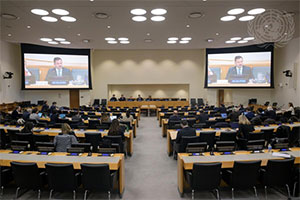 UN Commission on International Trade Law Holds Colloquium on Harmonizing Law in Age of Digital Trade and Finance. Credit: UN Photo/Manuel Elías
Trade has historically been a geopolitical tool that can both be used to propel development as well as entrench inequalities. In various nations in East Asia and Latin America, increased trade, as often seen in export booms, has allowed them to achieve influential standings within the global economy. On the other hand, many low-income countries in Sub-Saharan Africa, Asia, and Latin America struggle to maintain a robust trade performance, and oftentimes are subjugated to exploitative trade dynamics through intense extraction of their natural resources. In recent decades, international trade has reached a new era as emerging economies across the world are rising in economic preeminence. Stable international trade is crucial to world peace as global interconnectedness facilitates reliable diplomacy. Nevertheless, significant challenges are on the rise. Notably, a major wave of United States tariff escalations in January 2025 lifted US import taxes to their highest level since the 1930s, changing market dynamics and forcing renegotiations with global trading partners.These articles are aimed at informing readers about the complexities of trade and its varying effects on development, with a special focus on the consequences of the global economic crisis, the potential of fair trade and the gender implications of trade policies.
Updated by Yilan Batista and Shuli Wong August 2026

The Week with IPS

NEXT STOP - SDGs
Tracking global progress towards a sustainable world
Tracking global progress towards a sustainable world
