Languages
Friday, November 20, 2026



News and Views from the Global South
Economy & Trade

‘What Can We Do for You?’ Aid Projects Pour Into Myanmar
International aid agencies, big and small, are beating a path to Myanmar, relishing the prospect of launching projects in a nation of 51 million people tentatively emerging from more than five decades of military rule.
Asia-Pacific Region Aims at Hunger-Free Goal by 2030
The Asia Pacific region - home to two of the world's most populous countries - faces major food security challenges. According to the Asian Development Bank (ADB), both China and India are not only two of the world's biggest producers of food but also the world's biggest consumers.On Secret Marriages
It happens far more often than anyone is willing to admit or acknowledge. A woman who is a widow, or whose family owes a debt, or who has caught the eye of a lecherous boss, or who is no longer very young, or who fails to fit the fair and lovely demands of the usual suitors, is approached by an older man for marriage.
New Protocol Aims to Cut Trillion-Dollar Food Waste Bill
Four years ago, 27-year-old Tsering Dorji of western Bhutan’s Satsam village took to organic vegetable farming. Since then, thanks to composted manure and organic pesticide, the soil health of his farm has improved, and the yield has increased manifold.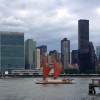
Polynesian Voyagers Bring Messages of Hope to UN on World Oceans Day
Polynesian voyagers who have sailed the world by canoe using ancient navigation skills will bring pledges they collected along the way to the UN on Wednesday as part of World Oceans Day celebrations.
World Bank Slightly Downgrades Global Economic Prospects for 2016
Global economic growth prospects for 2016 have been downgraded to 2.4 percent, in contrast to the initial 2.9 percent rate expected in January 2016, according to a World Bank report released here Wednesday.
Coral Reef Tourism in Danger as Reefs Struggle to Adapt to Warming
A recent UN Educational, Scientific and Cultural Organization (UNESCO) report on world heritage sites in danger from climate change received widespread media attention after the Australian government requested the removal of a chapter on the Great Barrier Reef.
No More Dumping of Milk in Laikipia
Daniel Mithamo, 28, grew up knowing that dairy farming is about producing milk in large quantities. You sell a few litres, consume some with your family, and dump the rest for lack of cold storage and decent roads to access markets.
Q&A: Crisis and Climate Change Driving Unprecedented Migration
Climate change is now adding new layers of complexity to the nexus between migration and the environment.
Golden Rice: The Malnutrition Fighting Crop
Over the past two decades, Bangladesh has remarkably managed to feed an increasing population better - the UN's Food and Agricultural Organization estimates that in 1993, the average Bangladeshi had access to just 2,000 calories per day, whereas today that number has increased to 2,450 calories per day. To a large extent, this success comes on the back of ever-higher rice production - rice makes up 70 percent of the average daily calorie intake.Issues of Overdevelopment
Urbanisation in Pakistan has been moving at a swift pace, albeit in a rudderless fashion. The Planning Commission estimates that half of our population shall be living in cities by 2030. Among other impacts, the approach and conduct of land governance shall drastically change for the worse, clear evidence of which is visible even today.Climbing the Knowledge Ladder
After the Paris Agreement on climate change endorsed by every participating country last December at the 21st Conference of Parties (COP21) of the United Nations Convention in Climate Change (UNFCCC), all the participants , including both developing as well as developed countries, have to put in place a clear strategy to not only reduce emissions of greenhouse gases through mitigation actions, but also to adapt to the adverse impacts of human-induced climate change.
Playing Pandu with Politics and Cricket Too
Writing in the British newspaper “Guardian”, columnist Owen Jones gave a succinct reason why politicians in this country are trusted even less than estate agents, a breed that hardly evokes public confidence and respect.
World Oceans Day – A Death Sea Called Mediterranean
While the United Nations identifies 17 major regional seas in its planning, the Mediterranean is perhaps the most dramatic case as it has gone from being the so-called cradle of civilization to be a cemetery for thousands of asylum-seekers and migrants. And it is most probably also the most polluted water basin the whole world. See this report.
Mega Dams Remain Controversial Source of Energy
Although mega dams can have devastating impacts on ecosystems and indigenous communities, many of the world’s poorest countries still see them as a way to fill gaping holes in their energy supplies.Wildlife Trafficking Needs to Be a Policy Priority in Asia Pacific Before It Is Too Late
This year’s World Environment Day on June 5 puts the spotlight on the illegal trade in wildlife. The problem has particular significance in Asia, which is the destination for most of the ivory taken from 20,000 to 25,000 elephants and the horns of more than 1,200 rhinos killed in Africa every year. Demand in the region is driven by fast growing middle and upper classes with an appetite for exotic pets, décor, food and fashion.
If Our Democracy Could Talk, What Would It Say?
Does our democracy bleed when 12 people are killed in just one phase of UP elections? Does it reek of half-rotten flesh of the masses, of mouldy dreams and broken promises? Does it feel ashamed, weary, angry, when, in its name, school children are shot dead, and youth tortured, in broad daylight, shamelessly, unapologetically, with impunity? When, in its name, more than a hundred are reportedly killed in the first four phases of UP elections, 40 of them AL activists, 12 supporters of rebel AL candidates, two BNP men, and the rest, ordinary citizens with no stake in the elections beyond that of, yes, a citizen? Does democracy cringe in humiliation when opposing candidates are prevented from filing nomination papers, ballot boxes are stuffed and voting centres taken over by force as we [continue to] sing the eulogies of a 'free and fair' election? Does it find itself drowning in a perplexing time warp, with the past, present and future collapsing onto each other, with history repeating itself, over and over, albeit in new(er) forms, the boundaries between heroes and enemies blurred more than ever?
Closing the Gaps in Fight Against Wildlife Trafficking in Latin America
Although it violates the international conventions that regulate the wildlife trade, it is possible to go online and find websites to buy, for example, axolotl salamanders (Ambystoma mexicanum) or spiny softshell turtles (Trionyx spiniferus).Is Good Governance Key To Eliminating Poverty?
For over a decade, much of the international development community, led by the OECD and the World Bank, promoted ‘good governance’ as a pre-requisite for economic development and poverty eradication. Good governance became the explanation for the failure of the structural adjustment programmes (SAPs) to deliver economic growth and poverty reduction. The link between good governance and poverty eradication is premised on the presumption that good governance promotes economic growth and development. It was presumed that SAPs were good for growth and the poor.
Battered by Storms, Sri Lanka Rethinks Food Security
The picture could be straight out of a tourist postcard – a sleepy green mountain with misty clouds floating above the canopy – if not for one fatal flaw: the ugly gash running right through the middle.Hardening US Stance
`Interesting` times are upon Pak-US ties again. A US drone strike killed Mullah Mansour in Balochistan; the proposed US F-16 sale to Pakistan formally expired. The Obama administration failed to convince lawmakers on Capitol Hill to allow use of US public funds to complete the transaction and Pakistan refused to pay for them in toto; and the US Congress is moving to put further Haqqani network-related conditionalities on assistance to Pakistan.« Previous Page — Next Page »


 UN Commission on International Trade Law Holds Colloquium on Harmonizing Law in Age of Digital Trade and Finance. Credit: UN Photo/Manuel Elías
Trade has historically been a geopolitical tool that can both be used to propel development as well as entrench inequalities. In various nations in East Asia and Latin America, increased trade, as often seen in export booms, has allowed them to achieve influential standings within the global economy. On the other hand, many low-income countries in Sub-Saharan Africa, Asia, and Latin America struggle to maintain a robust trade performance, and oftentimes are subjugated to exploitative trade dynamics through intense extraction of their natural resources. In recent decades, international trade has reached a new era as emerging economies across the world are rising in economic preeminence. Stable international trade is crucial to world peace as global interconnectedness facilitates reliable diplomacy. Nevertheless, significant challenges are on the rise. Notably, a major wave of United States tariff escalations in January 2025 lifted US import taxes to their highest level since the 1930s, changing market dynamics and forcing renegotiations with global trading partners.These articles are aimed at informing readers about the complexities of trade and its varying effects on development, with a special focus on the consequences of the global economic crisis, the potential of fair trade and the gender implications of trade policies.
Updated by Yilan Batista and Shuli Wong August 2026

The Week with IPS

NEXT STOP - SDGs
Tracking global progress towards a sustainable world
Tracking global progress towards a sustainable world
