Languages
Friday, November 20, 2026



News and Views from the Global South
Economy & Trade

Civil Society in Latin America Campaigns Against Trans-Pacific Partnership
Civil society organisations from Chile, Mexico and Peru are pressing their legislatures and those of other countries not to ratify the Trans-Pacific Partnership (TPP).
Fences and Walls: A Short-sighted Response to Migration Fears?
European nations from which millions once left to escape hardship and hunger – Greece, Ireland, Italy - are today destinations for others doing the same.
Children of a Lesser God: Trafficking Soars in India
Sunita Pal, a frail 17-year-old, lies in a tiny bed in the women’s ward of New Delhi’s Ram Manohar Lohia Hospital. Her face and head swathed in bandages, with only a bruised eye and swollen lips visible, the girl recounts her ordeal to a TV channel propped up by a pillow. She talks of her employers beating her with a stick every day, depriving her of food and threatening to kill her if she dared report her misery to anybody.
Building Africa’s Energy Grid Can Be Green, Smart and Affordable
It’s just after two p.m. on a sunny Saturday and 51-year-old Moses Kasoka is seated outside the grass-thatched hut which serves both as his kitchen and bedroom.Unfounded Debt Fears Block Economic Recovery
Debt anxieties are not new, often fanned by political competition. But so is a double dip recession due to premature deficit reduction. For example, to seek re-election, President Roosevelt backed down from his New Deal in 1937, promising that “a balanced budget [was] on the way”. In 1938, he slashed government spending, and unemployment shot up to 19 per cent.
Western Nations, Blaming Cash Crunch, Pull out of UNIDO
The 134-member Group of 77, the largest single coalition of developing countries, has expressed serious concern over the “unprecedented” withdrawal of nine member states from the Vienna-based UN Industrial Development Organization (UNIDO).
Leaving Saudi Arabia
The Eastern Province of Saudi Arabia is not one pilgrims or foreign tourists normally visit. Set against the Persian Gulf, it is the heart of the kingdom’s oil industry. Unsurprisingly, it is also home to most of its migrant workers whose labour populates this sector.Brexit and Its Economic Fallout
The United Kingdom is now in the midst of a Shakespearean dilemma, “to stay or not to stay”. Voters will decide in a referendum on June 23 whether to stay in the European Union or to break the four decades old relationship they forged, i.e. opt for “Brexit” as it is popularly known. If the majority decides to leave, it will have implications for Britain across the spectrums, political, economic, and social. While in the last referendum on this issue in 1975, an overwhelming 68 percent of the electorate had decided to stay, this time the margin will be narrower, one way or the other. Britain's departure from the EU will also undoubtedly set a bad example for advocates of Customs Union, an economic arrangement of sovereign countries set up to facilitate trade and economic integration through trade.
Drought Dries Up Money from Honey
“It is everything” is how smallholder farmer Nyovane Ndlovu describes beekeeping, which has long been an alternative sweet source of income for drought-beaten farmers in Zimbabwe.
Climate-Proofing Agriculture Must Take Centre Stage in African Policy
After over a year of extreme weather changes across the world, causing destruction to homes and lives, 2015-16 El Niño has now come to an end.
Seeds for Supper as Drought Intensifies in South Madagascar
Havasoa Philomene did not have any maize when the harvesting season kicked off at the end of May since like many in the Greater South of Madagascar, she had already boiled and eaten all her seeds due to the ongoing drought.
Political Contests Must not Push Kenya Over the Precipice Again
Kenyans, and friends of Kenya, are once again hoping that the five-yearly ritual of elections will not take the form of widespread ethnic violence and destruction of property. However, recent intransigent positions over the Independent Electoral and Boundaries Commission (IEBC) are a cause for apprehension and concern.
‘Likes’ That Can Kill
Selfies were born when people found no one to take their photo. Again, no one among family and friends wanted to be left out, and so the crowding into the frame began. The fish-pout emanates from self-consciousness, and then mimicry. Phones got cheaper, the reversible camera was installed, apps arrived to share the shots with friends and others, a system of approval ('like') was invented, and an epidemic was born.
Bougainville Women Turn Around Lives of ‘Lost Generation’
Finding a sense of identity and purpose, as well as employment are some of the challenges facing youths in post-conflict Bougainville, an autonomous region in eastern Papua New Guinea in the southwest Pacific Islands.
A Healthy Trading System Requires Progress and Engagement at All Levels
This is a challenging time for global trade. According to the current World Trade Organization (WTO) new trade forecasts, global goods trade is expected to grow by 2.8%, making 2016 the fifth consecutive year of sub 3% growth. The gross domestic product (GDP) is still the most critical variable in the trade expansion equation, and as long as GDP growth remains low, trade numbers are likely to follow a similar trend.Politics of Numbers
The Pakistan Economic Survey 2015-16 reminds us of our ticking population bomb. We are told that today the country`s population stands at 195.4 million 3.7m more than it was the previous year. We have regressed.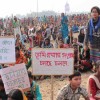
Addressing the Land Question
In a developing country such as Bangladesh, where the implementation of democracy still seems a far flung dream as national budgets blur the line between fantasy and expectation, land has come to be the defining issue of the day. It is of little surprise that a third-world country, caught in the throes of frantic industrial development, would have to deal with the issue of land. Add to it the fact that Bangladesh is the most densely populated country in the world and what you basically have is a recipe for development induced disasters. But even taking all of these challenges into account the current state of land rights in the country is appalling. Almost 56 percent of the entire population is functionally landless, getting by either through odd jobs or becoming part of the industrial division of labour. The average size of land holding is a meagre 0.6 hectare. For a country that is yet almost completely dependent on agrarianism as part of its economy, that is a terrible figure.
The Art of Covering Up in Somaliland
Amid the hustle and bustle of downtown Hargeisa, Somaliland’s sun-blasted capital, women in various traditional Islamic modes of dress barter, argue and joke with men—much of it particularly volubly. Somaliland women are far from submissive and docile.
Water Scarcity Could Impact West Asian Credit Ratings
Water scarcity, conflict and refugee exodus is the strongest megatrend in West Asia, indicating the status of current trends and how these factors may shape the future, according to UN Environment Programme’s sixth Global Environment Outlook - GEO-6 Regional Assessment for West Asia released May 2016.
Uruguay Seeks Future as Oil Producer in Ultra-Deep Waters
Uruguay is just weeks away from finding out if it will have a chance to stop being totally reliant on oil imports at some point in the future, when the first offshore exploration well in national waters – which set a new world record in terms of water depth - is completed.
Students Journey: A Step Closer to the SDGs in Rural India
As the seventh largest economy in the world by nominal GDP, India has fared better than many. Through a mix of interventions from the public and private sector, India’s economy has promoted growth and welfare. However, in spite of these developments, the challenge of hunger and malnutrition remain.« Previous Page — Next Page »


 UN Commission on International Trade Law Holds Colloquium on Harmonizing Law in Age of Digital Trade and Finance. Credit: UN Photo/Manuel Elías
Trade has historically been a geopolitical tool that can both be used to propel development as well as entrench inequalities. In various nations in East Asia and Latin America, increased trade, as often seen in export booms, has allowed them to achieve influential standings within the global economy. On the other hand, many low-income countries in Sub-Saharan Africa, Asia, and Latin America struggle to maintain a robust trade performance, and oftentimes are subjugated to exploitative trade dynamics through intense extraction of their natural resources. In recent decades, international trade has reached a new era as emerging economies across the world are rising in economic preeminence. Stable international trade is crucial to world peace as global interconnectedness facilitates reliable diplomacy. Nevertheless, significant challenges are on the rise. Notably, a major wave of United States tariff escalations in January 2025 lifted US import taxes to their highest level since the 1930s, changing market dynamics and forcing renegotiations with global trading partners.These articles are aimed at informing readers about the complexities of trade and its varying effects on development, with a special focus on the consequences of the global economic crisis, the potential of fair trade and the gender implications of trade policies.
Updated by Yilan Batista and Shuli Wong August 2026

The Week with IPS

NEXT STOP - SDGs
Tracking global progress towards a sustainable world
Tracking global progress towards a sustainable world
