Languages
Thursday, October 8, 2026



News and Views from the Global South
Economy & Trade
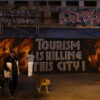
Overtourism: Civil Society Mobilising
It’s peak holiday season across Europe and North America, and people are hitting the beaches and crowding into city centres in ever-increasing numbers. They’re part of a huge industry: last year, travel and tourism’s share of the global economy stood at US$10.9 trillion, around 10 per cent of the world’s GDP.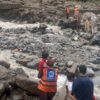
Swept Away: Flash Floods, Failed Systems Bane of Pakistan’s North
Intense rainfall over small areas in Pakistan’s mountainous regions caused massive destruction, sweeping away entire villages. On August 15, the district of Buner in Khyber Pakhtunkhwa (KP) province experienced a weather anomaly in which glacier melt and intense monsoon rains caused floods that buried villages under mud and rock.
Environmentalists Confident Case Against US Funding of Mozambique LNG Project Will Succeed
Environmental campaign groups are confident that a suit filed in the United States, seeking to stop the country’s Export-Import Bank (EXIM) from the ‘unlawful’ lending of nearly USD 5 billion to the controversial Mozambique Liquefied Natural Gas (LNG) project, will succeed.
Green Jobs on the Rise in the Arab Region
In the Arab region, a thought-to-be oil oasis, green jobs constitute 29 percent of energy sector roles, and 23 percent of the oil and gas sector. These numbers signify a push towards sustainable business and practices, with the Arab region striving to get away from oil, in their advancement towards the completion of the SDGs on time for 2030.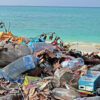
Plastics Treaty Talks End in ‘Abject Failure’ as US, Other Big Oil Allies Sabotage Progress
Negotiators in Geneva adjourned what was expected to be the final round of plastics treaty negotiations on Friday without reaching an agreement, a failure that environmentalists blamed on the Trump-led United States, Saudi Arabia, and other powerful nations that opposed any effort to curb plastic production—the primary driver of a worsening global pollution crisis.
‘Life in Gaza’s Shelters Is Marked by Deprivation – but Also by the Endurance of Human Dignity’
CIVICUS speaks with a West Bank-based Palestinian activist about her family members currently enduring the war in Gaza. She has asked to remain anonymous for security reasons.
Bending the Curve: Overhaul Global Food Systems to Avert Worsening Land Crisis
Current rates of land degradation pose a major environmental and socioeconomic threat, driving climate change, biodiversity loss, and social crises. Food production to feed more than 8 billion people is the dominant land use on Earth. Yet, this industrial-scale enterprise comes with a heavy environmental toll.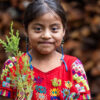
Bridging the Digital Divide: How AI Risks Marginalizing Indigenous Peoples
Although the advancement of artificial intelligence (AI) yields numerous opportunities for progress—such as improved efficiency, enhanced decision-making, and innovative tools for climate reform—it also poses new risks for Indigenous peoples. With AI rapidly transforming the world, it is imperative that there are ethical and equitable frameworks that prioritize inclusivity and work to narrow the gaps in the digital divide.
Inequality Worsens Planetary Heating
The accumulation of still growing greenhouse gas emissions (GHG) in an increasingly unequal world is accelerating planetary heating. It is also worsening disparities, especially between the rich and others, both nationally and internationally.
From Conflict to Climate Crusade, Refugees Lead the Charge in Kenya
For 18-year-old Lionel Ngukusenge, a refugee from Burundi, where he was forced into hiding because of a repressive regime, he has found another foe to contend with at the Kakuma refugee camp in Kenya: climate change.
Solar-Powered Fish Farming Feeds Indigenous Communities in the Peruvian Amazon
"Our organization is showing that it is indeed possible to move toward energy transition and not depend on oil," said Elaina Shajian, president of the Regional Coordinator of Indigenous Peoples of San Lorenzo (Corpi-SL), in the Peruvian Amazon.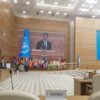
Landlocked Developing Countries to Start ‘New Decade of Delivery’
As the Third United Nations Conference on Landlocked Developing Countries (LLDC3) concludes today (Friday, August 8) in Awaza, Turkmenistan, with the adoption of the Awaza Political Declaration and the formal endorsement of the Awaza Programme of Action (2024–2034), there is optimism that LLDCs are finally at the dawn of a new era.
Beyond Lives Saved: Why Early Warning Systems Are a Smart Investment
Significant progress has been made globally in implementing national and local disaster risk reduction strategies. Yet, the impact of disasters on lives and economies persists and disaster resilience is one of the most regressed areas in Sustainable Development Goal implementation.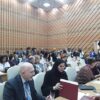
Women From Landlocked Developing Countries Set Sights on Open Horizons
“Progress towards gender equality and equity remains uneven and far too slow. One in four women in landlocked developing countries (LLDCs) live in extreme poverty, and this is nearly 75 million women,” said Rabab Fatima, Secretary-General of the Third United Nations Conference on Landlocked Developing Countries or LLDC3 ongoing in Awaza, Turkmenistan.
Africa’s ‘Land-Linked’ Nations Chart a New Trade Route to Prosperity
Once relegated to the periphery of Africa’s economic map due to their lack of coastline, the continent’s landlocked developing countries (LLDCs) are now reframing their geographic constraints as gateways to opportunity.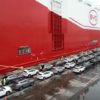
Latin America’s Electric Mobility on China’s Path
Residents near the port of Itajaí in southern Brazil celebrated the arrival of 7,292 electric and hybrid vehicles from China aboard the ship BYD Shenzhen on May 28 as a "historic event," with unloading taking four days.
Landlocked Developing Countries’ Group to Negotiate Way Out of Agricultural Catastrophe
Agriculture is a critical sector in landlocked developing countries, as more than half (55 percent) of the population is employed in the agriculture sector – significantly higher than the global average of 25 per cent. As such, the deterioration of food security in landlocked developing countries (LLDCs) is an unfolding catastrophe.
‘We Must Build Healthier Digital Environments Where Reliable Information Plays a Leading Role’
CIVICUS discusses Bolivia’s upcoming presidential election with Juan Carlos Uribe and Lucas Illanes from ChequeaBolivia, an initiative that monitors and verifies social media content.
UN Chief Hails Turkmenistan’s Quiet Diplomacy as Launchpad for Landlocked Solidarity
In the glass-panelled hallway straddling Buildings 2 and 3 at the Awaza Congress Centre, two smartly dressed young Turkmens stood behind an ornate national pavilion—anxious, alert, and surprisingly eloquent.
International Day of the World’s Indigenous Peoples 2025

Artificial Intelligence is changing how we live, learn, work - and who gets heard. It holds promise for humanity but, without safeguards, it risks becoming a new tool of domination.

How One Caribbean Country Is Changing the Face of Debt
The beauty of the majestic Piton mountains, vibrant culture, dazzling beaches and lush landscapes of Saint Lucia are invaluable assets. The country also takes pride in having two Nobel laureates, which is remarkable for a nation with a population of over 180,000.« Previous Page — Next Page »





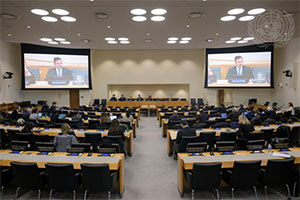 UN Commission on International Trade Law Holds Colloquium on Harmonizing Law in Age of Digital Trade and Finance. Credit: UN Photo/Manuel Elías
Trade has historically been a geopolitical tool that can both be used to propel development as well as entrench inequalities. In various nations in East Asia and Latin America, increased trade, as often seen in export booms, has allowed them to achieve influential standings within the global economy. On the other hand, many low-income countries in Sub-Saharan Africa, Asia, and Latin America struggle to maintain a robust trade performance, and oftentimes are subjugated to exploitative trade dynamics through intense extraction of their natural resources. In recent decades, international trade has reached a new era as emerging economies across the world are rising in economic preeminence. Stable international trade is crucial to world peace as global interconnectedness facilitates reliable diplomacy. Nevertheless, significant challenges are on the rise. Notably, a major wave of United States tariff escalations in January 2025 lifted US import taxes to their highest level since the 1930s, changing market dynamics and forcing renegotiations with global trading partners.These articles are aimed at informing readers about the complexities of trade and its varying effects on development, with a special focus on the consequences of the global economic crisis, the potential of fair trade and the gender implications of trade policies.
Updated by Yilan Batista and Shuli Wong August 2026

The Week with IPS

NEXT STOP - SDGs
Tracking global progress towards a sustainable world
Tracking global progress towards a sustainable world
