Languages
Saturday, November 21, 2026



News and Views from the Global South
Economy & Trade

U.S. Flag Can Be Seen Again in Cuba
The announcement that the United States and Cuba would reestablish diplomatic relations took most Cubans by surprise. Over half of the population was born after the severing of ties in 1961 and the start of the embargo that has marked their lives.
REDD and the Green Economy Continue to Undermine Rights
Dercy Teles de Carvalho Cunha is a rubber-tapper and union organiser from the state of Acre in the heart of the Brazilian Amazon, with a lifelong love of the forest from which she earns her livelihood – and she is deeply confounded by what her government and policymakers around the world call “the green economy.”
After 53 Years, Obama to Normalise Ties with Cuba
In perhaps his boldest foreign-policy move during his presidency, Barack Obama Wednesday announced that he intends to establish full diplomatic relations with Cuba.
Kenya’s Economy Sees Growth at Top But No ‘Trickle-Down’
David Kamau is a small-scale maize farmer in Nyeri, Central Kenya, some 153 kms from the capital Nairobi. He recently diversified into carrot farming but is still not making a profit.
Aboriginal Knowledge Could Unlock Climate Solutions
As a child growing up in Far North Queensland, William Clark Enoch would know the crabs were on the bite when certain trees blossomed, but now, at age 51, he is noticing visible changes in his environment such as frequent storms, soil erosion, salinity in fresh water and ocean acidification.
UNIDO Development Initiative Gains Momentum in ACP Nations
The inclusive and sustainable industrial development (ISID) initiative of the U.N. Industrial Development Organisation to promote industrial development for poverty reduction, inclusive globalisation and environmental sustainability is gaining momentum in the countries of the African, Caribbean and Pacific (ACP) group.
Cuba’s Reforms Fail to Reduce Growing Inequality
One of the major challenges assumed by President Raúl Castro when he launched a series of reforms in Cuba is improving living standards in a country still suffering from a recession that began over 20 years ago and has undermined the aim of achieving economic and social equality.
‘Record’ Illicit Money Lost by Developing Countries Triples in a Decade
Developing countries are losing money through illicit channels at twice the rate at which their economies are growing, according to new estimates released Tuesday. Further, the total volume of these lost funds appears to be rapidly expanding.
Russian Arms Producers Move Ahead of Western Rivals
The world's top 100 arms producing companies racked up 402 billion dollars in weapons sales and military services in 2013, according to the latest figures released by the Stockholm International Peace Research Institute (SIPRI).
OPINION: The Sad Future of Our Planet
It is now official: the current inter-governmental system is not able to act in the interest of humankind.
Lima Agrees Deal – but Leaves Major Issues for Paris
After a 25-hour extension, delegates from 195 countries reached agreement on a “bare minimum” of measures to combat climate change, and postponed big decisions on a new treaty until the 21st Conference of the Parties (COP 21), to be held in a year’s time in Paris.
Dirty Energy Reliance Undercuts U.S., Canada Rhetoric at Climate Talks
While U.S. and Canadian officials delivered speeches about how the world needs to step up to their responsibilities at the U.N. climate negotiations in Lima, Peru, activists from North America demanded clear answers back home on their governments’ relationships with fossil fuel corporations, as well as the future of several major oil projects across the continent.
OPINION: How Shifting to the Cloud Can Unlock Innovation for Food and Farming
The digital revolution that is continuing to develop at lightening speed is an exciting new ally in our fight for global food security in the face of climate change.
OPINION: Europe Has Lost Its Compass
The Swedish Social Democrat government, which took office only two months ago, has just resigned. The far-right anti-immigrant Sweden Democrats sided with the four-party centre-right opposition alliance, and new elections will be held in March next year.
Renewable Energy: The Untold Story of an African Revolution
Africa is experiencing a revolution towards cleaner energy through renewable energy but the story has hardly been told to the world, says Achim Steiner, Executive Director of the United Nations Environment Programme (UNEP).
Glaciers and Fruit Dying in Peru with no Response from COP20
Snow-capped mountains may become a thing of the past in Peru, which has 70 percent of the world’s tropical glaciers. And farmers in these ecosystems are having a hard time adapting to the higher temperatures, while the governments of 195 countries are wrapping up the climate change talks in Lima without addressing this situation facing the host country.
What Future for the ACP-EU Partnership Post-2015?
“There are still prospects for a meaningful ACP-EU partnership, capable of contributing and responding concretely and effectively to the objectives of promoting and attaining peace, security, poverty eradication and sustainable development,” according to the top official of the African, Caribbean and Pacific Group of States (ACP).
OPINION: Climate Change and Inequalities: How Will They Impact Women?
Among all the impacts of climate change, from rising sea levels to landslides and flooding, there is one that does not get the attention it deserves: an exacerbation of inequalities, particularly for women.
Want Economic Growth? Lessen Inequality
For years, many policy makers, including economists, have clung to the belief that if states do nothing to boost income equality, market forces will cause wealth to trickle down to the poorest citizens and contribute to overall growth.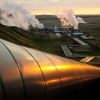
The Rapid Rise of Green Bonds
Most countries joining the growing list of nations pursuing clean geothermal power have been confronted with a huge financial challenge.
Mangrove Conservation Paves the Way to a Sustainable Future
 When the Asian tsunami washed over several Indian Ocean Rim countries on Boxing Day 2004, it left a trail of destruction in its wake, including a death toll that touched 230,000.
« Previous Page — Next Page »


 UN Commission on International Trade Law Holds Colloquium on Harmonizing Law in Age of Digital Trade and Finance. Credit: UN Photo/Manuel Elías
Trade has historically been a geopolitical tool that can both be used to propel development as well as entrench inequalities. In various nations in East Asia and Latin America, increased trade, as often seen in export booms, has allowed them to achieve influential standings within the global economy. On the other hand, many low-income countries in Sub-Saharan Africa, Asia, and Latin America struggle to maintain a robust trade performance, and oftentimes are subjugated to exploitative trade dynamics through intense extraction of their natural resources. In recent decades, international trade has reached a new era as emerging economies across the world are rising in economic preeminence. Stable international trade is crucial to world peace as global interconnectedness facilitates reliable diplomacy. Nevertheless, significant challenges are on the rise. Notably, a major wave of United States tariff escalations in January 2025 lifted US import taxes to their highest level since the 1930s, changing market dynamics and forcing renegotiations with global trading partners.These articles are aimed at informing readers about the complexities of trade and its varying effects on development, with a special focus on the consequences of the global economic crisis, the potential of fair trade and the gender implications of trade policies.
Updated by Yilan Batista and Shuli Wong August 2026

The Week with IPS

NEXT STOP - SDGs
Tracking global progress towards a sustainable world
Tracking global progress towards a sustainable world
