Languages
Saturday, November 28, 2026



News and Views from the Global South
Economy & Trade
Bill Gates to Support “Robin Hood” Tax
Microsoft co-founder and billionaire philanthropist Bill Gates appears poised to endorse the adoption of a controversial financial transactions tax (FTT) to be used as a new source of development aid for poor countries.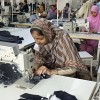
Bangladesh Draws Pakistan’s Garment Makers
Faced with serious political instability and a deteriorating industrial climate, Pakistan’s garment exporters are turning to Bangladesh, a territory which splintered away after a bloody war of independence in 1971.Corporate Profits Trumping Public Health
"There is a well-documented and shameful history of certain players in industry who... put public health at risk to protect their own profits," U.N. Secretary-General Ban Ki-moon told world leaders Monday as they met to address the issue of non-communicable diseases at the 66th U.N. General Assembly.
DR CONGO: No Water, No Management, No Power
Frequent power cuts have led to the firing of the board of the Democratic Republic of Congo's national electricity company. But it is not clear if sub-par generation from the Inga hydroelectric power stations supplying the capital Kinshasa is due to poor management or to unusually low water levels in the Congo River.China Breaks Latin America’s ‘Hundred Years of Growth Solitude’
With a shifting global landscape breeding strange bedfellows in the realm of international trade, analysts and economists gathered at the World Bank headquarters Tuesday to discuss what will likely be one of the defining partnership of the decade – China's connection with Latin America and the Caribbean (LAC).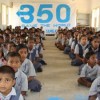
Indian Activists Bring Anti-Coal Campaign to World Bank
As leaders from two of the world's largest financial institutions, the World Bank and International Monetary Fund, met for annual meetings here Tuesday, a delegation of activists from India called on the World Bank to follow through with its proposal to dramatically cut funding for coal-burning power stations.U.S.: Obama Chooses Caution on Taiwan Arms Sale
Eager not to provoke a new round of tensions with China, U.S. President Barack Obama has reportedly decided to sell Taiwan upgraded versions of its main fighter jets instead of the new, more advanced models that the island state had preferred.Post-War Libya Urged to Create New Human Rights Regime
As the United Nations celebrated the birth of a new democratic Libya, the National Transitional Council (NTC), which has been duly recognised as the legitimate government, is faced with new political demands - even before it could get off the ground.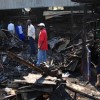
MALAWI: Markets Torched Ahead of Cancelled Protests
Soot and ash filled the air the day after a fire gutted Malawi's Blantyre Market. Men and women merchants wore solemn expressions as they shovelled piles of debris from the site on Tuesday.
Adding Up the Cost of Education in Sierra Leone
A formal strike of teachers has been averted and pupils in Sierra Leone returned to school on Tuesday, almost a week after the term was meant to officially start.
Q&A: “After 50 Years, the Embargo on Cuba Has Failed”
Cuba is urging the U.N. General Assembly to again condemn the U.S. embargo during its 66th session this week, in an annual ritual that has been a political and moral victory for the socialist nation but with little real impact.Women Hung Out to Dry in Global Labour Market
Amid policy battles over food production, energy resources and economic decline, one untapped natural resource that is guaranteed to boost production on a global scale has been stubbornly overlooked – the power of women in the labour force.ROMANIA: Fixing the Economy, Not Lives
The economic crisis has led Romanian authorities to take some of the toughest austerity measures in Central and Eastern Europe. While no big opposition movement emerged as a result, a special kind of protest has taken place: some have committed suicide to get their messages across.
ZAMBIA-ELECTIONS: Perpetrators of Violence Warned: ‘Expect No Mercy’
As Zambians go to the polls on Tuesday to elect a new government and president they do so amid fears of election violence.Accessible Micro-Loans Help Poor Women in Rural South Africa
While women still lag grossly behind men in terms of bringing home the bacon, a new entrepreneurship organisation, Financial Independence Through Entrepreneurship (FITE), is working to swing the balance of economic power in South Africa by providing micro-loans to hard-up women.NORTH KOREA: Women Wear Pants, Revive Markets
North Korea's communist government frowns upon women wearing pants, seeing it as a mark of ‘rotten bourgeois lifestyles.' Yet, wives, literally wearing pants, are selling goods in the local markets to supplement their husbands' meagre pay packets.
DOMINICAN REPUBLIC: Women Challenge Monopoly on “Men’s Jobs”
From a small office inside a public school on the eastern side of the Rio Ozama in the capital Santo Domingo, a programme operated by a local NGO, Ce-Mujer, has been leading a quiet revolution to empower women in the workplace for the last 13 years.World Bank, IMF Face Shifting Development Paradigm
Amid a global financial crisis that has shown little signs of reversing, next week's fall meetings of the International Monetary Fund and World Bank are crucial in setting the tone for rebounding world markets, to which leaders of the Bretton Woods institutions offered optimistic, yet ultimately vague, solutions in speeches this week.U.S.: Changing Key Law Could Mean “License to Bribe”
Changes to a key anti-bribery law that applies to international commerce, proposed by the U.S. Chamber of Commerce, could have disastrous consequences, hurting multinational firms, human rights, and the U.S.'s place of respect as an early adopter of the legislation, opponents to the changes argued here Friday.Bottom Trawling Cuts Wide Swath of Destruction
Bottom trawling, a method of deep-sea fishing, is threatening the existence of ecosystems in the deep oceans, wreaking nearly irrevocable havoc on thousands of species and the very habitat in which they live.U.S.: Republicans Call for Major Cuts to U.N.
As leaders from around the globe begin gathering in New York City for the annual opening of the U.N. General Assembly (UNGA), Republican lawmakers in Washington are calling for a major overhaul of the world body that would almost certainly result in huge cuts to its budget and operations.« Previous Page — Next Page »


 UN Commission on International Trade Law Holds Colloquium on Harmonizing Law in Age of Digital Trade and Finance. Credit: UN Photo/Manuel Elías
Trade has historically been a geopolitical tool that can both be used to propel development as well as entrench inequalities. In various nations in East Asia and Latin America, increased trade, as often seen in export booms, has allowed them to achieve influential standings within the global economy. On the other hand, many low-income countries in Sub-Saharan Africa, Asia, and Latin America struggle to maintain a robust trade performance, and oftentimes are subjugated to exploitative trade dynamics through intense extraction of their natural resources. In recent decades, international trade has reached a new era as emerging economies across the world are rising in economic preeminence. Stable international trade is crucial to world peace as global interconnectedness facilitates reliable diplomacy. Nevertheless, significant challenges are on the rise. Notably, a major wave of United States tariff escalations in January 2025 lifted US import taxes to their highest level since the 1930s, changing market dynamics and forcing renegotiations with global trading partners.These articles are aimed at informing readers about the complexities of trade and its varying effects on development, with a special focus on the consequences of the global economic crisis, the potential of fair trade and the gender implications of trade policies.
Updated by Yilan Batista and Shuli Wong August 2026

The Week with IPS

NEXT STOP - SDGs
Tracking global progress towards a sustainable world
