Languages
Saturday, November 28, 2026



News and Views from the Global South
Economy & Trade
MALAYSIA: Radiation Fears Fuel Protest
Fears of radioactive poisoning have fuelled a protest against an Australian mining company building the world’s largest rare earth processing plant outside China.Financiers Lock Horns over Macro Policies While Millions Go Hungry
As weeks of what the International Monetary Fund's managing director Dominique Strauss-Kahn called "painful" negotiations over a host of macroeconomic policies drew to a close here Saturday, confusion over coherent strategies for sustainable economic recovery hangs thick in the air.BRICS to Show Its Weight at WTO
Despite political differences among member countries, BRICS has set its sights on global trade talks to assert its weight. Its declared aim: to secure economic benefits for developing nations.
U.S.: BP Handling of Claims Slammed by Gulf Residents
Attorney Kenneth Feinberg, paid by BP to administer the firm's 20-billion-dollar compensation fund, has become the focal point of anger for Gulf residents who are angry, frustrated and desperate for help following last year's massive oil disaster.
MIDEAST: Palestinians Find Trade, Not an Economy
The Palestinian Authority is preapring to establish a state in near future. But the Palestinian economy remains strongly tied to Israel, and manufacturers are struggling to recover from the second Intifadah.
SENEGAL: Dispute Over Fishing Permits for Foreign Fleets Hots Up
Senegal's small-scale fishers are challenging the government over licences granting foreign trawlers permission to fish in Senegalese waters. The artisanal fishers condemn the "selling off" of the country's fishery resources at a time when stocks off Senegal's coast are severely depleted.Emerging Markets Clash with Anachronistic Institutions
The first weeks of April have witnessed a maelstrom of multilateralism – from the chambers of the annual Spring Meetings of the World Bank and the International Monetary Fund (IMF) here to the round tables of the BRICS summit in the resort island of the Hainan province in China – leaving in its wake a tome of unanswered questions regarding the contours and configurations of the new world order.BRAZIL: From Development Aid Recipient to Donor
Although Brazil's international development funds are still small compared to those of the industrialised world, the South American giant's foreign aid has grown considerably in the last eight years, and the country has gone from beneficiary of development assistance to donor.WORLD: Finding Funding for LDCs Amidst Global Financial Crisis
Representatives of the world’s poorest nations are preparing to assemble a new "programme of action" to reduce grinding poverty. Among proposals that could emerge from the U.N. Least Developed Countries Conference in Istanbul next month is a global tax on financial transactions that would generate billions of dollars a year for development assistance.EL SALVADOR: Drivers Risk Extortion, Murder by Gangs
Zigzagging along the streets of the Salvadoran capital in his bus, José Nuila is much more worried about avoiding an attack by youth gang members than about making his way through the complicated tangle of traffic.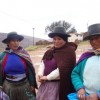
PERU: Local Gov’ts Fail to Prioritise Equality for Women
Legally, each of Peru's 25 administrative regions must have a plan for promoting equal opportunities for women. But over the last year, only 10 regions have actually allocated resources to the task of overcoming gender inequity, while another 10 have not even drawn up the compulsory equal opportunities plan.DEVELOPMENT: IBSA Fund Packs Small But Sustainable Punches
Despite only three million dollars a year coming into the India-Brazil-South Africa (IBSA) Fund for Poverty and Hunger Alleviation, it aims to pack punches above its weight with small but sustainable projects.
Stress and Anger over BP Oil Disaster Could Linger for Decades
As the one-year anniversary of the record-breaking BP oil spill in the Gulf of Mexico approaches, mental health experts and social scientists warn of decades of impact on Gulf residents.South Africa Key to Swazi Protest Outcome
Uneasy calm has returned to the streets of Manzini, Swazi commercial capital, after two days of heavy-handed police action against unions protesting government's handling of the financial crisis gripping the mountain kingdom.
Uganda Latest Govt to Face Down Protests
The Ugandan opposition has announced it will continue protests against rising prices for fuel, food and other essential commodities, undeterred by violent police repression of the previous two days of action.G24 Says Rich Nations’ Policies Hurting Developing World
Finance ministers of the G24 group of developing and emerging countries met on the sidelines the World Bank and International Monetary Fund spring meetings here on Thursday, warning against continued risks to their economies, despite largely "strong" growth as the world climbs out of the global financial crisis.Cuba’s Communist Party to Adopt Reforms
Cuba's governing Communist Party (PCC) will meet over the weekend to decide on the direction and scope of far-reaching reforms aimed at modernising the country's socialist economy over the next few years.U.S.: 2011 Foreign Aid Cuts Not as Great as Feared
While the State Department's overall 2011 international affairs budget was cut sharply from President Barack Obama's initial request, humanitarian and development groups are expressing some relief at the final result given the current political climate.DEVELOPMENT: IBSA’s South-South Funding With No Strings Attached
Development donors typically impose strict conditions on recipient countries. Now a different South-South approach to funding is taking shape through the India-Brazil-South Africa (IBSA) Fund for Poverty and Hunger Alleviation.
Young Cubans Unsure Where to Turn for Decent Jobs
In the throes of Cuba's economic "reorganisation," young people are walking a tightrope towards an uncertain employment future. They are finding it increasingly difficult to find jobs that meet both their professional aspirations and their salary expectations.
PHILIPPINES: Pulling Children Out of the Tunnel of Hard Labour
At the tender age of 10, Rodel Morozco was working in a goldmine and crawling inside tunnels, until one day he fell 200 feet underground because his father had blasted the tunnel with dynamite.« Previous Page — Next Page »


 UN Commission on International Trade Law Holds Colloquium on Harmonizing Law in Age of Digital Trade and Finance. Credit: UN Photo/Manuel Elías
Trade has historically been a geopolitical tool that can both be used to propel development as well as entrench inequalities. In various nations in East Asia and Latin America, increased trade, as often seen in export booms, has allowed them to achieve influential standings within the global economy. On the other hand, many low-income countries in Sub-Saharan Africa, Asia, and Latin America struggle to maintain a robust trade performance, and oftentimes are subjugated to exploitative trade dynamics through intense extraction of their natural resources. In recent decades, international trade has reached a new era as emerging economies across the world are rising in economic preeminence. Stable international trade is crucial to world peace as global interconnectedness facilitates reliable diplomacy. Nevertheless, significant challenges are on the rise. Notably, a major wave of United States tariff escalations in January 2025 lifted US import taxes to their highest level since the 1930s, changing market dynamics and forcing renegotiations with global trading partners.These articles are aimed at informing readers about the complexities of trade and its varying effects on development, with a special focus on the consequences of the global economic crisis, the potential of fair trade and the gender implications of trade policies.
Updated by Yilan Batista and Shuli Wong August 2026

The Week with IPS

NEXT STOP - SDGs
Tracking global progress towards a sustainable world
